
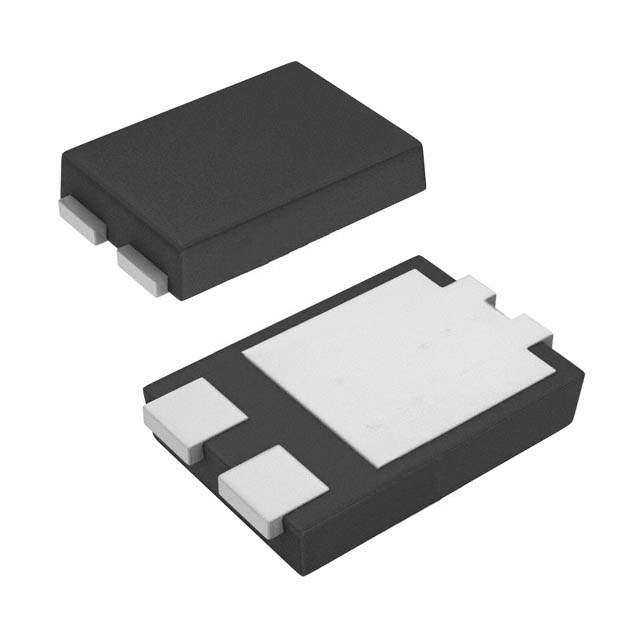
45 V reverse ceiling, 10 A average rectified ceiling, 570 mV at 10 A, TO-277B, -55°C to 150°C junction
Quick Engineering Summary
| Field | Value |
|---|---|
| Manufacturer | Littelfuse Inc. |
| Category | Diodes, Rectifiers - Single |
| Package | TO-277B |
| Core function | DIODE SCHOTTKY 45V 10A TO277B |
| Key electrical range | Supply and Demand Status: Limited |
| Reported stock | 40000 pcs reported — confirm on RFQ |
Not for high-voltage rails; fine for low-voltage power paths
Skip it for any reverse rail above 45 V. That number is a ceiling, not a working target, so it rules out designs that need more reverse-voltage headroom and leaves transient behavior beyond that limit unanswered.
In the right lane, DST1045S is a Schottky rectifier for straightforward low-voltage power paths in a surface-mount TO-277B body. The 10 A average rectified current is also a ceiling. It places the part in real power handling rather than signal steering, but it does not settle junction temperature or copper area because the thermal data is not shown here. Active lifecycle and EU RoHS compliance support new design-in.
The weak point is leakage at the top rail
800 µA at 45 V is the first number to watch. For a Schottky, that reverse leakage ceiling can become the quiet source of wasted hold-up current or an unintended bias path when the rail sits near its reverse limit, especially in hot standby paths and ORing arrangements.
The better-looking figure is 570 mV at 10 A. Paired with the 10 A average rectified ceiling, it points to the conduction-loss budget: DST1045S is aimed at low forward drop at meaningful current, but this listing still does not show how that drop shifts with current and temperature. The speed line, fast recovery <= 500ns, > 200mA (Io), is only category context, not a reverse-recovery spec for this exact diode.
639 pF makes switching behavior a real placement question
639 pF @ 5V, 1MHz is not a throwaway spec. In a Schottky rectifier, capacitance like that can matter as much as forward drop on a fast edge, because the surrounding switch node has to move that charge every cycle before you even get to the missing trr detail.
That steers DST1045S toward output rectification, input protection, and other low-voltage power jobs where 45 V and 10 A are the governing ceilings, and away from designs where node capacitance is the first-order loss term. The -55°C to 150°C junction range is broad enough for industrial temperature discussions, but it remains a junction limit. Ambient margin stays unresolved until the thermal path is documented.
Buy it for current builds, but schedule around the reel and lead time
New design-in works.
What needs attention is logistics, not lifecycle. DST1045S is Active, stock is listed at 40000, package is Reel - TR, quantity per package is 5000, and estimated pruduction lead time is 32 Weeks while supply-and-demand status is Limited. That mix supports a BOM decision, but it does not support casual replenishment if your build pattern is uneven or your AVL depends on small, frequent orders.
Plan around the reel quantity from the start, especially when line consumption is well below 5000 and partial-reel handling creates friction. MSL Level is 1 (Unlimited), so storage after receipt is easy enough, yet that does nothing to shorten the scheduling problem created by a listed 32 Weeks lead time under Limited supply-and-demand conditions.
For sustaining production, secure the next window before the line gets tight. For a new program, line up prototype, pilot, and first production timing with the stated lead time instead of assuming spot availability will cover the ramp.
The missing thermal and recovery data still matter
150°C is only a junction limit. Missing RθJC, trr, surge-current rating, and pinout still block switching-loss estimates, fault survival checks, and footprint release for DST1045S.
View the Win-Source product page for DST1045S.
Key Takeaways for Engineers & Buyers
- Hold reverse stress below the 45 V ceiling; DST1045S does not close any higher-rail decision.
- Budget conduction loss from 570 mV at 10 A, then check the thermal path because no thermal resistance is listed.
- Place buys in reel multiples of 5000 and account for the listed 32 Weeks lead time.