
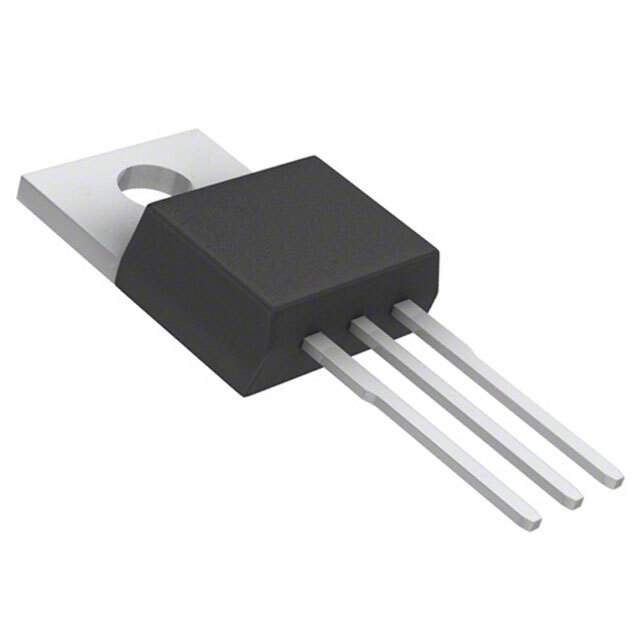
100 V reverse ceiling, 10 A per diode, 550 mV at 10 A, TO-220AB common-cathode array
Quick Engineering Summary
| Field | Value |
|---|---|
| Manufacturer | Littelfuse Inc. |
| Category | Diodes, Rectifiers - Arrays |
| Package | Tube |
| Core function | DIODE ARR SCHOT 100V 10A TO220AB |
| Key electrical range | Current - Average Rectified (Io) (per Diode): 10A; Current - Reverse Leakage @ Vr: 300 µA @ 100 V; Operating Temperature - Junction: -55°C ~ 150°C; Voltage - DC Reverse (Vr) (Max): 100 V |
| Reported stock | 1 pcs reported — confirm on RFQ |
100 V is the decision point, not the 10 A line
100 V is the hard ceiling that decides whether this device belongs on your rail at all. If reverse stress can approach that number in normal operation or transients, the listing does not settle the question; it marks the edge where failure risk begins, while the needed headroom still depends on the application.
The 10 A average rectified current is also a ceiling, per diode, in a 1 pair common cathode part. Pair that with 550 mV at 10 A and you have the conduction-loss picture the listing gives you, but not the thermal answer. That still depends on derating and thermal resistance data that are not here.
Can you actually buy DST20100C for a running line?
Can you actually get enough of it to build? Stock is 1, lifecycle is Unknown, and the package is Tube with a standard package of 1,000. That combination makes DST20100C a weak choice for any build that needs immediate supply depth, even before electrical fit comes into play.
For a sustaining design, the next move is straightforward: secure committed supply before it goes anywhere near the BOM. Unknown lifecycle does not mean obsolete, but it offers no protection against a line stop when on-hand quantity is effectively zero, and that matters more than any packaging or compliance detail.
For a fresh design, DST20100C stays in the conversation only if the common-cathode arrangement and through-hole TO-220AB footprint solve a real mechanical problem that an SMD option would not. EU RoHS compliance and MSL 1 (Unlimited) remove a handling concern, but they do not change the supply risk. That's the real constraint here.
Where this common-cathode TO-220AB part fits
So the practical fit is in power rectification work where through-hole assembly is deliberate. A 1 pair common cathode Schottky in TO-220AB suits low-voltage secondary rectification, ORing, or dual-diode arrangements that want one thermal body and a shared cathode node already defined by the package.
It is a poor fit for compact surface-mount layouts, and the 100 V reverse ceiling rules out any rail that treats 100 V as a normal operating neighborhood rather than a limit. The Schottky label points to lower forward drop, but the listing's "Fast Recovery <= 500ns, > 200mA (Io)" line is category metadata, not a usable reverse-recovery spec for DST20100C.
The missing numbers are the real blocker
The constraint is missing detail. No reverse-recovery time, no junction capacitance, no thermal resistance, and no pinout or package drawing are given for DST20100C.
View the Win-Source product page for DST20100C.
Key Takeaways for Engineers & Buyers
- Hold reverse stress below the 100 V ceiling; that number does not buy surge margin by itself.
- Budget conduction loss from 550 mV @ 10 A per diode before you commit TO-220AB board space.
- Do not release DST20100C to volume on stock of 1; place it only after supply is lined up.