
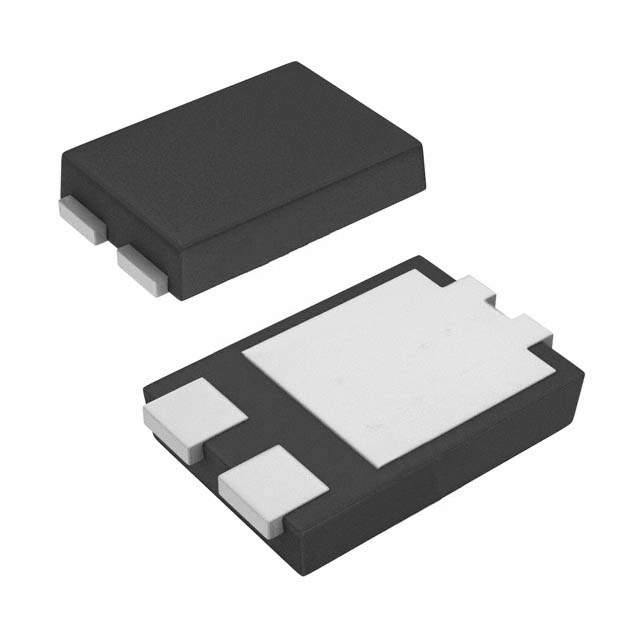
50 V reverse ceiling, 20 A average rectified limit, TO-277B package, -55°C to 150°C junction
Quick Engineering Summary
| Field | Value |
|---|---|
| Manufacturer | Littelfuse Inc. |
| Category | Diodes, Rectifiers - Single |
| Package | TO-277B |
| Core function | DIODE SCHOTTKY 50V 20A TO277B |
| Key electrical range | Supply and Demand Status: Limited |
| Reported stock | 1 pcs reported — confirm on RFQ |
Can you start a new design on this now?
Can I actually buy it in time? That is the first question here, and it matters more than lifecycle status. DST2050S is marked Active with no lifecycle conflict, and EU RoHS compliance clears the usual environmental hurdle for a new BOM line.
Availability is the pressure point. Stock is 1, supply status is Limited, and estimated production lead time is 32 Weeks. That can work for a prototype or a controlled pilot build. For any release that depends on steady reel flow, secure material early or this diode becomes the line stopper.
50 V is the ceiling that decides the rail
50 V is the decisive number. It is the maximum DC reverse voltage, so any rail, clamp position, or inductive node that can force more than 50 V in reverse is out.
The other hard ceiling is 20 A average rectified current. Use that to bound steady conduction duty, not pulse behavior or recovery behavior. The listed forward drop is 650 mV at 20 A, and that pairing drives the dissipation budget once current gets high enough that board and package thermal performance stop being background details and start setting the operating envelope. Reverse leakage is 4 mA at 50 V, so leakage is still present at the top of the reverse rating and can matter in hot standby or ORing paths.
Wrong for high-voltage rails, right for dense low-voltage power paths
Wrong for anything that needs reverse margin beyond 50 V. That rules DST2050S out of higher-voltage rectification and any position where ringing or fault conditions can push the diode past its listed reverse ceiling; here, the number is a stop sign.
Where it fits is much narrower and more practical: low-voltage, high-current rectification or freewheel duty in a surface-mount power stage that wants a Schottky in TO-277B. The package and 20 A average rectified rating point to board-mounted power conversion rather than signal steering, and the -55°C to 150°C junction range is broad enough for industrial ambient swings if the board can carry the heat implied by 650 mV at 20 A.
MSL 1 (Unlimited) helps on the assembly side, especially with long floor exposure. It does not answer the thermal question. The speed line does not broaden the fit much either: it says fast recovery =< 500ns, > 200mA (Io), yet the reverse recovery time field itself is blank, and for a Schottky the switching behavior that matters in a noisy, high-edge-rate converter still needs real trr or capacitance data before release.
The missing data is mostly switching and thermal
The constraint is incomplete closure. Reverse recovery time is absent, junction capacitance is absent, and no thermal resistance, pinout, or package drawing appears here.
View the Win-Source product page for DST2050S.
Key Takeaways for Engineers & Buyers
- Hold DST2050S to rails that stay inside the 50 V reverse limit.
- Budget conduction loss from 650 mV at 20 A; that pair sets the thermal discussion.
- Place the buy early: stock is 1, supply is Limited, and lead time is 32 Weeks.