
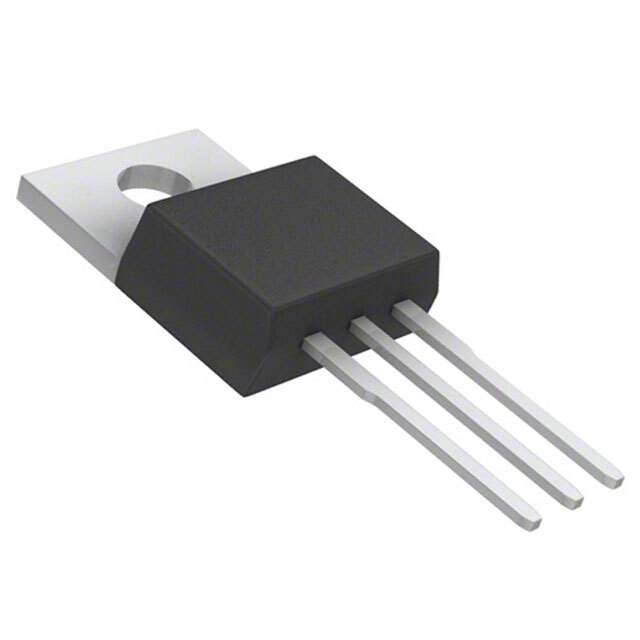
60V reverse ceiling, 10A per diode, 645mV at 10A, TO-220AB through-hole common-cathode pair
Quick Engineering Summary
| Field | Value |
|---|---|
| Manufacturer | Littelfuse Inc. |
| Category | Diodes, Rectifiers - Arrays |
| Package | TO-220AB |
| Core function | DIODE ARR SCHOTT 60V 10A TO220AB |
| Key electrical range | Current - Average Rectified (Io) (per Diode): 10A; Current - Reverse Leakage @ Vr: 850μA @ 60V; Operating Temperature - Junction: -55°C ~ 150°C; Supply and Demand Status: Balance |
| Reported stock | 1 pcs reported — confirm on RFQ |
Can you start a new design on DST2060C?
Can I trust the lifecycle enough to start? Not yet. DST2060C shows lifecycle Unknown, yet it also carries an Estimated EOL Date of 2029; those signals do not add up to a clean active-status part, so it should not go into a fresh platform without a direct continuity check.
For sustaining designs, the call is simpler. If this exact common-cathode Schottky pair is already qualified in your build, DST2060C is still a reasonable hold part.
The compliance side is straightforward. EU RoHS is listed, and no conflict field appears around it. The blocker is lifecycle confidence and availability, not environmental status.
This is not your high-voltage margin part
Start with the bad fit: anything that lives near a 60V rail ceiling, or sees ugly reverse spikes, is the wrong place to lean on DST2060C. The listed Voltage - DC Reverse (Vr) (Maximum) is 60V, and that number is a ceiling, not a working point. It answers whether the part belongs on low-voltage rectification rails, but it does not answer transient headroom, avalanche behavior, or surge survival because none of those numbers are shown here.
Where it does fit is a low-voltage, high-current rectifier position that benefits from Schottky drop and wants two diodes in a 1 Pair Common Cathode arrangement. The Current - Average Rectified (Io) (per Diode) is 10A, again as a ceiling. That sets the package class and copper path immediately, but it does not tell you how much current you can actually run at your ambient because no derating curve is in view.
Then there is the forward-drop line: 645mV @ 10A. That single pairing does a lot of work, because it frames the conduction-loss budget at the top listed current and makes clear that the 10A figure is not free thermal territory, especially once real board conditions, mounting, and heatsinking enter the picture. Get that wrong and the thermal problem shows up before the current rating looks violated.
Leakage matters too. The listing gives 850μA @ 60V for reverse leakage, so DST2060C is not the part to hide in a very low-leakage hold-up path or a precision sensing front end. In a power rectifier slot, that may be acceptable. In a battery-sensitive standby path, it may not.
And that package tells you where it belongs
Which leads straight to the package. DST2060C is a through-hole TO-220AB / TO-220-3 device, and that points to board-level power rectification where leaded assembly, mechanical stiffness, or easy heatsink attachment still matter more than density. It belongs in conventional power stages, not in compact surface-mount layouts chasing low profile.
The junction range of -55°C ~ 150°C is also a limit window, not proof that the assembly will run happily across that span. It tells you the silicon class is not the weak point on paper; it does not tell you the case temperature, RθJC, or mounting condition that gets you there. Here, the package and common-cathode topology are the real fit signals.
The constraint is supply, and the datasheet gaps are real
The constraint is supply. Stock is 1, and with tube packaging that points to line support risk rather than any meaningful buffer. If DST2060C is for an existing production build, reserve it for exact-need demand instead of broad replenishment.
The missing items are concrete and important: reverse-recovery time, junction capacitance, thermal resistance, IFSM, pinout, and a package drawing are absent here. Those gaps decide switching loss, surge tolerance, and whether the TO-220AB body really fits the mechanical and thermal stack you have in mind.
View the Win-Source product page for DST2060C.
Key Takeaways for Engineers & Buyers
- Hold reverse rail stress below the 60V ceiling; DST2060C does not close surge margin by itself.
- Budget conduction loss from 645mV @ 10A before committing the TO-220AB thermal path.
- Do not release a new build on stock of 1; tube packaging points to line-fill risk, not buffer.