
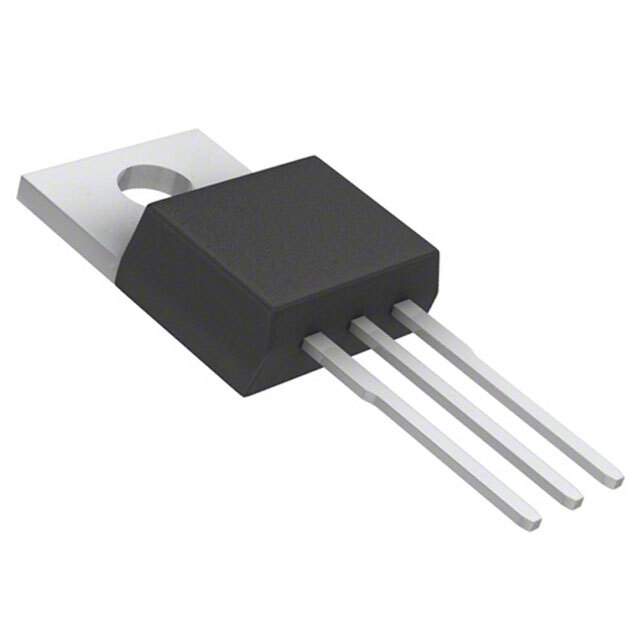
100 V reverse ceiling, 10 A per diode, 750 mV at 15 A, TO-220AB through-hole common-cathode pair
Quick Engineering Summary
| Field | Value |
|---|---|
| Manufacturer | Littelfuse Inc. |
| Category | Diodes, Rectifiers - Arrays |
| Package | Tube |
| Core function | DIODE ARR SCHOT 100V 10A TO220AB |
| Key electrical range | Current - Average Rectified (Io) (per Diode): 10A; Current - Reverse Leakage @ Vr: 500 µA @ 100 V; Operating Temperature - Junction: -55°C ~ 150°C; Voltage - DC Reverse (Vr) (Max): 100 V |
| Reported stock | 1 pcs reported — confirm on RFQ |
Thin stock is the weak point; the electrical envelope is usable
The weak point comes first: stock quantity is 1. That alone keeps DST30100C out of any build that needs immediate volume, even though lifecycle is Active with no stated conflict and EU RoHS compliance is listed, which keeps it in play for new design-in when the schedule can absorb a supply check before release.
The electrical picture is usable, but only within clear limits. DST30100C is a common-cathode Schottky pair in TO-220AB, through hole, with a 100 V DC reverse ceiling and 10 A average rectified current per diode. Those facts line up with board-power jobs such as low-voltage rectification, ORing, or freewheel duty where the common-cathode arrangement helps the topology and leaded assembly is still acceptable.
What they do not settle is thermal margin. The listing gives no thermal resistance or derating curve, so the TO-220-3 body tells you the mounting style, not whether the package will stay comfortable in the real enclosure once loss and ambient stack up.
100 V is a ceiling, not permission to run there
100 V sets the rail-fit boundary. If worst-case reverse stress can reach that number, DST30100C is no longer a comfortable choice.
The other hard limit is 10 A average rectified current per diode. Treat it as a ceiling for each leg, not evidence that the assembly will run cool. The listed forward drop, 750 mV @ 15 A, is enough to show conduction loss will matter as current rises, and reverse leakage is 500 µA @ 100 V, so off-state loss and blocking behavior deserve attention when the design sits near the reverse limit.
The package and topology point to board power, not dense switching detail
The constraint is missing switching detail. You have a through-hole Schottky common-cathode pair in TO-220AB, so the natural fit is board-level power hardware that values simple mounting and serviceability over compact surface-mount density.
That fit has a boundary. The listing calls out Fast Recovery <= 500ns, > 200mA (Io), but it does not give reverse-recovery time for DST30100C itself, and that missing dynamic number matters when you are judging ringing, EMI, or commutation stress. Use it where the topology wants a common cathode and where 100 V and 10 A per diode are the right ceilings.
1 unit on hand is the buy-side decision
1 unit is the decisive figure. DST30100C may be Active, but availability is the immediate constraint.
For a running line, lock supply before release. Tube packaging and a standard package of 1,000 point to conventional production handling, but they don't solve a near-term shortage.
What the listing still doesn't answer
And it still leaves out the concrete items that close the review: reverse-recovery time, junction capacitance, thermal resistance, and the package drawing or pinout.
View the Win-Source product page for DST30100C.
Key Takeaways for Engineers & Buyers
- Hold reverse stress at or below 100 V; that ceiling decides whether DST30100C belongs on the rail at all.
- Budget conduction loss from 750 mV @ 15 A before committing TO-220AB copper and mounting.
- Secure stock early if you need DST30100C now; listed quantity is 1 while standard package is 1,000.