
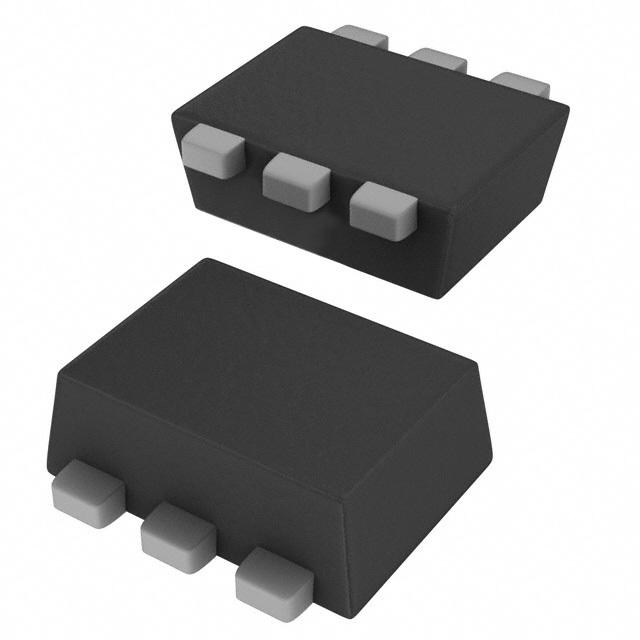
Dual NPN in SOT-963 with 40V VCEO, 200mA collector ceiling, and 300mW dissipation
Quick Engineering Summary
| Field | Value |
|---|---|
| Manufacturer | Diodes Incorporated |
| Category | Transistors (BJT) - Arrays |
| Package | SOT-963 |
| Core function | TRANS 2NPN 40V 200MA SOT-963 |
| Key electrical range | Frequency - Transition: 300MHz; Maximum Current Collector: 200mA; Maximum Power Dissipation: 300mW; Supply and Demand Status: Balance |
| Reported stock | 74000 pcs reported — confirm on RFQ |
Good for new work, with one obvious catch
Use it.
Lifecycle looks clean: DST3904DJ-7 is Active, the signals agree, and listed stock of 74000 supports both new design-in and sustaining builds.
The catch is physical, not commercial. This dual NPN array comes in SOT-963, so the upside is density while the tradeoff is limited thermal headroom and awkward hand rework. EU RoHS is straightforward here. What this listing settles is availability and the broad electrical envelope; what it does not settle is the detailed pinout and thermal behavior needed before a board is frozen.
Can you keep a running line on DST3904DJ-7?
Can we actually buy enough of it and build with it? Yes. The part is listed as Active, inventory is 74000, and packaging is Reel - TR, which fits normal SMT flow better than cut tape handling.
The real constraint is the package. SOT-963 is small enough that any second-source discussion can turn into a footprint problem quickly, and this page gives no drawing or land pattern to reduce that risk. Keep DST3904DJ-7 tied to a confirmed PCB footprint and feeder setup before committing it to a running line.
The 300mW limit matters more than the 200mA headline
The constraint is thermal.
A 200mA maximum collector current sounds generous for a small-signal dual NPN, but the 300mW maximum power dissipation is the ceiling that decides how much useful work both transistors can do at once inside a SOT-963 body, especially when layout and ambient conditions are doing you no favors.
The 300mV max VCE(sat) at 5mA, 50mA helps, but only in that stated condition. It gives one concrete low-current switching point, not a blanket promise about saturation across the full operating range. If the design depends on hard saturation outside that condition, this listing does not establish it.
The 40V VCEO ceiling closes another set of decisions fast. It fits low-voltage level shifting, small load switching, and general signal handling on rails that stay comfortably below 40V. It does not support higher-voltage interfaces or transient-heavy nodes, because no avalanche behavior or transient rating is listed here.
Gain data is useful, though still incomplete. The hFE minimum of 100 at 10mA, 1V shows the part is characterized at a meaningful current for bias planning, but it is still not a curve. The 300MHz transition frequency points to a genuinely fast small-signal transistor array, yet without capacitance data it does not close an edge-rate or analog bandwidth review by itself.
Best fit: dense low-power switching and bias stages
40V is the decisive ceiling.
Paired with the dual NPN structure and SMD SOT-963 package, that puts DST3904DJ-7 in compact logic-level switching, bias networks, current steering, and small-signal stages where board area matters as much as the transistor.
Its limits are just as clear. Don’t treat the 200mA collector figure as permission to use DST3904DJ-7 like a general-purpose load switch in a thermally casual layout; the 300mW package ceiling says otherwise. It is also a poor fit when debug access, manual rework, or generous creepage around the transistor body matter more than density.
What the listing still leaves open
Wrong for waveform-sensitive switching reviews.
Right now the missing items are pinout, package drawing, thermal resistance, and collector cutoff current. For DST3904DJ-7, those gaps decide layout, leakage budgeting, and how much of the 300mW ceiling is usable on a real board.
View the Win-Source product page for DST3904DJ-7.
Key Takeaways for Engineers & Buyers
- Keep VCEO below the 40V ceiling; this listing does not tell you avalanche or transient behavior.
- Budget around the 300mW package limit before using the full 200mA collector rating on DST3904DJ-7.
- Buy on Reel - TR and lock the SOT-963 footprint early; ECAD is not included here.