
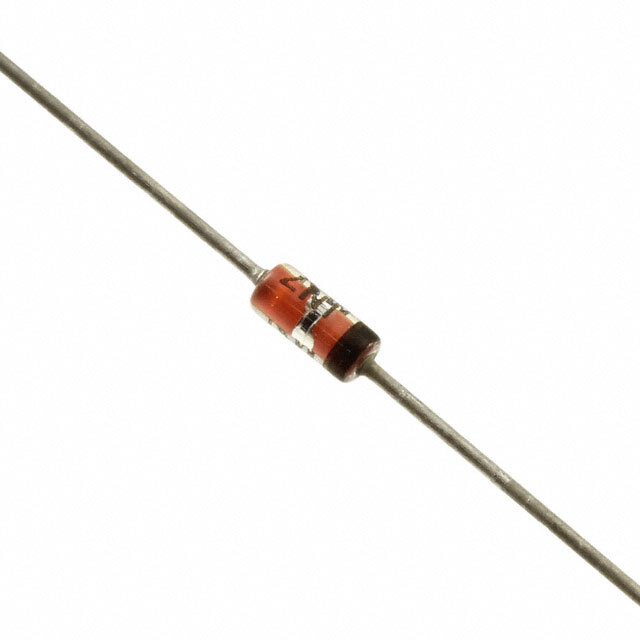
200 V reverse ceiling, 5 A average rectified ceiling, 900 mV at 5 A, in TO-220AC through-hole
Quick Engineering Summary
| Field | Value |
|---|---|
| Manufacturer | Littelfuse Inc. |
| Category | Diodes, Rectifiers - Single |
| Package | TO-220-2 |
| Core function | DIODE SCHOTTKY 200V 5A TO220AC |
| Key electrical range | Current - Average Rectified (Io): 5A; Current - Reverse Leakage @ Vr: 150 µA @ 200 V; Operating Temperature - Junction: -55°C ~ 150°C; Supply and Demand Status: Normal |
| Reported stock | 21118 pcs reported — confirm on RFQ |
And the real decision is thermal, not just voltage
So the first pass on DST5200 is straightforward: it works only if your design stays inside three ceilings at once. The 200 V DC reverse rating is the rail limit, not extra margin, and it rules out any rectifier position that needs more reverse headroom during line surges or transformer ringing. The 5 A average rectified rating is also a ceiling, not a steady operating point, so it places the part in a certain converter or secondary-rail class without saying how much ambient margin the assembly really has.
The number that changes the layout discussion is 900 mV at 5 A. That forward-drop and current pairing puts real thermal load into the conduction path at the top of the listed current, and in a through-hole TO-220AC body it shifts attention to copper, mounting, and airflow before anyone starts debating Schottky versus ultrafast behavior, because the heat picture gets concrete faster than the label does. Treat the 5 A line casually and ignore the listed forward drop, and heat bites first.
The junction range of -55°C to 150°C is a silicon survival envelope, not proof that the finished assembly reaches those corners comfortably. Read together, the current and forward-drop ceilings make DST5200 a conservative power-rectifier option only where the thermal path is already under control.
Unknown lifecycle keeps this out of easy approvals
Proceed carefully.
For a fresh design, the real obstacle is lifecycle confidence more than electrical fit. The status is Unknown, with no conflict signals, while supply and demand status is Normal and stock quantity is 21118. That supports a near-term build plan, not an easy long-program release. The warehouse picture is better than the lifecycle picture.
If DST5200 is for sustaining production, cover the line in tube packaging while stock is present. If it is for a new platform, clear lifecycle status in parallel before freezing the BOM. EU RoHS is compliant, which removes one routine compliance objection, but it does not settle the longevity question.
Not for dense SMT power stages
Not for dense SMT power stages or low-profile assemblies. DST5200 is a through-hole, TO-220-2 / TO-220AC single Schottky rectifier, so it fits board-level power hardware where leaded assembly and a standing package are acceptable.
The missing numbers are the ones that close review
The constraint is missing dynamic and thermal detail.
DST5200 is tagged as Schottky, yet the listing does not give reverse-recovery time, junction capacitance, thermal resistance, surge current, pinout, or a package drawing. Those details decide switching loss, transient survivability, heatsinking method, and whether the footprint is correct.
One line needs careful reading: “Fast Recovery <= 500ns, > 200mA (Io).” That is a category-style speed label, not a stated trr for DST5200, and it should not be used as the missing recovery spec. Until those gaps are filled, DST5200 is a part you can shortlist, not one you can fully close.
View the Win-Source product page for DST5200.
Key Takeaways for Engineers & Buyers
- Hold reverse stress below the 200 V ceiling; that number decides whether DST5200 belongs on the rail at all.
- Budget conduction loss around 900 mV @ 5 A, because that pair sets the thermal burden more than the package name does.
- Buy tube quantity against the current 21118 stock if this is for a running line; lifecycle is still unverified.