
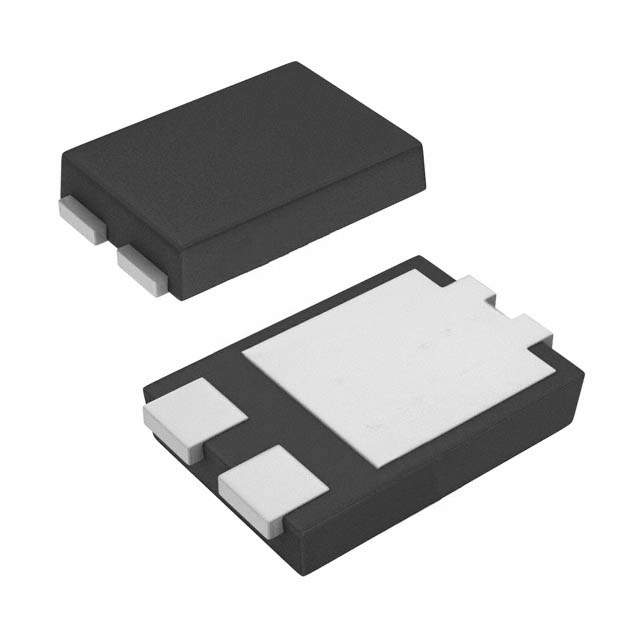
60 V reverse ceiling, 5 A average rectified limit, TO-277B, -55°C to 150°C junction
Quick Engineering Summary
| Field | Value |
|---|---|
| Manufacturer | Littelfuse Inc. |
| Category | Diodes, Rectifiers - Single |
| Package | TO-277B |
| Core function | DIODE SCHOTTKY 60V 5A TO277B |
| Key electrical range | Supply and Demand Status: Limited |
| Reported stock | 1 pcs reported — confirm on RFQ |
The supply constraint is sharper than the lifecycle signal
Availability is the real constraint. Active status, EU RoHS compliance, and MSL 1 are all favorable, but stock is 1, supply status is Limited, and listed lead time is 32 Weeks.
Wrong for high-margin rails, useful for compact 60 V rectification
Wrong for rails that press against a 60 V reverse ceiling. That number is a limit, not a working target, so it rules out higher-voltage rectification and still leaves the transient story unresolved.
Where the part fits is compact power rectification that wants a surface-mount Schottky in TO-277B instead of a leaded body. The 5 A average rectified current is also a ceiling, which keeps it in moderate-current paths rather than heavier load steps or repeated thermal abuse.
Forward drop is the next filter. At 750 mV and 5 A, the conduction-loss budget is already substantial near the top of the current rating, and package thermal behavior becomes the real design question long before 5 A looks comfortable in continuous service. Leakage matters too: the listing gives 700 µA at 60 V, useful for spotting where standby loss or hot reverse bias may show up, but it still does not provide the full leakage curve across temperature.
The junction range of -55°C to 150°C keeps it in play for harsh ambient hardware. It does not answer self-heating.
And the missing diode details are the real review blockers
And that is why the gaps matter more than another line of catalog prose. The listing does offer one dynamic clue with 314pF at 5V, 1MHz, which helps when switching-node capacitance is part of the loss picture, but reverse-recovery time is explicitly absent even though the speed field says fast recovery <= 500ns, > 200mA (Io). That label is not a substitute for trr.
The other missing items are the ones that decide whether the part survives real stress: IFSM for surge current, thermal resistance for the TO-277B body, and a package drawing or pinout view for land pattern and polarity confirmation. Without those, DST560S can make a shortlist, but it cannot close surge or thermal confidence from this page alone.
32 Weeks decides how you buy it
32 Weeks is the figure that changes behavior. With reel packaging at 5000 and available stock at 1, DST560S is not the part to leave until kit release if it is already on an existing production build.
Use it for planned demand, not spot demand. If the line needs DST560S, commit the order against the reel format and schedule risk now rather than assuming Active status will save the build.
View the Win-Source product page for DST560S.
Key Takeaways for Engineers & Buyers
- Hold reverse stress below the 60 V ceiling; that number does not settle surge behavior.
- Budget conduction loss from 750 mV at 5 A, then check the thermal path for TO-277B.
- Place the buy now if DST560S is on a running build; stock is 1 and lead time is 32 Weeks.