
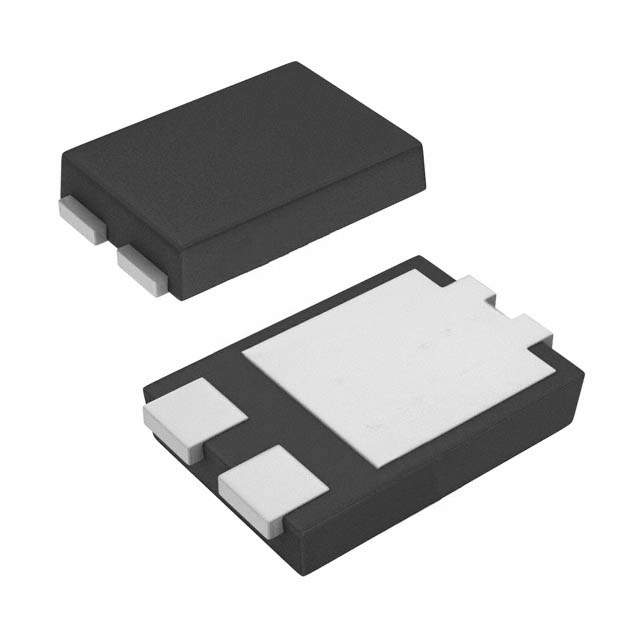
100 V reverse, 8A average rectified, 680 mV at 8 A, TO-277B, -55°C to 150°C junction
Quick Engineering Summary
| Field | Value |
|---|---|
| Manufacturer | Littelfuse Inc. |
| Category | Diodes, Rectifiers - Single |
| Package | TO-277B |
| Core function | DIODE SCHOTTKY 100V 8A TO277B |
| Key electrical range | Supply and Demand Status: Balance |
| Reported stock | 1 pcs reported — confirm on RFQ |
The real limit here is thermal budget, not headline current
The constraint here is thermal budget. DST8100S-A fits a 100 V Schottky rectifier slot, but the listing leaves the thermal picture open, so the current rating alone does not settle the design-in call.
The 8A average rectified current is a ceiling, not proof that any board can carry 8A continuously. The paired forward-drop figure makes that plain: 680 mV at 8 A sets the conduction-loss burden at the top listed current, and that burden will drive copper, pad use, and ambient headroom before the Schottky label tells you much of anything. The 100 V DC reverse rating is the other hard ceiling, and it answers the basic rail-class question while leaving surge margin unanswered because no surge or avalanche figure is listed here.
The temperature range, -55°C to 150°C junction, is broad enough for harsh environments, and the AEC-Q101 line matters for automotive-qualified hardware. Still, temperature range is not thermal resistance. EU RoHS compliance is straightforward, and MSL 1 helps on the assembly side.
Can you actually buy DST8100S-A for production?
Can you get it in time? Not from on-hand stock.
Stock quantity is 1, and the listed lead time is 32 Weeks. That puts the real decision on planning, not lifecycle, because the part is Active and supply-demand status is Balance.
For a running line or near-term build, order only if a full reel works for the demand window: package is Reel - TR and quantity per package is 5000. For a small build, that makes this listing operationally awkward even though the lifecycle signal is clean. For a new program with a longer horizon, it works if you commit early instead of treating it like a spot buy.
100 V is enough only if your transients are already controlled
100 V is the decisive limit. It tells you where DST8100S-A belongs: secondary rectification, reverse-polarity blocking, or freewheel paths in systems that stay comfortably inside that reverse ceiling.
The rest of the fit is consistent. TO-277B and surface mount point to compact power stages rather than leaded service parts, while 542pF at 5V, 1MHz gives one clue about node capacitance in switching service. Reverse leakage, 70 µA at 100 V, matters on standby-sensitive rails, but it remains a limit at a stated condition, not a blanket promise across temperature.
The speed line is less useful than it first appears. It says fast recovery <= 500ns, > 200mA (Io), yet this is a Schottky and the actual reverse-recovery time field is blank. That leaves DST8100S-A in the right voltage and current class for a small SMT body, but outside any switching-loss review that depends on a real trr number.
Use DST8100S-A, but don’t skip the missing curves
Use it, conditionally.
The missing items decide whether DST8100S-A survives abuse or merely matches a BOM line: reverse-recovery time, thermal resistance, surge current, and a package drawing with pinout. The forward-drop curve is also absent here, and that curve shows how dissipation shifts with current and temperature. Without those details, you can place the part in the right voltage and current class, but you cannot close switching loss, fault survival, or board-temperature margin.
View the Win-Source product page for DST8100S-A.
Key Takeaways for Engineers & Buyers
- Treat 100 V as the reverse ceiling; keep rail transients inside it.
- Budget conduction loss from 680 mV at 8 A before locking copper and pad area.
- Place the reel buy early: stock is 1, lead time is 32 Weeks, package quantity is 5000.