
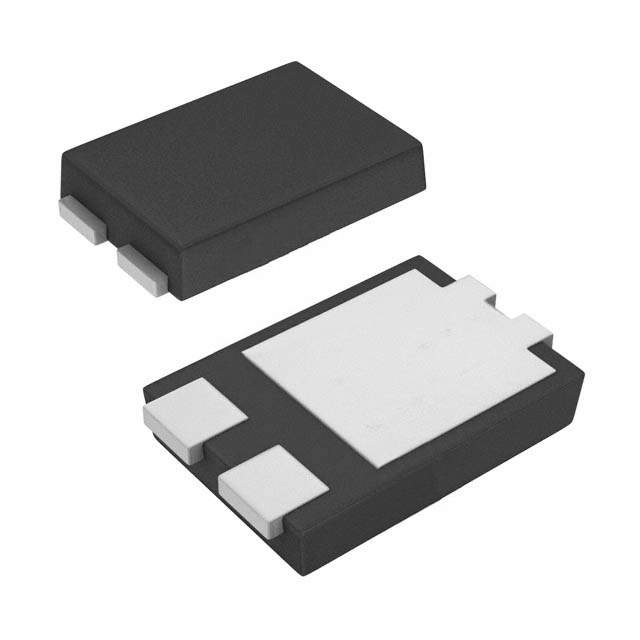
100 V reverse ceiling, 8 A average rectified ceiling, TO-277B surface mount, -55°C to 150°C junction
Quick Engineering Summary
| Field | Value |
|---|---|
| Manufacturer | Littelfuse Inc. |
| Category | Diodes, Rectifiers - Single |
| Package | TO-277B |
| Core function | DIODE SCHOTTKY 100V 8A TO277B |
| Key electrical range | Supply and Demand Status: Balance |
| Reported stock | 1 pcs reported — confirm on RFQ |
Not for loose rail margins; fine for compact 100 V rectification
Skip this one for rails that live near the diode's reverse limit or for builds that need immediate volume. It fits better in a compact surface-mount rectifier position where a 100 V reverse ceiling and 8 A average rectified ceiling match the actual stress, and where TO-277B is already acceptable.
The lifecycle call is straightforward: Active, with no conflict in the status fields, so DST8100S is a valid new design-in candidate rather than a sustaining-only buy. EU RoHS is compliant, and MSL 1 helps on handling. The catch is supply timing, not lifecycle health.
100 V is the line you cannot cross
100 V is the ceiling that decides whether this diode belongs on your rail at all. The 8 A average rectified rating is a ceiling too, not a default operating point.
At 680 mV and 8 A, the listing gives you a forward-drop budget, but not the thermal path that turns that drop into junction temperature.
The real fit is dense power boards with known thermal headroom
The constraint is missing thermal and switching detail. The headline numbers are enough to place this device in a design class, but not enough to answer the questions that separate a safe rectifier choice from a field return, especially when conduction loss, ambient conditions, and fault exposure all stack up on the same board.
Start with fit. This is a single Schottky rectifier in TO-277B, surface mount, with a stated 100 V reverse ceiling and 8 A average rectified ceiling. That points to compact power stages, output rectification, freewheel paths, and high-current blocking jobs where board area is tight and through-hole parts are off the table.
The Schottky construction also makes the listed 70 µA reverse leakage at 100 V worth noting. At the full reverse rating, leakage is present but still controlled enough that this does not read like a part meant only for low-voltage rails.
On the forward side, the listing gives 680 mV at 8 A, so DST8100S is not a mystery on conduction drop at its named test point. You can judge whether that drop fits the efficiency budget of your converter or ORing path. What this page does not give you is the thermal path behind that number, because there is no thermal resistance, no derating curve, and no surge-current figure.
That missing detail matters. The package and current class fit dense power boards, but the absent thermal data still decides whether DST8100S survives your ambient and fault profile. Junction operating temperature is listed at -55°C to 150°C, which is broad enough for industrial power hardware, yet it remains a limit range, not proof that your board can run the junction anywhere near 150°C.
32 Weeks, not lifecycle, is what can stall the line
32 Weeks is the number to act on. With stock shown as 1 and reel packaging at 5000, DST8100S is a poor fit for reactive buying even though supply and demand is marked Balance.
Put DST8100S on forecast and buy to the reel if this is headed into production. For review closure, the missing items are reverse-recovery time, thermal resistance, surge current, and a package drawing or pinout; those gaps still decide switching loss, fault survival, and footprint release.
View the Win-Source product page for DST8100S.
Key Takeaways for Engineers & Buyers
- Treat 100 V as the reverse ceiling; don't use DST8100S where rail transients can crowd that limit.
- Budget conduction loss from 680 mV at 8 A, then check whether TO-277B fits the board heat path.
- Place forecast orders early; stock is 1 and listed lead time is 32 Weeks.