
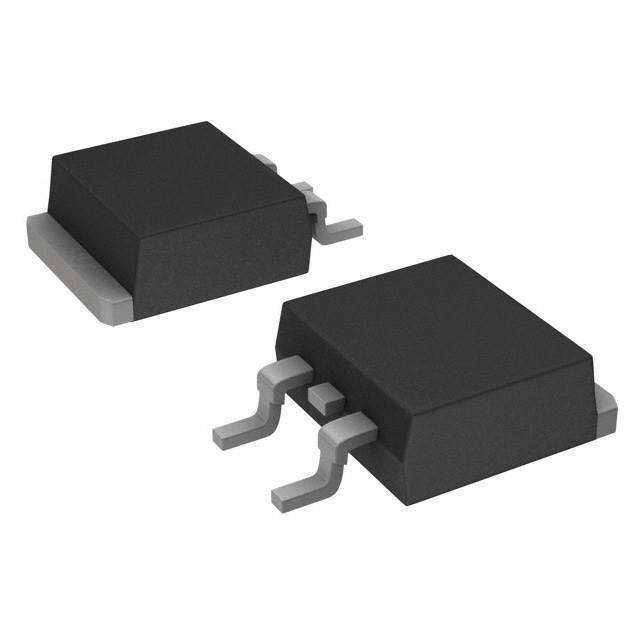
20 V reverse ceiling, 500mV @ 2A forward drop, common-cathode Schottky pair; lifecycle is the real blocker.
Quick Engineering Summary
| Field | Value |
|---|---|
| Manufacturer | Littelfuse Inc. |
| Category | Diodes, Rectifiers - Arrays |
| Package | Not listed for this part |
| Core function | DIODE ARRAY SCHOT 200V 15A TO263 |
| Key electrical range | Current - Average Rectified (Io) (per Diode): 123A; Voltage - DC Reverse (Vr) (Max): 20 V; Voltage - Forward (Vf) (Max) @ If: 500mV @ 2A |
| Reported stock | 1 pcs reported — confirm on RFQ |
Can you still buy DSTB30200C with confidence?
Can you put this on a new BOM with confidence? No. The listing carries a direct conflict: lifecycle is Unknown, while Part Status is Obsolete. Add inventory of 1 unit and the sourcing answer gets even simpler.
The rest does not change that call. It is a common-cathode Schottky pair and it is EU RoHS compliant, but neither fact improves the supply outlook. If DSTB30200C is already on a running line, buy only what covers the near-term production shortfall and start the migration search now.
The 20 V ceiling is tighter than the package headline
The weak point comes first. The listing does not agree with itself. The description says DIODE ARRAY SCHOT 200V 15A TO263, but the specification field for Voltage - DC Reverse (Vr) (Max) is 20 V, and that is the field that sets the electrical ceiling for DSTB30200C.
Treat 20 V as the ceiling unless the datasheet proves otherwise. A 24 V rail, a load-dump event, or even a lightly controlled inductive node sits outside what this page can support, and that matters more than the package headline because reverse-voltage margin is what decides whether the part survives the rail you place it across.
The stronger number here is the forward-drop point: 500mV @ 2A. That gives you one conduction point, not a full operating picture. It does show that conduction loss starts to matter early if you expected to use the current figures implied elsewhere in the listing, and it is nowhere near enough on its own to settle thermal headroom.
Current is the other problem. Current - Average Rectified (Io) (per Diode) is shown as 123A, while the description says 15A. That mismatch is too large to ignore, so DSTB30200C should not be signed off for current stress until the datasheet settles which number is real.
Topology still matters. A 1 Pair Common Cathode device belongs in dual-rectifier or ORing positions that actually need that node arrangement; if the schematic wants common anode or two isolated diodes, DSTB30200C is the wrong footprint before lifecycle risk even enters the discussion.
Fit is narrow
Fit is narrow.
Use it only where the topology already matches. DSTB30200C fits low-voltage Schottky rectification with a common-cathode node; it does not fit any design that needs confidence above a 20 V reverse ceiling, and it does not fit a fresh program with an Obsolete flag on it.
And the missing datasheet items are the real stop signs
And that is where the listing stops being usable for signoff. There is no pinout or package drawing here, even though the description names TO263. There is no thermal resistance, so the forward-drop point cannot be turned into an ambient decision. There is no reverse-recovery time or junction capacitance, which leaves switching loss and noise behavior open. There is also no surge-current figure.
For DSTB30200C, those are not nice-to-haves. They are the difference between a cautious sustaining buy and an electrical signoff.
View the Win-Source product page for DSTB30200C.
Key Takeaways for Engineers & Buyers
- Block new BOM releases on DSTB30200C; Part Status is Obsolete.
- Check rail stress against the 20 V reverse ceiling before using DSTB30200C in any clamp or rectifier position.
- Match the common-cathode topology and bulk handling plan before consuming the single listed unit.