
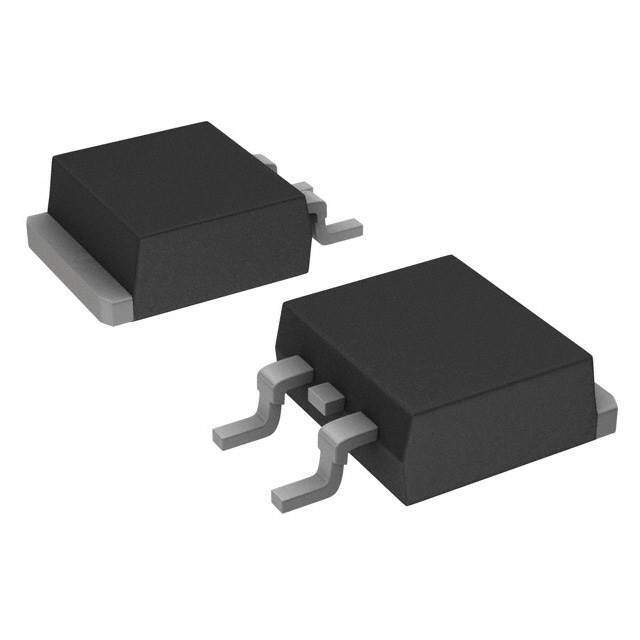
200V reverse ceiling, 5A average rectified ceiling, 900mV at 5A, TO-252 package, -55°C to 150°C junction
Quick Engineering Summary
| Field | Value |
|---|---|
| Manufacturer | Littelfuse Inc. |
| Category | Diodes, Rectifiers - Single |
| Package | TO-252 |
| Core function | DIODE SCHOTTKY 200V 5A TO252 |
| Key electrical range | Current - Average Rectified (Io): 5A; Current - Reverse Leakage @ Vr: 150μA @ 200V; Operating Temperature - Junction: -55°C ~ 150°C; Supply and Demand Status: Limited |
| Reported stock | 2800 pcs reported — confirm on RFQ |
200V is the number that decides this part
200V sets the whole conversation. That reverse-voltage ceiling is the reason to consider DSTD5200 in the first place, because it separates a plausible high-side or secondary clamp option from a Schottky that belongs only on lower-voltage rails, and it matters more here than any other listed figure.
The current rating needs the same discipline. The 5A average rectified current is a ceiling, not a casual operating point, and the 900mV @ 5A forward-drop figure shows exactly where dissipation starts to press on the layout. In other words, this is not a diode you drop in and forget. The TO-252 package has to move that heat, while the listed -55°C to 150°C junction range gives environmental room without answering the thermal question that really decides margin.
That is where the listing stops short. It gives no reverse-recovery time, no junction capacitance, and no surge figure, so DSTD5200 closes the static rail-fit question but leaves the dynamic one open until the full datasheet fills in those blanks.
Can you buy it for a running line?
Can you get enough of it? Yes, but with a real supply constraint. Lifecycle is Unknown rather than flagged EOL or NRND, yet the practical issue is stock and availability: 2800 are listed, and supply-and-demand status is Limited.
For an existing production build, put DSTD5200 against committed near-term demand now instead of assuming the line can pull it later. For a new design, the call is cautious rather than clean. EU RoHS compliance helps, but the lifecycle picture is still unverified, so the part is easiest to justify when the 200V Schottky position is hard to fill and the TO-252 footprint is already on the board.
Wrong for fast-switching proof, right for board rectification
Wrong for a switching-loss argument. The listing's "Fast Recovery = 200mA (Io)" does not provide a recovery time, so it cannot support a decision about high-frequency commutation behavior.
DSTD5200 fits better in simpler board-mounted rectification and blocking duty on SMD power layouts that already accept TO-252-3, DPAK (2 Leads + Tab), SC-63. Schottky construction and a 200V reverse ceiling make it more credible on higher-voltage rails than the usual low-voltage Schottky options, while the 150μA @ 200V reverse leakage figure at least pins leakage to the top reverse condition. Use it where reverse-voltage headroom matters. Skip it where trr, stored charge, or capacitance is the first-order requirement.
The missing data is the real review gate
And those gaps are specific: trr, junction capacitance, thermal resistance, surge current, pinout, and the package drawing are absent here. Those are the items that decide switching fit, thermal headroom, fault survival, and footprint release for DSTD5200.
View the Win-Source product page for DSTD5200.
Key Takeaways for Engineers & Buyers
- Hold DSTD5200 to rails that need the full 200V reverse ceiling; that number is the main fit check.
- Budget conduction loss from 900mV at 5A before committing the TO-252 land pattern.
- Cover near-term demand now if DSTD5200 is approved; stock is 2800 and supply status is Limited.