
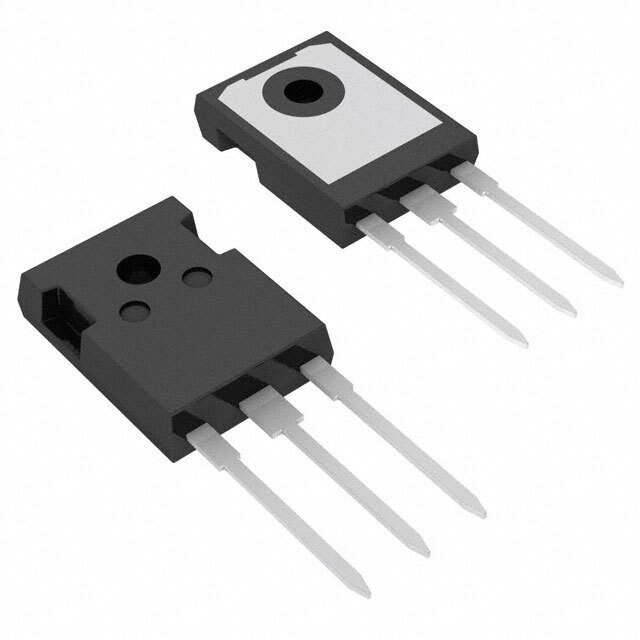
100 V reverse ceiling, 30 A average rectified limit, 900 mV at 30 A, isolated-tab ITO-220AB package
Quick Engineering Summary
| Field | Value |
|---|---|
| Manufacturer | Littelfuse Inc. |
| Category | Diodes, Rectifiers - Single |
| Package | TO-220-3 Full Pack, Isolated Tab |
| Core function | DIODE SCHOTTKY 100V 30A ITO220AB |
| Key electrical range | Current - Average Rectified (Io): 30A; Current - Reverse Leakage @ Vr: 1 µA @ 100 V; Operating Temperature - Junction: -55°C ~ 150°C; Supply and Demand Status: Normal |
| Reported stock | 11932 pcs reported — confirm on RFQ |
100 V is the number that decides this part
100 V is the hard ceiling that makes or breaks this rectifier. It tells you whether the reverse rail fits. It does not say anything about surge tolerance, transient headroom, or avalanche behavior, because none of that is listed here.
Next comes the 30 A average rectified current limit. Treat it as a ceiling, not a working point. Pair that with the listed 900 mV maximum forward drop at 30 A and the real question appears: how much conduction heat your assembly can move through an isolated-tab TO-220-3 Full Pack body over time, under your own mounting and cooling conditions. The package helps mechanical isolation, but it does not settle the thermal path by itself.
Active status, low lifecycle risk, and EU RoHS compliance keep the decision simple. DSTF30100S is a reasonable new design-in when the rail sits comfortably inside 100 V and the thermal path is already understood elsewhere.
Can you keep DSTF30100S on a running line?
What does a buyer actually ask first? Is this a line-stopper or a routine buy? Here it looks routine: lifecycle is Active, supply and demand is Normal, and listed stock is 11932. For a through-hole rectifier in tube packaging, that supports ongoing builds and modest new ramps without turning the device into the schedule risk.
The fit is narrow, and that's useful. This is a single Schottky rectifier, through hole, in ITO-220AB with an isolated tab, so it belongs in power stages that still want leaded assembly, serviceable mounting, or straightforward chassis isolation. It does not belong in dense surface-mount power layouts. It also is not the part to choose when the review turns on switching behavior, because the listing gives only the broad category line of fast recovery =< 500ns, > 200mA (Io). That is classification context, not the trr value needed to compare switching loss or diode snap.
The leakage figure is one of the cleaner details here: 1 µA at 100 V. Read it literally. It says reverse leakage is controlled at the top listed reverse voltage, which helps frame standby loss and hot reverse-bias concerns, but only at that stated condition. It does not replace a leakage-versus-temperature curve, and the -55°C to 150°C junction range only defines the allowed junction span, not how leakage shifts across it. In a hot enclosure, that missing curve is where confidence would come from.
Buy it for sustaining production or for a fresh design-in, but buy to the assembly plan: tube, through hole, isolated tab.
The weak spot is missing detail, not status
The weak point comes first: key details are missing. trr, junction capacitance, thermal resistance, and a package drawing or pinout still need to be in hand.
Status is not the problem.
Wrong for switching comparisons, right for simple rectification
Wrong for switching comparisons. If your decision depends on trr ranking, capacitive charge, or exact thermal impedance, this is not enough information to approve the part from the listing alone.
Where it does fit is simpler: a single Schottky rectifier on a reverse rail up to 100 V, with through-hole mounting and an isolated-tab TO-220-3 Full Pack body that eases mechanical isolation. The -55°C to 150°C junction range keeps it in industrial temperature discussions, but that range is still a limit band, not proof of thermal margin in your assembly.
View the Win-Source product page for DSTF30100S.
Key Takeaways for Engineers & Buyers
- Hold reverse stress below the 100 V ceiling; that number closes rail fit, not surge behavior.
- Budget conduction loss around 900 mV @ 30 A, then check the thermal path of the isolated-tab package.
- Buy tube-pack DSTF30100S against the current 11932 stock if the build is through-hole.