
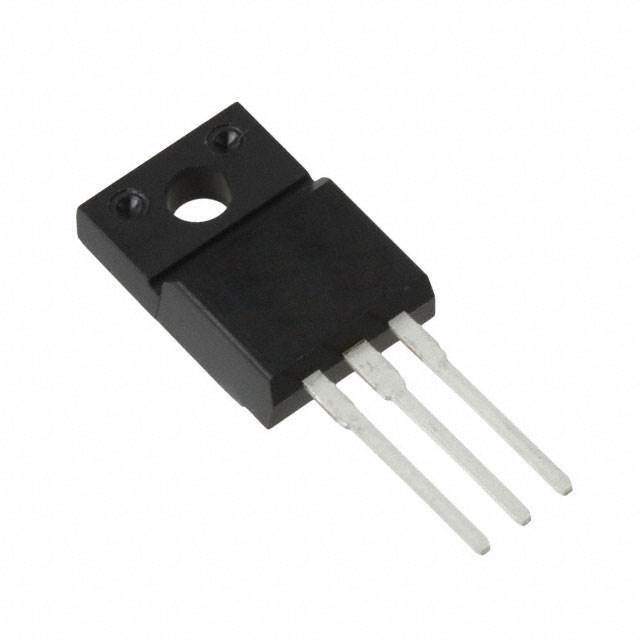
45V reverse ceiling, 20A per diode, 580mV at 20A, ITO-220AB through-hole common-cathode pair
Quick Engineering Summary
| Field | Value |
|---|---|
| Manufacturer | Littelfuse Inc. |
| Category | Diodes, Rectifiers - Arrays |
| Package | ITO-220AB |
| Core function | DIODE ARR SCHOT 45V 20A ITO220AB |
| Key electrical range | Current - Average Rectified (Io) (per Diode): 20A; Current - Reverse Leakage @ Vr: 3mA @ 45V; Operating Temperature - Junction: -55°C to 150°C; Speed(Frequency): Fast Recovery = 200mA (Io) |
| Reported stock | 1000 pcs reported — confirm on RFQ |
Good for new builds
Yes, with limits.
Active lifecycle status and EU RoHS compliance remove the first two objections fast. There is no visible status conflict tied to DSTF4045C, so the part clears the basic screen for both new design-in and ongoing production.
The real fit comes from the combination of a 45V reverse ceiling, 20A average rectified per diode, and a common-cathode pair in ITO-220AB. That puts DSTF4045C in low-voltage, high-current rectification where two diodes share board area and a thermal neighborhood. It does not answer switching behavior, surge survival, or heatsink sizing, because those details are not here.
Can you keep a line running on it?
Can you buy enough parts to keep the line moving?
For now, yes—with one clear constraint. Listed stock is 1000, and the package format is Tube/Rail.
That matters more than a popularity field ever will. Tube/Rail fits planned through-hole assembly and controlled replenishment, but it is less forgiving if the line expects reel-fed handling or if service demand shows up in uneven bursts. If DSTF4045C is single-sourced on the BOM, reserve the 1000 pieces early; for a fresh build, the Active status is still the stronger signal than the current stock count.
The 45V and 20A numbers are ceilings, not comfort
And that constraint carries straight into the electrical fit. The 45V DC reverse rating is a ceiling, not an operating target, so the part belongs on rails with real margin below 45V. No surge or avalanche figure is listed, which leaves no basis for assuming tolerance above that point.
The 20A average rectified rating is also a ceiling, and it is per diode. That settles one question: DSTF4045C is a power part, not a small-signal array dressed up for heavier work. It does not settle the thermal design, because average current without thermal resistance or derating data leaves ambient headroom unresolved.
The forward-drop figure is more useful than it first looks. At 580mV maximum at 20A, it gives you a direct conduction-loss starting point at the stated current, and that number will drive package heating long before a casual read of the current rating makes the part seem easy.
Reverse leakage matters too. The listing gives 3mA at 45V, so near the reverse-voltage ceiling you should expect off-state loss and temperature sensitivity, while the curve behind that behavior is still missing. The -55°C to 150°C junction range is a junction limit, not a promise about board temperature, lead temperature, or enclosure conditions without the absent derating data.
The package helps board fit, but the missing curves still matter
The weak point comes first: key detail is missing. The strong point is that the mechanical intent is still clear.
DSTF4045C is a through-hole, common-cathode Schottky pair in ITO-220AB, so it belongs in power stages that want leaded mounting, straightforward creepage on the board, and a shared cathode node without building that node from two separate parts. That suits low-voltage rectification and OR-ing style layouts where the common cathode simplifies routing.
It is a poor fit for designs that need compact surface-mount assembly, explicit high-frequency switching data, or a thermal model tight enough to sign off from a short parametric listing. One field is especially muddy: “Speed(Frequency) Fast Recovery = 200mA (Io)” is not a reverse-recovery time and should not be read as one. For a Schottky, that missing dynamic picture matters because the next design question is usually capacitance and switching behavior, not whether the word fast appears in a category label.
The missing items are concrete. Reverse-recovery time is absent. Junction capacitance is absent. Thermal resistance or a derating curve is absent. Pinout and package drawing are absent here as well, even though the package family is named. Those gaps decide whether DSTF4045C drops into an existing footprint and whether its heat stays manageable inside the enclosure or returns later as a field problem.
View the Win-Source product page for DSTF4045C.
Key Takeaways for Engineers & Buyers
- Keep reverse stress below the 45V ceiling; this listing does not buy surge margin above it.
- Budget conduction loss from 580mV @ 20A, then check the thermal path for the ITO-220AB mount.
- Buy to Tube/Rail handling and secure the 1000 pieces if DSTF4045C is for a running line.