
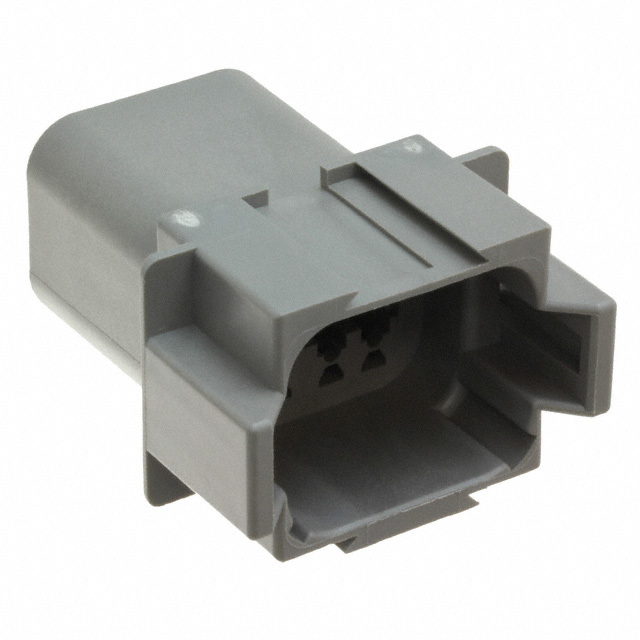
12 positions, 9.12mm pitch, panel mount, -55°C to 125°C; clear fit, but not for new design-in.
Quick Engineering Summary
| Field | Value |
|---|---|
| Manufacturer | TE Connectivity |
| Category | Rectangular Connector Housings |
| Package | Box |
| Core function | REC, 12P, GRY, E, ENH KEY, CAP, |
| Key electrical range | Supply and Demand Status: Shortage; Temperature Range - Operating: -55°C ~ 125°C |
| Reported stock | 1 pcs reported — confirm on RFQ |
Can you still buy DT04-12PA-BL11 with confidence?
Can you put this into a new build with confidence? No. DT04-12PA-BL11 is marked EOL, stock is 1, and supply status is Shortage.
For a running line, the answer is narrower: buy only against immediate demand and treat it as a sustaining item while you line up the next housing decision. EU RoHS is compliant, but that doesn't change the lifecycle problem.
The housing fit is good; the line risk is worse
The weak point comes first: EOL rules out DT04-12PA-BL11 for fresh design work, even though the mechanical fit looks useful. What keeps it relevant is the combination of panel mount, mounting flange, latch holder, and the environmental feature callout of IP68 and IP6K9K, which points to sealed bulkhead-style interconnects rather than loose internal board wiring.
The 12 positions in 2 rows and the 0.359" (9.12mm) pitch place it well away from dense signal packaging. This is a housing for applications where harness handling, service access, and sealing matter more than packing contacts tightly, and the receptacle body with male pin contact type narrows the mating assumptions further because a mismatch here won't show up as marginal performance later; it stops the connector system from mating as intended.
Material matters too. Polyamide (PA66), Nylon 6/6, Glass Filled suits a connector expected to live in harsher mechanical surroundings, but it does not answer retention force, sealing geometry, or contact loading by itself. DT04-12PA-BL11 reads like a real enclosure-interface part rather than a generic rectangular shell, and that makes the EOL status more disruptive than it would be on a commodity internal connector.
12 positions decide the use case more than the color
12 positions set the use case first. Add the 2-row layout and 0.359" (9.12mm) pitch, and DT04-12PA-BL11 lands in low-density power-and-signal harness territory, not compact electronics packaging.
The -55°C to 125°C range is a ceiling, not proof of full system suitability. It says the housing belongs in equipment that sees real temperature swing, but it does not close sealing life, contact heating, or vibration questions. Gray color and the enhanced key matter operationally because they help prevent mating mistakes in multi-connector panels. In the field, that can be the difference between a clean service event and a mis-mated harness that comes back as an intermittent fault.
1 piece on hand is the real buying constraint
1 piece is the decisive figure. With stock at 1 and supply status at Shortage, reserve DT04-12PA-BL11 only for a known service need or an existing production gap, and keep it off any new approved BOM.
Package is Box, but packaging is not the issue here. Availability is.
What the listing still doesn't tell you
Not enough yet.
The missing items are concrete: pinout or cavity map, mechanical drawing, and the mating-part definition behind the enhanced key.
View the Win-Source product page for DT04-12PA-BL11.
Key Takeaways for Engineers & Buyers
- Freeze DT04-12PA-BL11 to existing production only; lifecycle is EOL.
- Match the enclosure cutout to a panel-mount, flange housing before committing tooling.
- Check the mating interface for the enhanced key and 12-position, 2-row layout.