
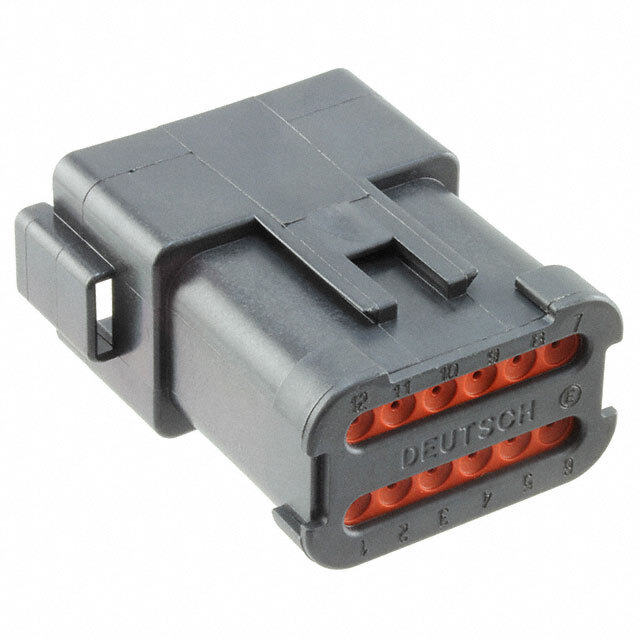
12 positions, panel mount, IP68/IP6K9K, -55°C to 125°C: fit is clear, but supply is tight.
Quick Engineering Summary
| Field | Value |
|---|---|
| Manufacturer | TE Connectivity |
| Category | Rectangular Connector Housings |
| Package | Bulk |
| Core function | CONN RCPT HSG 12POS |
| Key electrical range | Supply and Demand Status: Shortage; Temperature Range - Operating: -55°C ~ 125°C |
| Reported stock | 179 pcs reported — confirm on RFQ |
Still a valid design-in, but don’t buy it casually
And that’s the real call: DT04-12PB-CL03 is fine for new work when the mechanical fit already matches. Lifecycle is Active with no conflict signals, and EU RoHS is clear. The caution is supply: listed status is Shortage against 179 pieces.
The constraint here is mechanical, not electrical
The constraint is mechanical. The numbers define interface and mounting, not rail or load.
DT04-12PB-CL03 is a 12-position, 2-row receptacle housing with male pin contacts, crimp termination, panel mount, and a latch holder. That places it in a sealed bulkhead or enclosure pass-through where housing, retention, and harness build are one decision, not separate ones.
It does not answer contact performance, because this is a housing entry rather than a full contact-system definition. If the design needs a free-hanging inline connector, a board connector, or any termination other than crimp, DT04-12PB-CL03 is the wrong starting point. The mounting flange and latch holder matter more than the color or resin callout, because once the panel cutout is fixed, those features decide whether the connector stays located and serviceable.
-55°C to 125°C is the ceiling that sets the environment
125°C is the upper limit, and -55°C is the lower one.
That operating range sets the environmental envelope for DT04-12PB-CL03 when it sits in an enclosure wall through real outdoor or under-hood temperature swing. It settles the ambient-range question for many harsh-environment builds, but it does not settle current rise, contact heating, or sealing life under load, because those limits are not listed here.
The other decisive environmental ratings are IP68 and IP6K9K. They make the housing credible for washdown and dust-tight panel interfaces when the rest of the connector system matches, but they do not prove mating-cycle performance, contact resistance, or cable-side assembly quality. Get that distinction wrong and the field return may first show up as intermittent ingress or harness-side assembly drift rather than an obvious connector-selection mistake.
Wrong for open-ended sourcing, right for fixed sealed panels
Wrong for open-ended sourcing. Right for a design that already knows it needs a black rectangular receptacle housing, panel mounted, with 12 positions in 2 rows and crimped male-pin contact architecture behind a sealed interface.
That makes DT04-12PB-CL03 a sensible fit where the enclosure wall is part of the retention scheme and where IP68 and IP6K9K are actual use conditions, not box-checking. The listed insulation material, polyamide (PA66), nylon 6/6, glass filled, reinforces the picture of a mechanically serious housing, but the page still stops short of the details needed to finish a release: pinout, housing drawing, and panel-cutout dimensions. Those are the items that close stack-up, keepout, and service-access decisions. Without them, you can judge category fit and environmental intent, but you can’t freeze the mechanical interface around DT04-12PB-CL03.
View the Win-Source product page for DT04-12PB-CL03.
Key Takeaways for Engineers & Buyers
- Lock the panel interface around the receptacle housing and mounting flange before releasing DT04-12PB-CL03.
- Match the harness plan to 12 positions, 2 rows, and crimp termination; this housing decides all three.
- Cover shortage risk now; 179 pieces is a thin buffer for any repeating build.