
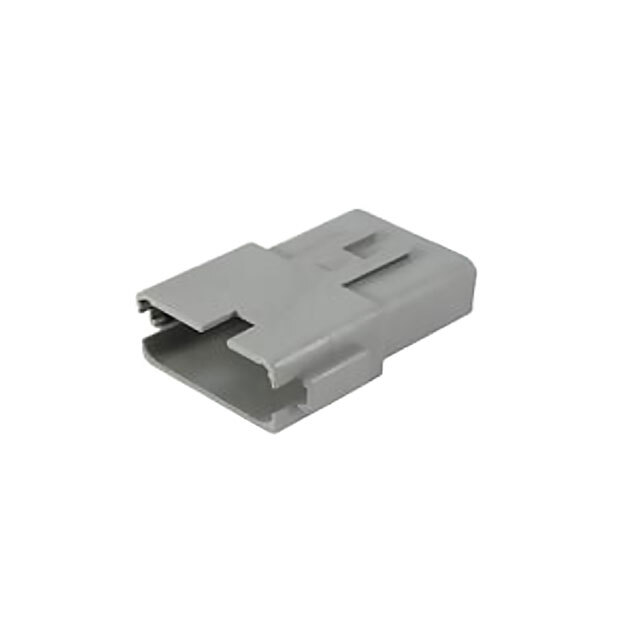
12 positions, panel mount, IP68/IP6K9K, and -55°C to 125°C set where this housing fits.
Quick Engineering Summary
| Field | Value |
|---|---|
| Manufacturer | TE Connectivity |
| Category | Rectangular Connector Housings |
| Package | Bulk |
| Core function | CONN RCPT HSG 12POS |
| Key electrical range | Supply and Demand Status: Shortage; Temperature Range - Operating: -55°C ~ 125°C |
| Reported stock | 2568 pcs reported — confirm on RFQ |
2568 pieces on hand does not cancel the shortage
2568 pieces is enough to matter. It still does not decide the buy.
Shortage does. DT04-12PB-L012 is Active and remains flagged as constrained, so it works for new design-in and existing production only when supply is treated as the first schedule risk.
The hardware itself is clear enough: a 12-position receptacle housing with panel mount, crimp termination, male pin contact format, latch holder, and mounting flange. EU RoHS compliance supports that call. For a running line, pull coverage sooner rather than later. For a fresh program, use DT04-12PB-L012 when the mechanical fit is already locked and the sealing requirement is real.
The sealing and temperature limits decide the application
And that is where the part earns its place. IP68 and IP6K9K point to an exposed panel boundary where water ingress and washdown are part of the environment, but they say nothing about contact resistance, current carrying ability, or mating durability because none of that is listed here.
The -55°C to 125°C operating range closes another decision. It supports equipment that sees cold start and hot enclosure conditions, yet it does not settle ambient headroom by itself because the contact system, wire size, and loaded-circuit heating are absent from this page. Get that wrong and the field return will not be about the plastic housing surviving temperature; it will be about the assembled connector running outside the contact system it was actually built with.
The 12 positions in 2 rows matter just as much. That geometry suits compact panel I/O where harness density matters, and it is a poor fit where service access wants fewer, larger cavities or where the panel cutout is already committed to a different row arrangement.
The weak point is the missing contact system detail
The weak point is real. The useful part comes after.
DT04-12PB-L012 is only the housing, so there is no listed current limit, no voltage rating, no contact size, and no wire range to show what the finished connector can actually carry.
What is here is enough to place it mechanically: receptacle body, panel mount, crimp termination, latch holder, mounting flange, black plastic, and 12 positions. That points to sealed harness entry through a panel, not a board-level interconnect or a free-hanging signal shell with no mounting structure. The male pin contact type narrows the mating scheme, so don't treat this as a generic 12-way shell.
The datasheet gaps are mechanical, not cosmetic
Get the drawing first.
For DT04-12PB-L012, the review stops on absent panel-cutout dimensions, full housing drawing, pin or cavity layout, and mating-part detail. Those are not nice-to-have items on a panel-mount sealed housing; they decide whether the flange lands, whether the latch clears adjacent hardware, and whether the harness team is building the right connector half at all.
View the Win-Source product page for DT04-12PB-L012.
Key Takeaways for Engineers & Buyers
- Reserve DT04-12PB-L012 early if the build depends on 2568 pieces and the line is already in shortage.
- Match DT04-12PB-L012 only to a 12-position, 2-row panel interface with crimped male-pin contacts.
- Use DT04-12PB-L012 where IP68 or IP6K9K sealing and -55°C to 125°C exposure are actual requirements.