
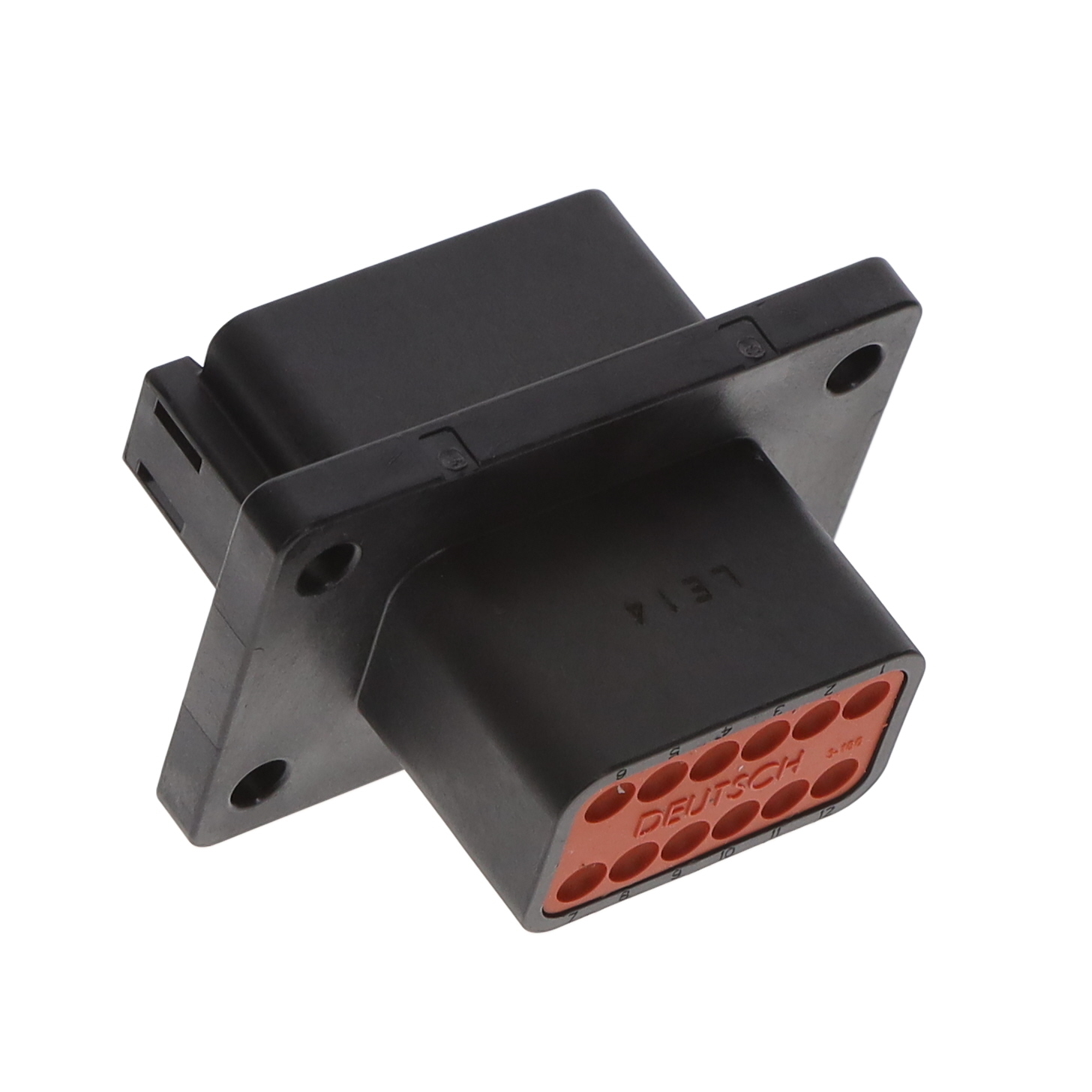
12 positions, free-hanging crimp receptacle, IP68/IP6K9K, -55°C to 125°C operating range
Quick Engineering Summary
| Field | Value |
|---|---|
| Manufacturer | TE Connectivity |
| Category | Rectangular Connector Housings |
| Package | Bulk |
| Core function | CONN RCPT HSG 12POS |
| Key electrical range | Supply and Demand Status: Shortage; Temperature Range - Operating: -55°C ~ 125°C |
| Reported stock | 343 pcs reported — confirm on RFQ |
125°C is the number that keeps this in play
125°C is the ceiling that keeps this housing viable for under-hood or outdoor harness work, while the -55°C low end keeps cold-start exposure in scope. It settles the housing ambient range, not contact heating, current loading, or sealing performance after assembly.
The real constraint is availability, not lifecycle
Availability is the constraint the numbers create: stock is 343 and the demand signal is Shortage. Active status still supports new work, but an Active connector that can't stay on the line will stop a build.
Bulk packaging fits harness production better than service kitting, so the build quantity should be lined up before release rather than left to small-lot assumptions. EU RoHS is straightforward and needs no extra emphasis here.
View the Win-Source product page for DT04-12PC-C015.
The fit is sealed cable harnesses, not board-level interconnect
The weak point comes first: this listing covers only the housing, so DT04-12PC-C015 does not establish contact performance, mating force, or loaded-current behavior on its own. The stronger case is mechanical intent, and it is unusually clear even from a short listing: receptacle housing, male pin contact style, crimp termination, latch holder fastening, free-hanging in-line mount, and 12 positions in 2 rows.
That set of attributes places it in cable-to-cable or cable-to-device harnesses where sealing and retention matter more than density. IP68 and IP6K9K do the heavy lifting here, because they support use in washdown, spray, or dirty environments where a weaker housing choice would be exposed quickly, and the reduced wire seals show that sealing is built into the product concept. Green helps with harness identification. It is not a design driver.
The boundaries are just as clear. Free-hanging in-line mounting rules out any assumption of board attachment, and a crimp housing is the wrong starting point if the assembly flow expects soldered terminations or a fixed panel interface. The glass-filled polyamide body supports a rugged harness role, but the missing mating-half details and contact data still leave open the full interconnect decision. Pinout or cavity layout, the housing drawing, and the compatible contact and wire-seal detail are the concrete items that close a harness release.
343 pieces won't carry a broad rollout
343 pieces is enough for samples, pilot builds, or a narrow sustaining need. It won't carry a broad rollout when the same record also says Shortage.
That makes the next step practical, not theoretical: close the housing drawing, pinout or cavity layout, and compatible contact and wire-seal detail before release so the crimp system, mating orientation, and cable dress fit the product.
View the Win-Source product page for DT04-12PC-C015.
Key Takeaways for Engineers & Buyers
- Reserve DT04-12PC-C015 early if 343 pieces does not cover your build window.
- Match the harness to 12 positions, 2 rows, and free-hanging crimp termination before release.
- Pull the full datasheet for DT04-12PC-C015 pin layout and wire-seal details before tooling.