
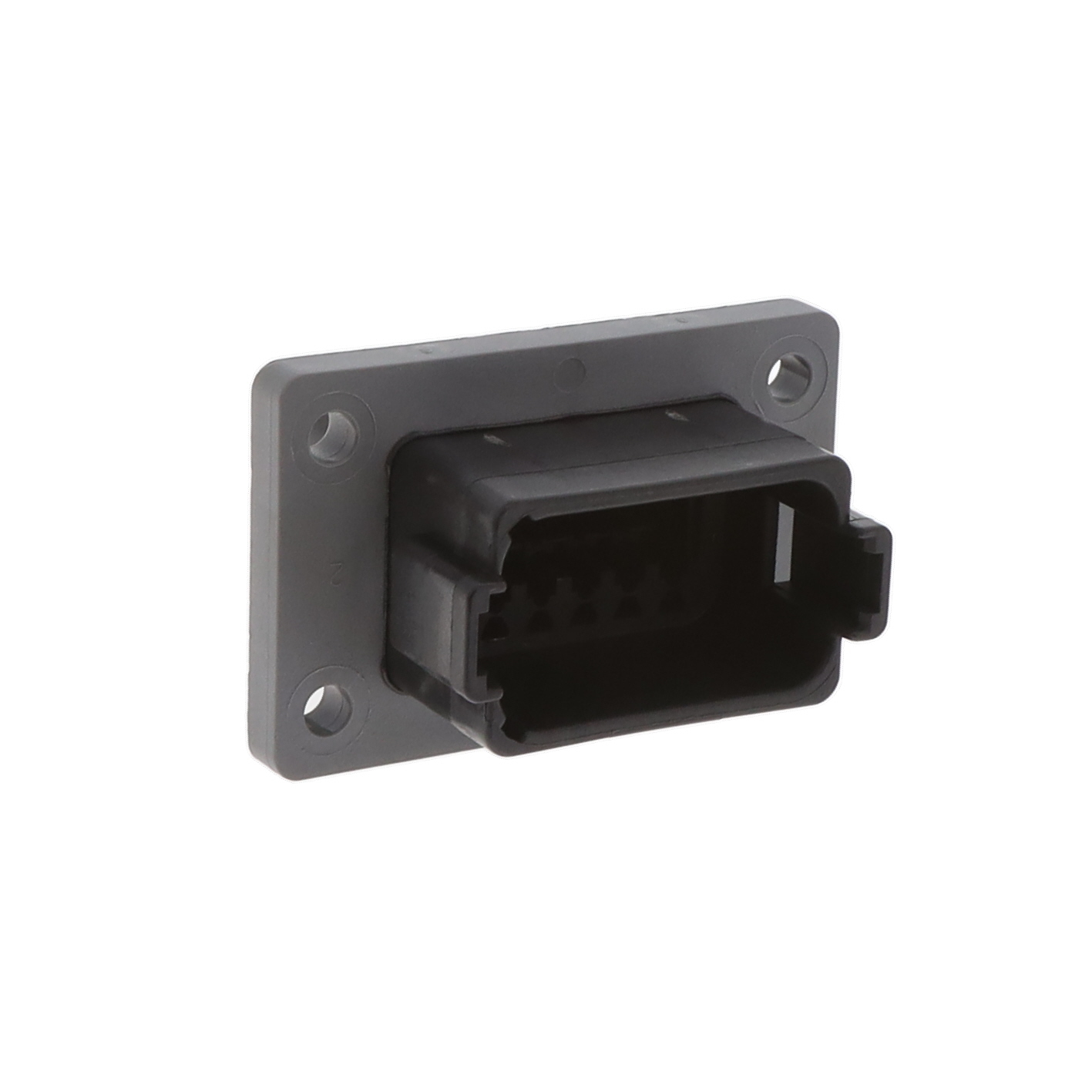
12 positions, 0.359" pitch, free-hanging sealed receptacle, -55°C to 125°C operating range
Quick Engineering Summary
| Field | Value |
|---|---|
| Manufacturer | TE Connectivity |
| Category | Rectangular Connector Housings |
| Package | Box |
| Core function | REC, 12P, BRN, N, ENH KEY, CAP, |
| Key electrical range | Supply and Demand Status: Shortage; Temperature Range - Operating: -55°C ~ 125°C |
| Reported stock | 395 pcs reported — confirm on RFQ |
The real constraint is mechanical fit, not lifecycle
The constraint here is geometry. Active status and EU RoHS compliance keep lifecycle and compliance straightforward, but the real decision sits in the physical format: 12 positions in 2 rows, 0.359" (9.12mm) pitch, 0.175" (4.45mm) row spacing, and a free-hanging sealed receptacle body.
Those numbers settle connector-family fit, not the whole interconnect review. They place this housing in a cable-side assembly that needs sealing and keyed mating discipline, while leaving contact current, insertion force, and mate-cycle life unanswered. Get the footprint wrong and the failure is immediate: the harness will not mate, or it will mate to the wrong keyed shell.
Wrong for board I/O, right for sealed cable-side harnesses
Wrong for board mounting. The listing calls out Free Hanging (In-Line), crimp termination, and a receptacle housing with male pin contacts, so this belongs in harness work rather than on a PCB edge or in a board-level mezzanine scheme.
Where it does fit is a sealed cable interconnect that needs 12 circuits in a 2-row body and a latch holder retention scheme. The -55°C to 125°C range is broad, but it is a ceiling for operation, not proof of sealing performance under your fluid exposure, vibration, or mating-cycle conditions.
Can you actually keep it on a running line?
Can you get it in time? DT04-12PD-BE02 is Active, but stock is 395 and supply status is Shortage. If this housing is already qualified into a build, secure the needed quantity before the next release window.
The missing details are the ones that finish the review
The weak point is documentation depth. The good news is lifecycle is not the problem. DT04-12PD-BE02 is identifiable enough to place on a BOM, but the listing stops short of the details that close a connector release, and that matters more here than the Active status does.
Start with the mating and cavity definition. You have 12 positions, 2 rows, pitch, row spacing, receptacle format, male pin contact style, and enhanced keying in the description, but no cavity numbering, no pinout view, and no housing drawing. For a keyed sealed connector, that is exactly where assembly errors and service mistakes start, especially when the harness team and the test-fixture team are working from different assumptions about orientation and cavity assignment.
The other gap is performance detail around the sealing and retention system. “Sealed” and “Latch Holder” describe intent, not limits. There is no contact size callout, no wire range, no mating connector reference, and no retention or environmental test detail in this listing. Those missing items decide whether DT04-12PD-BE02 is simply the right shell family or the right exact housing for the harness you are about to release.
View the Win-Source product page for DT04-12PD-BE02.
Key Takeaways for Engineers & Buyers
- Reserve DT04-12PD-BE02 early if the build needs 12 positions and the shortage flag matters to line timing.
- Match the harness to 0.359" (9.12mm) pitch and 0.175" (4.45mm) row spacing before releasing tooling.
- Keep DT04-12PD-BE02 in sealed free-hanging cable assemblies, not board-mounted interconnects.