
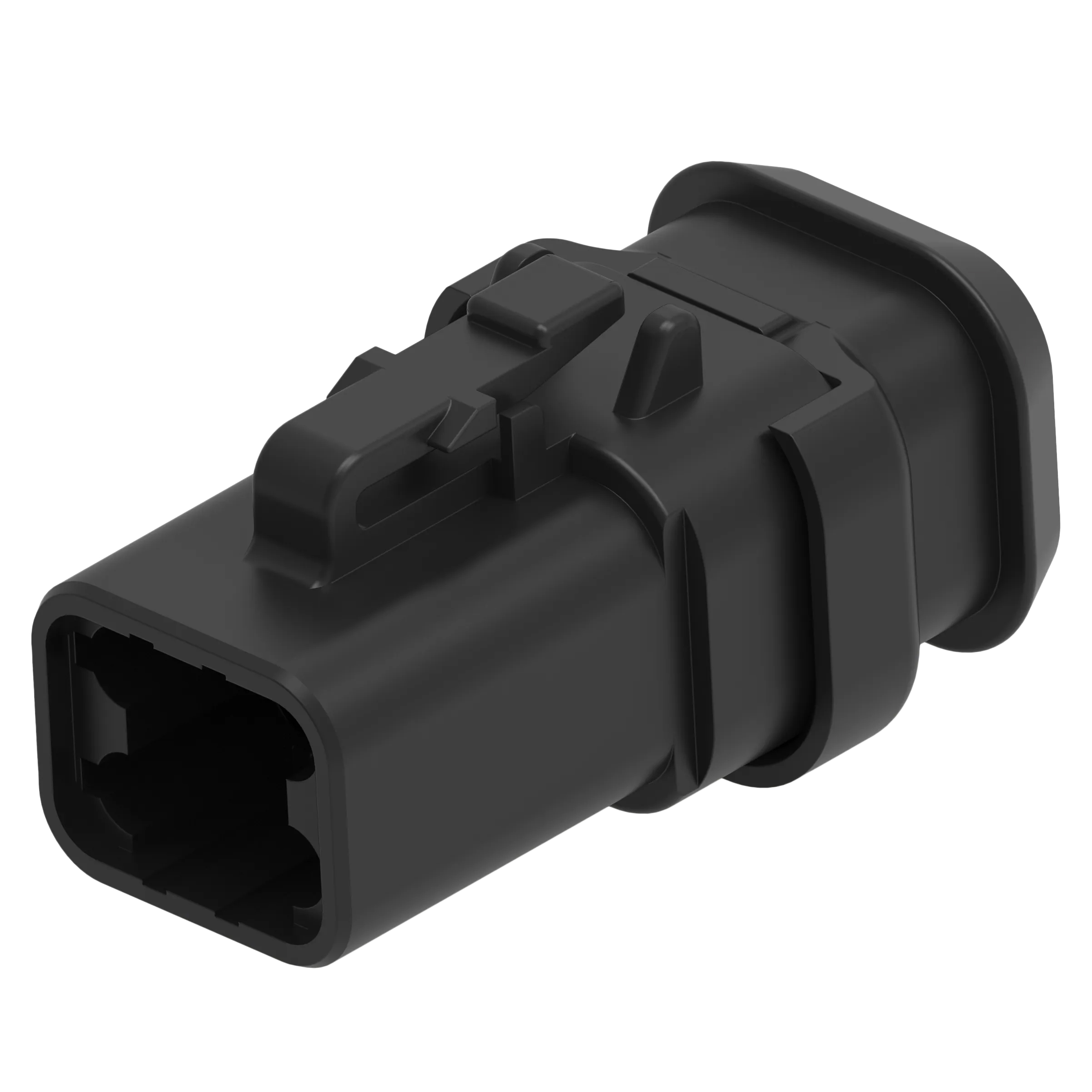
2-position free-hanging receptacle housing, IP68/IP6K9K, -55°C to 125°C operating range
Quick Engineering Summary
| Field | Value |
|---|---|
| Manufacturer | TE Connectivity |
| Category | Rectangular Connector Housings |
| Package | Bulk |
| Core function | CONN RCPT HSG 2POS |
| Key electrical range | Supply and Demand Status: Shortage; Temperature Range - Operating: -55°C ~ 125°C |
| Reported stock | 937 pcs reported — confirm on RFQ |
937 on hand doesn’t cancel the shortage signal
937 pieces is enough to matter. It still doesn’t erase the harder message: DT04-2P-E003 is marked Shortage while lifecycle remains Active.
That combination supports new design-in only when supply is treated as a managed constraint rather than a background assumption. Active status and EU RoHS keep DT04-2P-E003 viable for new work and sustaining builds, but the purchasing move is to reserve stock against real build demand, especially when this housing is the exact keyed shell a harness already uses, because a shortage on a connector housing stops assemblies just as effectively as a missing contact.
This is a sealed cable housing, not a board connector
Keep it in harnesses.
DT04-2P-E003 is a free hanging, in-line rectangular connector housing with 2 positions, 1 row, crimp termination, and a latch holder. Those facts place it in cable-to-cable or cable-end interconnect work, where the housing, latch, and seal matter more than density. It does not fit applications that expect board mounting, solder termination, or a multi-row footprint.
The receptacle body with male pin contact type is the fit decision that can trip a build if someone reads receptacle and assumes the wrong gender. Add the cap plus the IP68 and IP6K9K ratings, and the intended use narrows further: DT04-2P-E003 belongs where washdown, dust ingress, or exposed outdoor routing are real conditions, not box-checking.
The real limits here are environment and mating format
The constraint is mechanical and environmental. That is what the numbers set.
The listed -55°C to 125°C operating range is a ceiling on where the housing can operate, not a promise about every adjacent component in the harness. It does settle one selection question: this housing stays in play across cold-start and under-hood style temperature swings that would rule out lighter-duty interconnect hardware.
IP68 and IP6K9K are also performance ceilings, and only for the assembled condition the full connector system requires. They show that DT04-2P-E003 is intended for sealed service, but they do not close contact, wire, or assembly choices because the listing does not include the mating half, contact system details, or a drawing that shows how the seal stack is implemented. Get that stack wrong and the field return may first show up as intermittent harness failure after water exposure or high-pressure wash, not as an obvious connector selection mistake.
The 2-position, 1-row format is the other hard boundary. It suits simple power or signal pairs and keeps the package compact, but it rules out any design that may need more pin count later without a housing change. Bulk packaging works for line-side kitting, and it also tells you DT04-2P-E003 is being bought as an assembly component rather than a convenience-packed service item.
What’s still missing before release?
What is the release blocker first? Pinout or cavity drawing, mating connector detail, and contact or wire-size compatibility.
DT04-2P-E003 is only a housing entry here, so those gaps matter more than another line of copy.
View the Win-Source product page for DT04-2P-E003.
Key Takeaways for Engineers & Buyers
- Lock the BOM to a 2-position, 1-row free-hanging receptacle housing before releasing harness drawings.
- Match the sealing requirement to IP68 and IP6K9K; don't relax enclosure assumptions around DT04-2P-E003.
- Cover the Shortage flag against the 937 stock position before committing DT04-2P-E003 to a running line.