
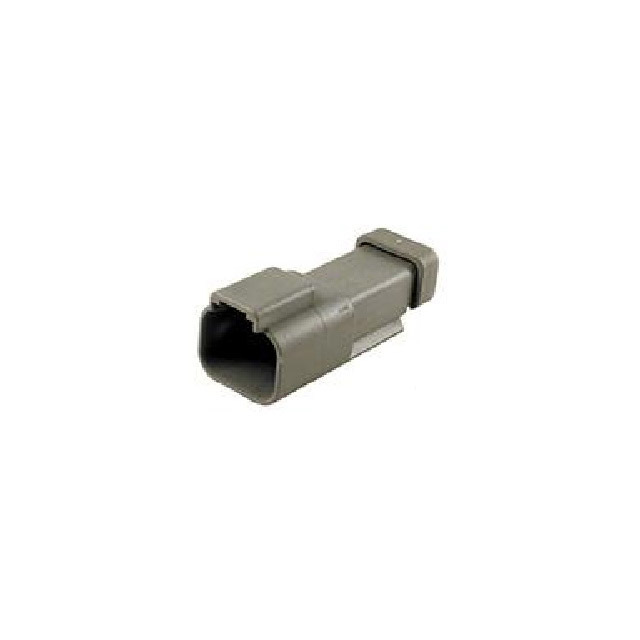
3 positions, free-hanging receptacle, IP68/IP6K9K, -55°C to 125°C operating range
Quick Engineering Summary
| Field | Value |
|---|---|
| Manufacturer | TE Connectivity |
| Category | Rectangular Connector Housings |
| Package | Bulk |
| Core function | CONN RCPT HSG 3POS |
| Key electrical range | Supply and Demand Status: Shortage; Temperature Range - Operating: -55°C ~ 125°C |
| Reported stock | 952 pcs reported — confirm on RFQ |
Shortage is the real constraint, not lifecycle
The numbers point to a supply constraint, not a lifecycle problem. DT04-3P-CE01 is listed as Active with low lifecycle risk, and those signals line up cleanly, so status does not block a new design. The issue is the Shortage flag. With 952 pieces shown in stock and Bulk packaging, it can cover current demand, but it is not a line item to leave for late-stage buying if the harness build depends on it.
The verdict is straightforward: use DT04-3P-CE01 when a sealed 3-position housing is the intended mechanical fit, and lock in build coverage early. EU RoHS compliance clears a routine compliance check. It doesn't change the supply picture.
Not for board I/O; built for sealed inline harnesses
This is the wrong choice for board-mounted I/O, a cable-to-board transition, or a field-terminated screw interface. It is a free-hanging, in-line receptacle housing with crimp termination and a latch holder, so it belongs in a wire harness rather than on a PCB edge or panel feedthrough.
Its fit is narrower than that, and clearer. The 3 positions and 2-row layout place it in compact, low-circuit-count interconnects, while Cap (Cover), IP68, IP6K9K, and Reduced Wire Seals point to sealed cable assemblies exposed to water, washdown, or dirt ingress. The -55°C to 125°C operating range sets the environmental ceiling for the housing, but it does not answer contact current, voltage, or mating-cycle decisions because those limits are not shown here.
125°C is the decisive limit here
125°C is the number that decides the first pass. For DT04-3P-CE01, the listed -55°C to 125°C operating range supports cold-start and hot-zone harness use, but 125°C is still the ceiling for operation, not a reason to ignore the contact system, sealing stack, or cable choice.
The missing contact-system data still decides the risk
The weak point comes first: this listing stops at the housing. The useful part is that it still places DT04-3P-CE01 in the right design class — a sealed, free-hanging, 3-position harness interconnect — without overstating what is known.
The missing details are the ones that decide whether it actually works. There is no contact size, wire gauge range, current rating, or voltage rating, so load capability and insulation margin remain open. There is no mating connector detail, no pinout or cavity drawing, and no housing dimensions, which leaves packaging clearance and harness routing unresolved. For a connector with IP68 and IP6K9K called out, the sealing claim matters, but the companion contact and wire-range details still determine whether the finished assembly meets the environmental target or stalls in build because the selected terminals and cable do not line up with the housing.
So DT04-3P-CE01 is a solid new-design candidate only when those contact-system details are already controlled elsewhere in the program.
View the Win-Source product page for DT04-3P-CE01.
Key Takeaways for Engineers & Buyers
- Reserve DT04-3P-CE01 early if the build depends on the listed 952 stock during a Shortage condition.
- Match DT04-3P-CE01 only to crimp-terminated male pin contacts in a 3-position layout.
- Use DT04-3P-CE01 where IP68 or IP6K9K sealing and -55°C to 125°C operation are actual requirements.