
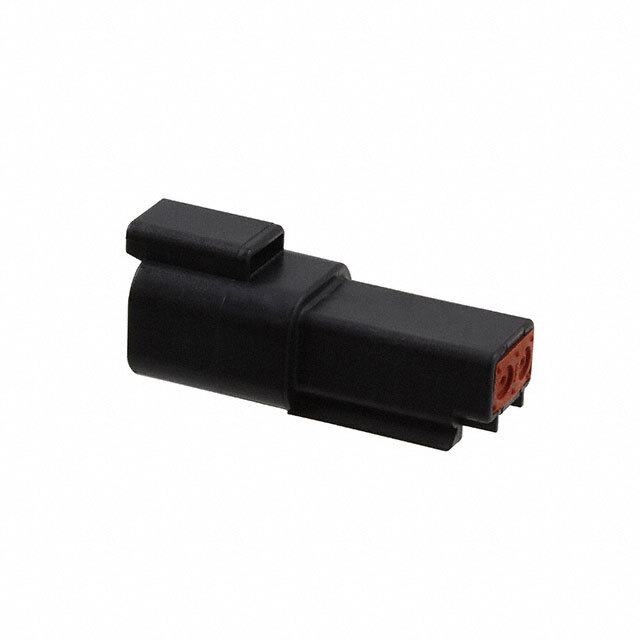
3-position free-hanging receptacle housing with IP68/IP6K9K sealing and -55°C to 125°C operation
Quick Engineering Summary
| Field | Value |
|---|---|
| Manufacturer | TE Connectivity |
| Category | Rectangular Connector Housings |
| Package | Bulk |
| Core function | CONN RCPT HSG 3POS |
| Key electrical range | Supply and Demand Status: Shortage; Temperature Range - Operating: -55°C ~ 125°C |
| Reported stock | 1727 pcs reported — confirm on RFQ |
Still a valid design-in, if the harness needs sealing
And that is the main point: DT04-3P-CE02 is a current part, not a sustaining-only holdover. The design question is fit, not lifecycle rescue. Active status appears consistently with no conflict, and the EU RoHS line is clean enough that compliance does not become the story.
What matters here is not the 3-position count alone but the mix of receptacle housing, crimp termination, free-hanging mounting, and the listed IP68 and IP6K9K features. That combination points to cable-to-cable or inline harness work where ingress protection matters. If the design needs a board connector, fixed panel hardware, or a terminated assembly out of the bag, this is the wrong starting point.
The temperature range is a ceiling, not a comfort zone
Use the limits carefully.
The listed -55°C to 125°C operating range sets the environmental ceiling and closes one decision, but it leaves several others open. It places DT04-3P-CE02 in harsh-environment harnesses that see cold start and hot soak conditions, yet it says nothing about contact heating, current loading, or seal life under a specific wire set because this is only a housing entry. The IP68 and IP6K9K marks narrow enclosure strategy in a useful way: they support a sealed inline connector choice, but they do not replace the missing mating-part details that determine whether the finished connection keeps that seal in the build.
The material callout matters too. Polyamide, nylon, glass filled is a useful mechanical clue for a connector shell, but without a drawing or retention data it does not settle latch durability, insertion force, or packaging abuse.
The weak point is not the part; it's the missing mating detail
The listing is thin where harness engineers usually need it most, but it still says enough to place DT04-3P-CE02 in the right class of design. A 3-position, 2-row receptacle housing with male pin contact type and crimp termination belongs in low-circuit-count cable assemblies, especially where a latch holder and reduced wire seals are part of the packaging problem rather than an afterthought.
It does not belong in board-level interconnect, and it does not save time for teams that need a preloaded connector. This is a housing in bulk, nothing more. On the bench, the assembly flow still has to account for contacts, wire prep, sealing parts, and the mating half, and none of those choices can be treated as implied just because the shell format is right.
Can you actually keep a line running on DT04-3P-CE02?
Can we get enough of it?
1727 is the first number to watch, because the commercial risk here is not lifecycle drift but the explicit shortage flag attached to DT04-3P-CE02. Active status keeps it in play for new design-in and existing production, but shortage changes how you manage it. For a new program, that does not automatically rule it out. For a running line, it shifts the conversation from technical fit to line protection.
Bulk packaging helps only if the process already handles loose housings; it does nothing to ease a supply squeeze. Place coverage earlier than usual if this connector appears across multiple harness variants, because one missing housing can stop builds that otherwise look fully covered.
There is also a quieter risk in the way this part is defined. DT04-3P-CE02 is only the housing, so a shortage here can stall output even when adjacent BOM lines remain healthy, since the harness cannot ship with an almost-right shell and the missing piece is the mechanical gate that everything else depends on.
What the listing still doesn't answer
3 gaps stand out: mating-part detail, pinout or cavity identification, and a mechanical drawing. For DT04-3P-CE02, those close harness packaging, latch access, and assembly documentation.
View the Win-Source product page for DT04-3P-CE02.
Key Takeaways for Engineers & Buyers
- Lock the build to a 3-position, 2-row free-hanging receptacle housing before releasing harness drawings.
- Plan buys against the listed shortage and 1727 stock quantity if DT04-3P-CE02 is on a running line.
- Pull the mating and cavity details before tooling, because this housing listing stops at shell-level features.