
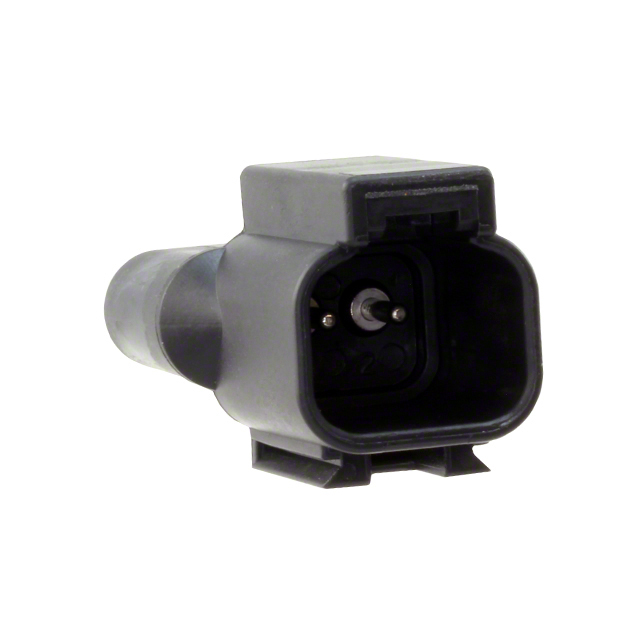
3-position free-hanging receptacle housing with IP68/IP6K9K and -55°C to 125°C operation
Quick Engineering Summary
| Field | Value |
|---|---|
| Manufacturer | TE Connectivity |
| Category | Rectangular Connector Housings |
| Package | Bulk |
| Core function | CONN RCPT HSG 3POS |
| Key electrical range | Supply and Demand Status: Shortage; Temperature Range - Operating: -55°C ~ 125°C |
| Reported stock | 16000 pcs reported — confirm on RFQ |
Still a valid new design-in, with one supply catch
And that catch matters more than the housing itself: DT04-3P-CE09 is Active with low lifecycle risk, so there is no lifecycle reason to keep it out of a new harness or a sustaining build.
The real caution is availability, not product status. Stock is listed at 16000, yet the supply signal is Shortage, so this is the kind of connector housing you can design around mechanically and electrically, then still watch a line stop if replenishment is treated as routine. EU RoHS is straightforward here and doesn't complicate the decision.
The limits here are sealing and temperature, not current
The constraint is clear: the visible numbers set environmental ceilings, not contact loading.
IP68 and IP6K9K define where this housing can survive. They settle the question of wet, dirty, washdown-exposed cable runs, but not terminal performance, because the contacts are not the product here. The -55°C to 125°C operating range is another hard limit. It supports cold-start and underhood-adjacent exposure, but it remains a ceiling, not a promise about every seal, wire, or crimp system paired with it.
DT04-3P-CE09 fits sealed inline harness work, not board I/O
The weak point comes first: this listing covers only the housing, so it does not give the mating half, cavity layout dimensions, or the contact-system details that usually decide whether a harness drawing can be released without rework.
Once that boundary is accepted, the fit is fairly direct. DT04-3P-CE09 is a receptacle housing with 3 positions in 2 rows, free hanging and in-line, with crimp termination and a latch holder. That combination points to cable-to-cable or cable-to-device harness work where sealing and retention matter more than density. It does not belong in a board-mounted interconnect decision, and it answers nothing about solder process, PCB keepout, or panel cutout because those are outside this product category.
The material callout matters as well. Polyamide (PA66), Nylon 6/6, Glass Filled reads like a mechanical shell meant for field exposure and handling, not a soft indoor housing where sealing features and latch durability are secondary. Black color and the cap or cover feature are minor by comparison; the real design consequence is that DT04-3P-CE09 belongs in sealed harness architecture, and if a program does not need IP68 or IP6K9K, it may be taking on complexity for protection it won't use.
What is still missing before release?
Can a buyer release this from the page alone? No.
What is still missing is concrete: cavity layout, mating connector identification, and a dimensional drawing. Without those, DT04-3P-CE09 is only a likely fit.
View the Win-Source product page for DT04-3P-CE09.
Key Takeaways for Engineers & Buyers
- Lock the BOM to DT04-3P-CE09 only if a 3-position, 2-row free-hanging receptacle housing is the exact fit.
- Plan buys early; stock shows 16000 while supply status is Shortage.
- Pull the full datasheet for mating details and cavity layout before releasing the harness drawing.