
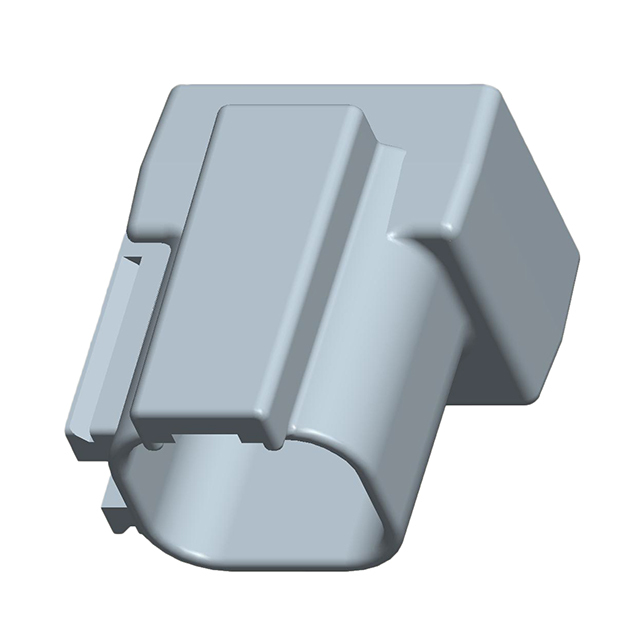
600 V, 4 positions, free-hanging crimp housing, -55°C to 125°C, with IP68 and IP6K9K sealing
Quick Engineering Summary
| Field | Value |
|---|---|
| Manufacturer | TE Connectivity |
| Category | Rectangular Connector Housings |
| Package | Box |
| Core function | REC, 4P, GRY, 600V, 1. |
| Key electrical range | Supply and Demand Status: Shortage; Temperature Range - Operating: -55°C ~ 125°C |
| Reported stock | 217 pcs reported — confirm on RFQ |
Can you start a new build on this housing?
Can we release it into a new build? Yes — with a supply caveat. DT04-4P-RT03 is listed Active with no lifecycle conflict, so it is a valid new design-in choice, not a sustaining-only buy. The issue is availability: stock is 217 and the line is flagged Shortage, so place it where the build plan can absorb allocation pressure.
The rest of the listing points to a stable production housing: free-hanging, crimp termination, latch holder, and EU RoHS compliance. That reads like ongoing program hardware, not one-off bench use.
4 positions decide the job faster than the voltage does
4 positions. In 2 rows, that points to a small sealed wire-to-wire or wire-to-device housing, not a bulk power interface. The 600 V figure is a listed ceiling for insulation, but it does not turn DT04-4P-RT03 into a high-power connector.
600 V is insulation headroom, not a working target
600 V is the decisive number here, and it needs the right interpretation. It is a listed limit in the product description, useful as insulation headroom, but it does not answer every operating question. It helps place the housing in a low-voltage sealed interconnect family with generous insulation margin, while leaving contact heating, mating performance, and transient behavior unresolved because those numbers are not shown.
The same applies to the 4A figure in the description. That is a ceiling, not an operating point. It says the connector family is not confined to signal-only work, yet the real current decision still depends on the contact system details. Get that wrong and the failure mode is familiar: temperature rise at the crimp and contact interface long before the housing material becomes the problem.
Temperature range matters more than many teams admit on sealed connectors. -55°C to 125°C puts DT04-4P-RT03 in outdoor, underbody, and equipment-cable environments where cold-start brittleness and hot-soak survival both matter. It does not show derating across that span, and that missing curve is what separates a connector that merely survives from one that carries load comfortably at the hot end.
Wrong for board entry, right for sealed cable harnesses
Not for board mounting. DT04-4P-RT03 is a free-hanging in-line housing with crimp termination and a latch holder, so it belongs in cable harnesses and pigtails, not on a PCB edge or panel feedthrough.
Its fit is otherwise clear: a 4-position, 2-row sealed interconnect using male-pin contacts, with IP68 and IP6K9K called out and a glass-filled polyamide body for mechanical durability. The 0.175" (4.45mm) pitch and 0.359" (9.12mm) row spacing define the envelope the harness layout and mating space have to respect. If the package needs a flatter single-row connector, or service access cannot tolerate a latch-holder retention feature, the geometry is wrong before electrical limits even enter the discussion.
The missing details are the ones that finish the connector decision
And that is where the listing stops short. There is no pinout or cavity drawing, no housing dimensions beyond pitch and row spacing, and no mating-part detail that would close stack-up, keep-out, or service-access questions. For a connector housing, those are decision items, because they determine whether the harness fits the enclosure and whether assembly can reach the latch without turning service into a rework event.
The electrical gaps matter just as much. The description gives 600 V and 4A, but it does not show contact resistance, insulation resistance, dielectric-withstand detail, or temperature-rise information tied to current, so margin under load remains undefined once the connector is sealed and routed through a hot harness bundle.
Sealing is also only partly described. IP68 and IP6K9K are named, but the conditions behind those ratings are not shown here, leaving open the assembly dependencies — seals, contacts, wire range, and mating state — that usually decide whether a lab pass becomes a production pass. For DT04-4P-RT03, those missing details are what stand between a sensible shortlist and a released harness.
View the Win-Source product page for DT04-4P-RT03.
Key Takeaways for Engineers & Buyers
- Lock the BOM to a 4-position, 2-row housing on 0.175" (4.45mm) pitch and 0.359" (9.12mm) row spacing.
- Reserve supply early; DT04-4P-RT03 shows 217 in stock and a Shortage status.
- Use DT04-4P-RT03 only where free-hanging, crimp-terminated, sealed interconnects are intended.