
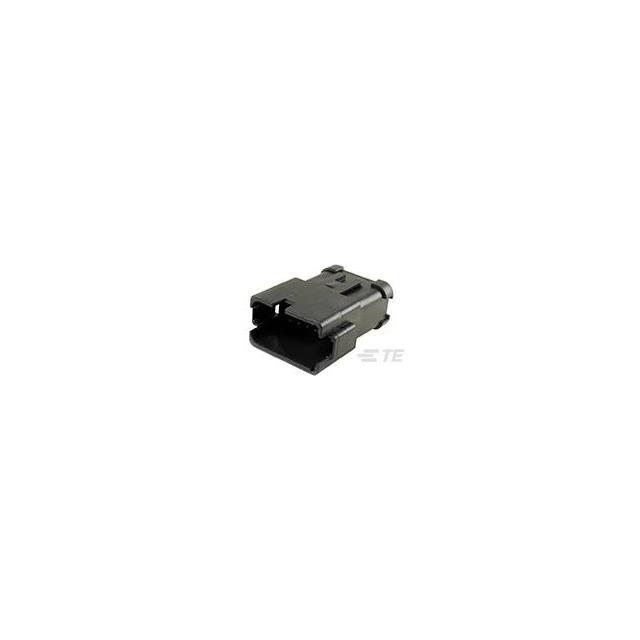
8 positions, 0.359" pitch, IP68/IP6K9K, -55°C to 125°C, free-hanging plug with crimp female sockets
Quick Engineering Summary
| Field | Value |
|---|---|
| Manufacturer | TE Connectivity |
| Category | Rectangular Connector Housings |
| Package | Box |
| Core function | PLG, 8P, GRY, E, XCAP, A |
| Key electrical range | Supply and Demand Status: Shortage; Temperature Range - Operating: -55°C ~ 125°C |
| Reported stock | 1 pcs reported — confirm on RFQ |
Can you put it on a new BOM now?
Can we actually get it in time? Yes, but only if supply is handled first. DT06-08SA-CE04 is marked Active with no lifecycle conflict, so status alone does not block a new design.
Availability does. Stock is 1, and the supply signal shows shortage. That matters more than the housing details. For an existing production line, buy ahead and protect the build. For a new release, don't let DT06-08SA-CE04 become the part that holds first articles because someone assumed an active connector would also be easy to get. EU RoHS is clean here.
Not for board I/O; built for sealed cable harnesses
This is the wrong part for board mounting, direct solder termination, or a fixed panel interface. It is a free-hanging in-line plug housing with crimp termination, female sockets, and latch lock retention, so it belongs in a cable-to-cable or cable-to-mating-connector harness, not on a PCB edge or inside a compact mezzanine stack.
Where it fits is clear. You get 8 positions across 2 rows, with 0.359" (9.12mm) pitch and 0.175" (4.45mm) row spacing, so this is not a miniature signal shell you hide anywhere. The cap and the IP68 and IP6K9K features point to exposed harness runs where sealing matters after mating and during service. Gray PA66 glass-filled nylon 6/6 speaks to mechanical duty and environment, not contact performance.
-55°C to 125°C is the figure that earns its place
-55°C to 125°C is the operating range, and it's the number that settles the first screening decision. It puts DT06-08SA-CE04 in harnesses that see real outdoor, underbody, or equipment-edge temperature swing.
That figure is a ceiling for operating exposure, not a shortcut for the rest of the electrical picture. It does not answer current per contact, voltage withstand, or how much thermal rise the terminated system can tolerate once the contacts are loaded. Those questions stay open.
The other useful numbers here are geometric and environmental. Eight positions set circuit count without doubling shells or leaving cavities unused. The 0.359" (9.12mm) pitch and 0.175" (4.45mm) row spacing define the harness breakout and mating envelope, and they rule this housing out where connector density comes first. IP68 and IP6K9K are not decorative ratings; they determine whether DT06-08SA-CE04 belongs in washdown or splash-heavy routing at all, while still leaving mating-condition details to the full datasheet.
What's missing is concrete. There is no contact size detail, no wire gauge range, no current rating, and no voltage rating in this listing, so conductor selection and circuit loading cannot be closed from this page. Pinout is absent too, along with a drawing, and those are the pieces that settle packaging and service access before the harness drawing is frozen.
The weak point is supply, not the housing
Yes, the weak point is supply. Stock is 1, and that matters more than the fact that the part itself lines up well with sealed in-line harness work.
The package is Box, so this is not a reel-managed production item where feeder assumptions drive the buy. Reserve DT06-08SA-CE04 against the build, then release the harness only after the mating connector and crimp process are locked. With an active part under shortage, schedule risk comes from waiting, not from lifecycle ambiguity.
View the Win-Source product page for DT06-08SA-CE04.
Key Takeaways for Engineers & Buyers
- Lock supply for DT06-08SA-CE04 before release; stock is 1 and status shows shortage.
- Match the harness to 8 positions on 2 rows with 0.359" (9.12mm) pitch and 0.175" (4.45mm) row spacing.
- Use DT06-08SA-CE04 where IP68 or IP6K9K sealing and -55°C to 125°C exposure are actual requirements.