
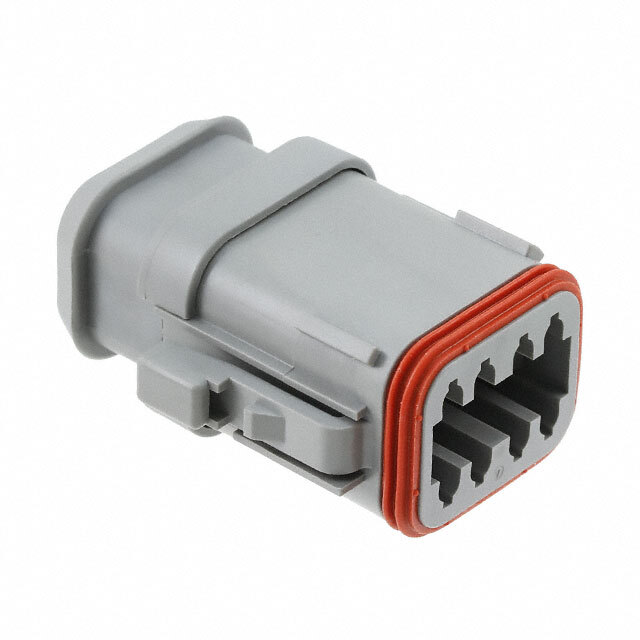
12 positions, free-hanging plug, crimp female sockets, IP68/IP6K9K, -55°C to 125°C
Quick Engineering Summary
| Field | Value |
|---|---|
| Manufacturer | TE Connectivity |
| Category | Rectangular Connector Housings |
| Package | Bulk |
| Core function | CONN PLUG HSG 12POS |
| Key electrical range | Supply and Demand Status: Shortage; Temperature Range - Operating: -55°C ~ 125°C |
| Reported stock | 30 pcs reported — confirm on RFQ |
Then the real call is availability, not lifecycle
And that leaves DT06-12SA-C015 as a valid new design-in part, not a sustaining-only buy. Lifecycle is Active with no conflict, and EU RoHS is clear.
The pressure point is supply status: Shortage, with stock shown at 30 and package listed as Bulk. That does not rule the part out, but it does change the release decision. If this housing is already locked into a harness build, secure line coverage first. If the program is still early, don't assume DT06-12SA-C015 can be spread across multiple builds without a supply plan.
What decides the fit first?
Is this going into a sealed cable harness, or are you trying to make it do a board connector's job? DT06-12SA-C015 is a plug housing in a free hanging in-line format, with crimp termination, female socket contacts, latch lock retention, and 12 positions across 2 rows. That puts it squarely in harnessed interconnects, where serviceability and environmental sealing matter more than board density.
IP68 and IP6K9K matter only in the right assembly context. They point to exposed or washdown-prone cable runs, not a dry enclosure where sealing adds little and bulk works against you. It's a harness part.
The temperature and sealing claims are useful, but incomplete
The weak point comes first: this listing stops at the housing level, so several details that actually close the connector decision are still missing. There is no cavity drawing, no pinout or position map, no mating connector callout, and no wire-size or seal-range detail. For a 12-position sealed plug, those are the items that decide whether the harness can be built, keyed, and serviced without rework.
What is here still defines the envelope. The operating range runs from -55°C to 125°C, and 125°C is the ceiling, not a casual target. That keeps DT06-12SA-C015 in play for cold-start and under-hood-adjacent harnesses where ordinary indoor connector housings drop out fast. The same goes for IP68 and IP6K9K: the housing is meant for wet and dirty environments, but those ratings alone do not finish the review because sealing performance depends on the full connector system and wire-seal match, and that information is not included here.
One more implication follows from the contact system. Female socket plus crimp termination shifts process risk to terminal selection and crimp execution rather than soldering or board coplanarity. If the program needs a fixed PCB interface, DT06-12SA-C015 is the wrong starting point.
Use it where the harness needs a sealed 12-way plug
Wrong for board-mounted I/O. Wrong for applications that need the connector body to define the full electrical interface on its own.
Right for in-line cable assemblies that need 12 positions, latch retention, and environmental sealing in a plastic housing. The reduced wire seals feature is a clue to where DT06-12SA-C015 earns its keep: packaged harnesses where cable exit management matters and the connector has to stay sealed without turning into a bulky splice point. Gray color may help service identification, but it is not a design driver. The real fit comes from free-hanging construction, 2-row density, and the sealed plug format.
View the Win-Source product page for DT06-12SA-C015.
Key Takeaways for Engineers & Buyers
- Reserve DT06-12SA-C015 for sealed in-line harnesses, not board interfaces.
- Match the harness to 12 positions and female crimp terminations before release.
- Pull the TE drawing for cavity layout, mating half, and wire-seal details.