
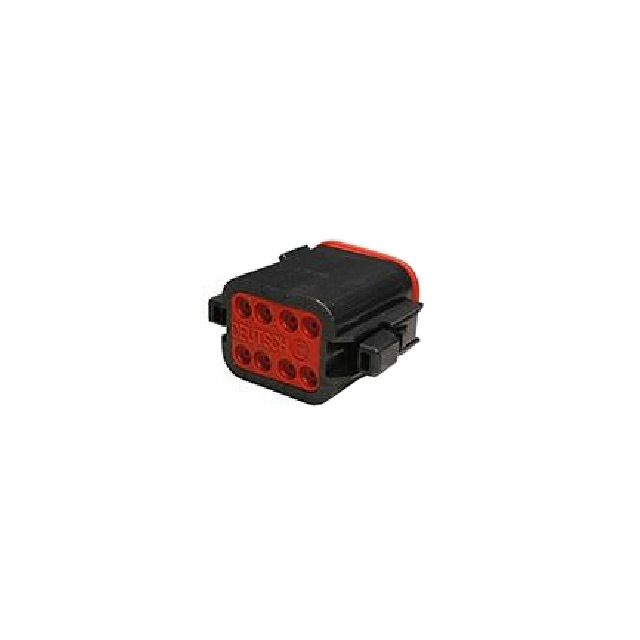
12-position free-hanging plug housing with IP68/IP6K9K sealing and -55°C to 125°C range
Quick Engineering Summary
| Field | Value |
|---|---|
| Manufacturer | TE Connectivity |
| Category | Rectangular Connector Housings |
| Package | Bulk |
| Core function | CONN PLUG HSG 12POS |
| Key electrical range | Supply and Demand Status: Shortage; Temperature Range - Operating: -55°C ~ 125°C |
| Reported stock | 285 pcs reported — confirm on RFQ |
The real constraint is sealing in a free-hanging harness
The constraint here is environmental sealing in an inline harness, not board connection. This is a free hanging (in-line) plug housing with latch lock retention, 12 positions in 2 rows, a blocked gasket, IP68, IP6K9K, and reduced wire seals. That mix points straight to sealed cable-to-cable or cable-to-device interconnects where dust, washdown, or pressure spray drives the connector choice more than density.
The electrical side is still open. DT06-12SA-CE12 is listed as a housing rather than a complete connector system, so there is no contact rating, no voltage rating, and no current ceiling here to close a load decision.
Active status helps, but shortage is the buying problem
That makes the lifecycle call easy and the supply call harder. DT06-12SA-CE12 is marked Active with no lifecycle conflict, so it belongs in new work as well as existing production.
Availability is the issue. The listing shows 285 in stock and also flags Shortage, which is enough reason to buy against the build plan instead of spot demand. Bulk packaging may suit line-side kitting, but it won't protect a release that lands late with no buffer. RoHS is compliant, removing one routine compliance objection.
-55°C to 125°C is the ceiling that broadens the fit
125°C is the upper limit, with -55°C at the low end. That range keeps DT06-12SA-CE12 in outdoor or under-equipment harness discussions, but the listing still gives no contact system details.
Where DT06-12SA-CE12 fits cleanly
What does a buyer or harness engineer ask first? Whether this is the right shell for a sealed inline branch. Yes, if the build needs a 12-position plug housing with female socket contacts, crimp termination, and latch lock retention.
Those details place DT06-12SA-CE12 in field-wired harnesses, serviceable cable assemblies, and equipment interconnects where assembly happens around wires rather than onto a PCB.
It does not belong in board-mounted connector decisions, and it does not answer any fine-pitch density question because no pitch is listed. The plastic insulation material and gray body are secondary. The fit comes from the sealed free-hanging form factor and the 2-row, 12-position layout. If the design needs a panel-mount shell, terminal block behavior, or a proven high-current contact path, this listing does not get you there.
The missing drawing matters more than another feature line
12 positions only help if the mating geometry, cavity numbering, and wire-seal details match the harness in front of you.
The first gap is the housing drawing. Without it, you cannot check envelope, latch access, or keying details. The next gap is pinout or cavity identification; on a 2-row connector, that is what prevents harness errors and field rework. Contact size and any electrical rating tied to the intended terminals are also absent, even though DT06-12SA-CE12 is identified here as a crimp female-socket housing rather than a complete current-carrying assembly.
Mating-part information is missing too, and that omission carries more weight than another line about color or package because it decides whether the connector can move into a real harness release or stay stuck in review.
View the Win-Source product page for DT06-12SA-CE12.
Key Takeaways for Engineers & Buyers
- Lock the harness to a 12-position female-socket crimp build before releasing DT06-12SA-CE12.
- Check the mating connector and cavity layout; this listing gives no pinout or housing drawing for DT06-12SA-CE12.
- Cover the shortage signal with scheduled buys against the 285 pieces currently listed.