
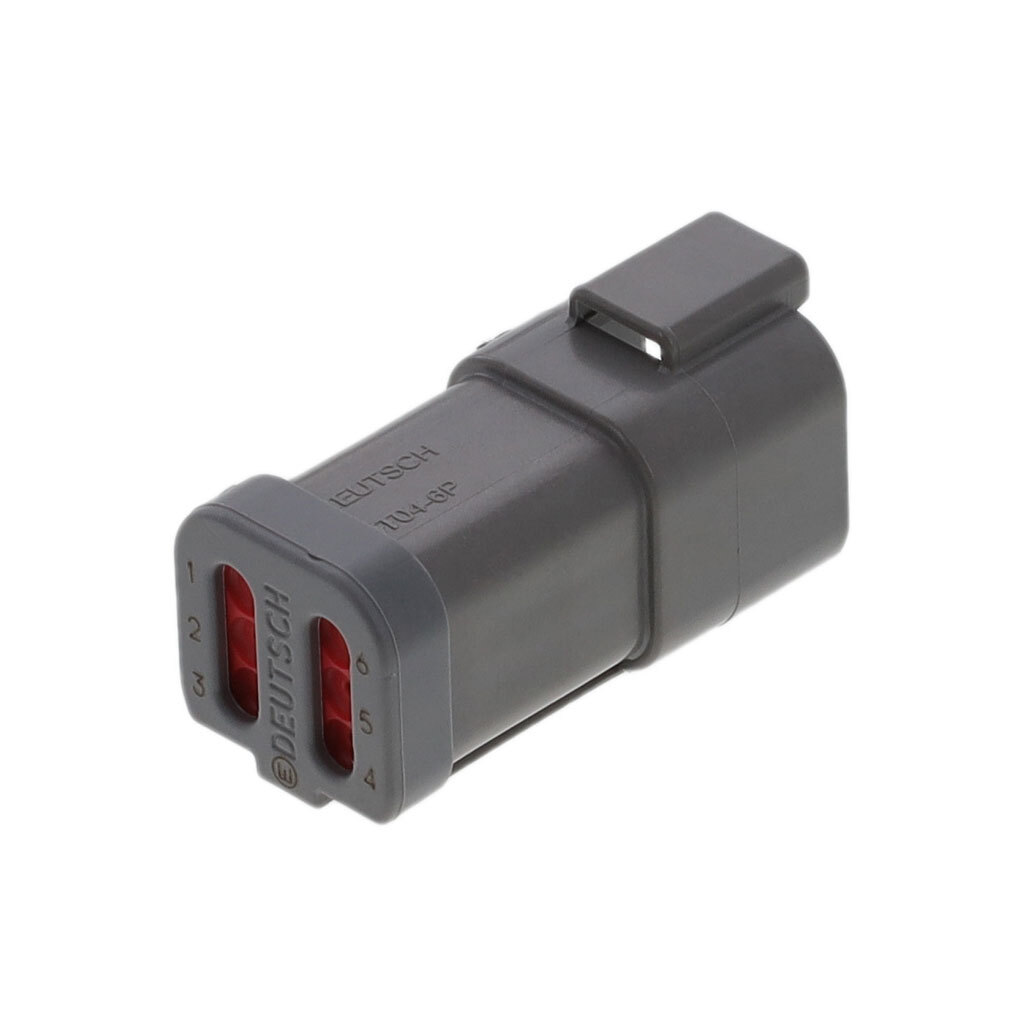
2 positions, free-hanging plug housing, crimp female socket, -55°C to 125°C, IP68 and IP6K9K
Quick Engineering Summary
| Field | Value |
|---|---|
| Manufacturer | TE Connectivity |
| Category | Rectangular Connector Housings |
| Package | Bulk |
| Core function | CONN PLUG HSG 2POS |
| Key electrical range | Supply and Demand Status: Shortage; Temperature Range - Operating: -55°C ~ 125°C |
| Reported stock | 1270 pcs reported — confirm on RFQ |
Can you safely design this in now?
Can this go into a new design now? Yes. DT06-2S-CE13 is Active, and nothing in the lifecycle signals argues against release.
What changes the decision is supply, not lifecycle. Supply and demand is marked Shortage even with 1270 pieces listed, so this is a part to release with a buy plan already attached.
It is a free-hanging, in-line rectangular plug housing for crimped female sockets with latch lock retention. It is not a board connector, and it is not a general enclosure accessory. EU RoHS compliance removes one routine approval snag, but the real fit still comes down to the harness mechanics.
Not for board I/O; built for sealed inline harnesses
Wrong for PCB mount, wrong for a panel receptacle, and wrong for a loose two-wire splice with no retention strategy. This housing is built for an in-line cable harness where mating retention and sealing matter more than density.
DT06-2S-CE13 is a free-hanging plug housing with crimp termination, female socket contacts, and a latch lock. That combination sets the use case quickly: a sealed inline connection rather than anything board-level or loosely spliced.
The key limits here are mechanical and environmental, not electrical. The operating range runs from -55°C to 125°C, so temperature exposure is covered for cold-start and underhood-adjacent harness use, but this listing still does not establish current carrying capacity because it covers the housing rather than the loaded connector system.
IP68 and IP6K9K are the features that push it into harsher service. The reduced wire seals and shrink boot adapter point the same way, and together they make the intended environment pretty clear: places where spray, washdown, or dirt ingress would quickly punish an unsealed housing. Get that call wrong and the failure mode is usually corrosion or intermittent contact rather than an obvious assembly problem.
The 2-position, 1-row format matters too. It keeps DT06-2S-CE13 in simple sensor, actuator, or power-and-signal harness branches, and it rules the part out fast when circuit count starts to climb. Black plastic and bulk packaging are secondary details; the real question is whether the harness architecture needs a sealed 2-way inline plug with crimped female sockets and latch retention.
1270 pieces is the immediate constraint
1270 pieces is enough to support builds, not enough to ignore. With DT06-2S-CE13 flagged Shortage and packed in Bulk, reserve it for committed demand first, then place coverage for the next release window.
The missing details are mechanical, not lifecycle
The constraint is mechanical closure, not lifecycle confidence. This listing does not include the pinout, housing drawing, or contact-size compatibility, and those are the details that decide cavity usage, wire entry, and mating-envelope clearance.
The sealing story also needs the assembly detail behind the IP68 and IP6K9K claims. Without the mating-part definition and dimensional drawing, you know the housing is meant for harsh environments, but not the exact stack-up that gets you there.
View the Win-Source product page for DT06-2S-CE13.
Key Takeaways for Engineers & Buyers
- Lock the harness to a 2-position female-socket crimp interface before releasing DT06-2S-CE13.
- Use DT06-2S-CE13 only where the full -55°C to 125°C operating range is required.
- Cover the shortage risk now; 1270 pieces listed in bulk leaves little room for a running line.