
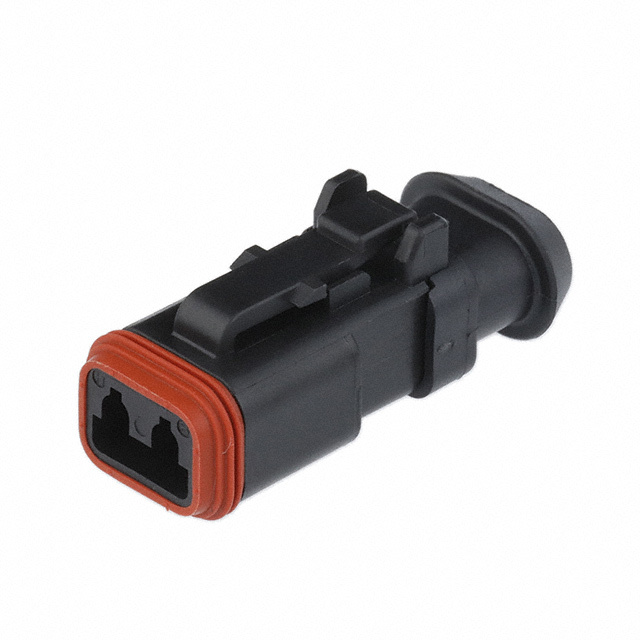
3 positions, free-hanging plug housing, IP68/IP6K9K, -55°C to 125°C; availability is the real constraint.
Quick Engineering Summary
| Field | Value |
|---|---|
| Manufacturer | TE Connectivity |
| Category | Rectangular Connector Housings |
| Package | Bulk |
| Core function | CONN PLUG HSG 3POS |
| Key electrical range | Supply and Demand Status: Shortage; Temperature Range - Operating: -55°C ~ 125°C |
| Reported stock | 50 pcs reported — confirm on RFQ |
Use it for new builds, but don't assume supply
Good for new design-in.
There is no lifecycle-based reason to keep this housing out of a new harness: DT06-3S-CE13 is listed Active with no conflict. The constraint is availability. Stock is 50 and supply is marked Shortage, so release timing matters more than status. If this housing sits on a near-term build, reserve material before the harness drawing is frozen. EU RoHS is in line, so compliance is not the issue here.
Can you actually keep a line running on it?
Can you buy enough of it when the line needs it? That is the first question here, because the listing pairs Shortage with 50 on hand and bulk packaging for DT06-3S-CE13.
Bulk works for harness production. It does not protect continuity. For an existing production line, the part still fits from a lifecycle standpoint because it remains Active, but the shortage flag makes supply the gating item rather than connector geometry. Put the buy against committed demand, not forecast, and don’t let a 3-position housing become the missing piece that stops a finished cable assembly.
The numbers that matter are fit limits, not performance claims
3 positions. That answers the first fit question fast: DT06-3S-CE13 belongs in a small harness branch or sensor-style interconnect, not in a design that may need more I/O later without a housing change.
The -55°C to 125°C operating range is a limit, not a target, and it closes the environmental screen for cold-start and hot-zone use only up to that ceiling. It says nothing about current loading, contact heating, or sealing life under vibration. IP68 and IP6K9K set the other hard boundaries, pointing to sealed free-hanging cable connections rather than sheltered board-level interconnect. Add the latch lock, female socket contact style, and crimp termination, and the use case gets specific: a cable-side plug housing for harsh-environment harnesses, where sealing and retention matter more than density.
Where DT06-3S-CE13 fits, and what the listing still doesn't answer
And that fit is narrower than the short description suggests. A free-hanging in-line plug with 3 positions, 2 rows, crimp termination, and female sockets is a harness connector you design around as a mechanical and environmental interface, not a generic rectangular housing you can drop anywhere.
The listed features point to the intended build style. Reduced wire seals and a shrink boot adapter push DT06-3S-CE13 toward sealed cable exits and controlled wire dress, exactly where field failures show up when the rear sealing stack is wrong. Black plastic insulation material identifies the housing class, but it does not settle durability questions, and you still need the actual cavity layout and housing drawing before committing panel clearances, mating access, or service tooling.
The missing items are concrete and important. The listing does not give the pinout or cavity numbering, the mechanical drawing, the mating connector details, or the wire-size and crimp-contact compatibility. Those omissions decide whether the harness can be built, inspected, and mated without rework.
View the Win-Source product page for DT06-3S-CE13.
Key Takeaways for Engineers & Buyers
- Lock allocation early if DT06-3S-CE13 is for a release build; stock is 50 and status is Shortage.
- Match the harness to a 3-position, 2-row female-socket crimp plug before freezing the connector set.
- Pull the drawing and cavity details for the reduced wire seals and shrink boot adapter before tooling.