
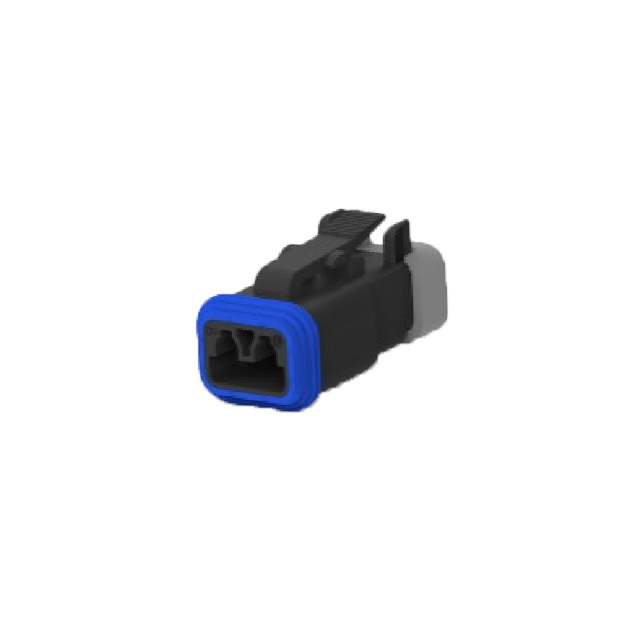
3 positions, free-hanging plug housing with IP68/IP6K9K sealing and -55°C to 125°C operation
Quick Engineering Summary
| Field | Value |
|---|---|
| Manufacturer | TE Connectivity |
| Category | Rectangular Connector Housings |
| Package | Bulk |
| Core function | CONN PLUG HSG 3POS |
| Key electrical range | Supply and Demand Status: Shortage; Temperature Range - Operating: -55°C ~ 125°C |
| Reported stock | 1 pcs reported — confirm on RFQ |
The real constraint is supply, not lifecycle
Supply is the constraint here. Active status and EU RoHS support new design-in, but listed stock is 1 and supply is marked Shortage, so availability needs to be settled before you freeze a harness around it.
Sealing is the reason to pick it
Sealed housing.
The case for this part starts with environmental protection. IP68, IP6K9K, a sealed gasket, reduced wire seals, and a cap point to free-hanging harness work that has to keep out spray, dirt, and washdown exposure.
The operating range runs from -55°C to 125°C, so the housing is built for cold-start and hot-zone service up to that 125°C ceiling. What is not here matters too: there is no contact current, voltage withstand, or insertion-force detail on this page. The latch lock is still a useful clue, because retention is built into the housing rather than left to a separate scheme.
Wrong for board I/O, right for sealed in-line harnesses
Wrong for board mounting.
It is also the wrong choice for unsealed indoor interconnects where a cheaper shell would do. What it is right for is sealed in-line harness work: a plug housing with female socket contacts, crimp termination, free-hanging mounting, 3 positions, and 2 rows.
That geometry fits harness assemblies, pigtails, and cable sections that need a compact sealed disconnect, while ruling out panel flanges, PCB tails, and higher-position-count rectangular shells before the mating half even enters the discussion. The 3-position count is a hard fit boundary as well. It works for simple power-and-signal groupings or low-circuit sensor branches, but it will not absorb late net growth.
Can you keep a running line on DT06-3S-CE14?
Can you actually buy enough of it?
That is the first question, because the weak point is availability rather than lifecycle. One stock figure shows 1, another quantity field shows 1032, and the demand flag says Shortage. Taken together, those signals are enough to treat supply as constrained until a live commit says otherwise.
For a sustaining build, reserve material against the schedule instead of assuming the housing will still be there when the crimp contacts and cable are ready. For a new release, lock the source plan before qualification units consume the small visible stock, because an Active label does not help much if the line cannot get parts when it needs them.
Bulk packaging is the other practical detail. It fits line-side kitting and harness production better than reel-driven automation, and it points to handling at the assembly cell rather than any pick-and-place style flow.
The missing mechanical detail is what keeps this from being a complete selection view. This page does not carry the cavity drawing, mating-part callout, wire range, seal dimensions, or pinout orientation, and those are the details that prevent rework on a connector housing.
View the Win-Source product page for DT06-3S-CE14.
Key Takeaways for Engineers & Buyers
- Lock supply early; stock is 1 and status is Shortage.
- Match the harness to a 3-position, 2-row female-socket crimp housing before release.
- Pull the full TE drawing for cavity layout, pinout orientation, and wire-seal details; this page does not carry them.