
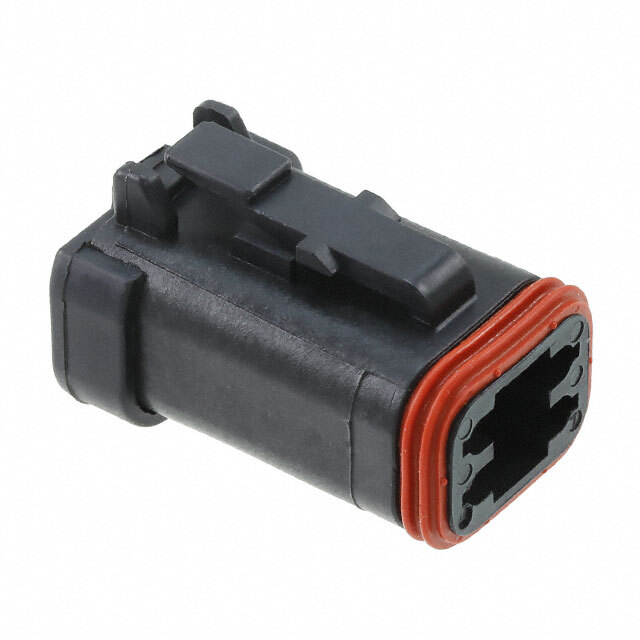
6 positions, free-hanging plug housing, IP68/IP6K9K, -55°C to 125°C, crimp female sockets
Quick Engineering Summary
| Field | Value |
|---|---|
| Manufacturer | TE Connectivity |
| Category | Rectangular Connector Housings |
| Package | Bulk |
| Core function | CONN PLUG HSG 6POS |
| Key electrical range | Supply and Demand Status: Normal; Temperature Range - Operating: -55°C ~ 125°C |
| Reported stock | 1 pcs reported — confirm on RFQ |
Use it for new harness work, not blind release
Yes, use it.
Active status removes the lifecycle objection to a new program. The fit is narrower than that simple status suggests: this is a 6-position free-hanging plug housing for crimp termination with female socket contacts, so it points to cable-end or cable-to-cable harness work rather than a board interface or any application that needs a mounted receptacle body.
EU RoHS is listed, which clears the usual material-compliance question. It doesn't settle the mechanical one. This page still does not identify the mating half, cavity geometry, or housing dimensions that decide whether DT06-6S-E005 actually fits the connector family and packaging envelope.
The weak point is supply, while the housing spec is clear
The weak point is availability. One stock field shows 1, while another quantity field shows 907, so the immediate risk is not lifecycle but whether DT06-6S-E005 can support a build without a manual stock check.
The housing spec itself is more straightforward. The operating range runs from -55°C to a 125°C ceiling, which suits harsh-environment harnesses, but this listing still leaves out contact-system data needed to judge current rise, contact heating, and sealing performance after assembly abuse. IP68 and IP6K9K are strong signals for water and washdown exposure, yet they remain housing-level claims here; the result still depends on the terminals, seals, and mating half chosen.
What the 6-position, 3-row body really commits you to
And that is where the real design decision sits. The 6 positions and 3 rows are not just catalog fields; they set the harness breakout, mating orientation, and cable-end space claim long before anyone gets to secondary details like color or the fact that the body is plastic.
This housing belongs in sealed in-line harness sections where a latch lock matters and where crimped female sockets are already the chosen contact system. The latch lock points to positive mechanical engagement, which makes this the right kind of housing for equipment that sees vibration or repeated service disconnects. The cap or cover feature matters too, because it suggests the interface is meant to be protected when unmated or during handling, a practical advantage in off-board wiring where contamination is a real failure path.
What it does not do is answer a board-mounted connector decision or stand in for terminal performance data. There is no contact pitch, no row spacing, and no dimensional drawing here, so routing density, backshell clearance, and branch exit interference remain open questions. DT06-6S-E005 may be the right sealed shell, but the missing mechanical detail is still what closes the packaging review.
What is still missing
What does a buyer need first? The drawing, the mating-part reference, the pin or cavity layout, and the terminal or wire-range compatibility. Those gaps are what stop DT06-6S-E005 from being released on this page alone.
View the Win-Source product page for DT06-6S-E005.
Key Takeaways for Engineers & Buyers
- Confirm the mating connector and keying before freezing DT06-6S-E005 into the harness.
- Pull the housing drawing and cavity layout; the listing gives 6 positions and 3 rows, but no dimensions.
- Resolve the stock mismatch before scheduling builds: one record shows 1 and another shows 907.