
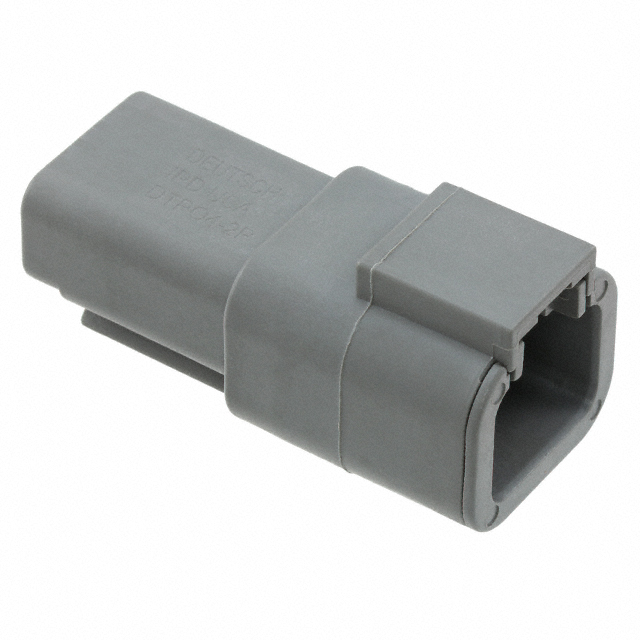
250VDC, 2 positions, 5.46mm pitch, panel-mount right-angle header, -55°C to 125°C operating range
Quick Engineering Summary
| Field | Value |
|---|---|
| Manufacturer | TE Connectivity |
| Category | Rectangular Connectors - Headers, Male Pins |
| Package | Bulk |
| Core function | CONN HEADER R/A 2POS 5. |
| Key electrical range | Supply and Demand Status: Shortage; Temperature Range - Operating: -55°C ~ 125°C; Voltage Rating: 250VDC |
| Reported stock | 727 pcs reported — confirm on RFQ |
Not for dense I/O; right for sealed two-wire entry
Wrong for dense board-edge I/O, and wrong for any layout that needs more than 2 positions. This is a panel-mount, right-angle header with a 5.46mm mating pitch and a mounting flange, so it spends space on retention and environmental sealing rather than channel count. On a compact control board, the flange, shrouded 4-wall body, and 27.43mm insulation height will shape the mechanical discussion long before the electrical rating does, especially when the entry point has to coexist with nearby keepouts, enclosure walls, and service access.
A sealed board-to-cable transition is where it earns its place. The IP68/IP6K9K listing points to use in exposed environments, while the latch holder and shrouded housing cut the odds of a half-mated field connection. The -55°C to 125°C operating range keeps it in scope for equipment that sees cold starts and hot enclosures. For new design-in, it is usable but conditional because lifecycle is Unknown. For an existing production build, the bigger constraint is the Shortage flag, while EU RoHS compliance is already covered.
250VDC closes insulation questions, not load questions
250VDC is a ceiling, not a load answer.
It clears the insulation side for a low-position-count interconnect, but it does not state contact current, temperature rise at load, or the margin left once wire, harness, and enclosure details are in play.
The buy risk is availability, not regulation
Unknown lifecycle is the weak point, and the Shortage status makes it harder to ignore. Still, 727 pieces are listed, so this is not a paper part. It is something you can probably build with now, but not something to release into an unconstrained production ramp without a supply plan.
Use it for prototypes, service demand, or a controlled build where the 2-position right-angle form is already locked. If it is headed into a running line, reserve stock against that line now and avoid letting a shortage-marked interconnect stall final assembly.
View the Win-Source product page for DT13-2P.
The missing details are mechanical and current-carrying
727 pieces on hand do not answer the real review questions.
What is still missing is the contact current rating, the mating and unmating force data, and the full drawing or pinout needed to settle panel cutout, PCB keepout, and cable-side clearance. Those details decide whether this connector is merely category-compatible or actually ready for release into hardware.
The other gap is the sealing condition behind the IP68/IP6K9K rating. For a connector chosen on environmental grounds, that assembly condition is part of the decision.
View the Win-Source product page for DT13-2P.
Key Takeaways for Engineers & Buyers
- Lock the panel and PCB geometry around the 5.46mm mating pitch and 3.10mm post length.
- Treat 250VDC as the insulation ceiling, not proof of current capacity or cable-side performance.
- Resolve the Shortage flag before releasing DT13-2P to volume.