
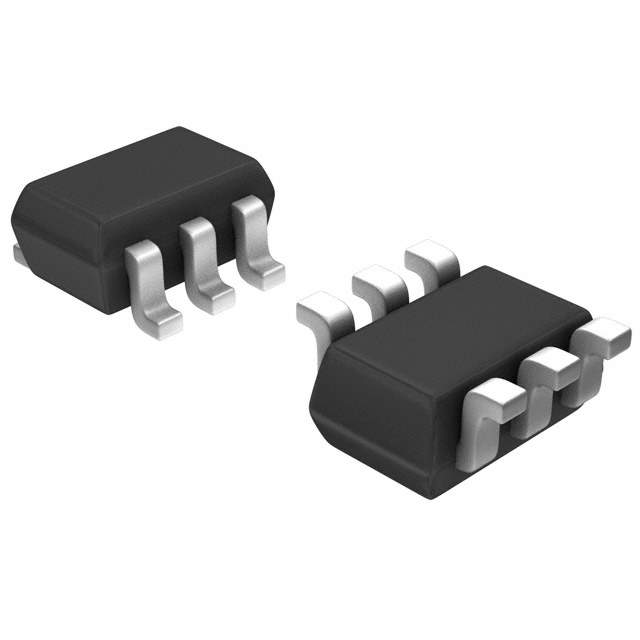
5V stand-off, 8.5V max clamp, 4.7A peak pulse, 4 channels in SOT-363 for HDMI protection
Quick Engineering Summary
| Field | Value |
|---|---|
| Manufacturer | Diodes Incorporated |
| Category | TVS - Diodes |
| Package | SOT-363 |
| Core function | TVS DIODE 5VWM 8. |
| Key electrical range | Max Clamping Voltage: 8.5V; Minimum Breakdown Voltage: 6V; Peak Pulse Current(Ippm): 4.7A (8/20μs); Power Line Protection: Yes |
| Reported stock | 233825 pcs reported — confirm on RFQ |
The weak point is missing signal data, not lifecycle
The weak spot comes first: there is no capacitance figure, no pinout, and no package drawing here. For HDMI, that is where the real fit starts. This is a steering rail-to-rail TVS with 4 unidirectional channels in SOT-363, so routing and line loading will decide whether it stays invisible in the interface or shows up in the eye diagram.
The stronger news is simpler. DT1446-04S-7 is an active design-in candidate, not a sustaining-only buy. Lifecycle is Active, stock is 233825, packaging is Reel - TR, and RoHS is listed as EU RoHS. Those are solid starting conditions for a 5V HDMI protection job, but they do not settle the electrical fit; the missing high-speed details still do that work.
The 5V ceiling sets the rail, and 8.5V sets the let-through
The constraint is straightforward: this device belongs on lines that must stay within a 5V stand-off ceiling. The 5V (Max) stand-off voltage does not describe a normal operating point at 5V; it marks the level up to which the part is intended to remain off. Put DT1446-04S-7 on a rail above that ceiling and it may conduct when you did not intend it to.
The other two numbers that shape the decision are 6V minimum breakdown and 8.5V max clamping voltage. Breakdown at 6V is the turn-on threshold floor, not a working rail. Clamping at 8.5V is a ceiling under the stated surge condition. If the downstream silicon cannot tolerate that let-through, DT1446-04S-7 is the wrong protection window before layout even enters the discussion.
4.7A is a surge ceiling, not a blanket toughness claim
4.7A matters. The listed peak pulse current is 4.7A (8/20μs), and that is a surge ceiling tied to that waveform, not a broad claim about what DT1446-04S-7 can survive in any cable event.
That keeps the fit narrow and clear. This part belongs in compact HDMI protection where four lines need rail-to-rail steering in a small SMD footprint, and where SOT-363 is worth more than a larger package with more published surge detail. It does not automatically suit harsher cable-exposed environments just because the category says TVS. There is no peak pulse power figure here, no derating curve, and no thermal resistance, so the 4.7A number cannot be stretched into a wider survivability story.
Can you keep DT1446-04S-7 on a running line?
Yes, and that is the first buying question that matters. The answer looks favorable: DT1446-04S-7 is Active, supply and demand is marked Sufficient, stock quantity is 233825, and the package is Reel - TR. For an SMT protection part in SOT-363, that combination keeps placement straightforward and avoids a feed-format mismatch becoming a production problem.
The practical limit is footprint confidence. This is a very small multi-channel protection device, and the listing does not include the drawing or pinout that would make any footprint assumption safe. Lock the land pattern only after you have the package drawing in hand, because a six-lead body this small does not forgive a casual footprint decision, and a wrong channel map on an HDMI protector is exactly the kind of error that clears assembly, hides through bring-up, and returns later from the field.
There is also a sourcing advantage here that matters more than the popularity field: the inventory depth is already present. Use that to cover the first build and qualification window while the full datasheet closes the remaining electrical questions around capacitance, pinout, and package-level thermal detail.
What the listing still doesn’t answer
Several gaps remain: capacitance, trr, thermal resistance, and pinout. For HDMI, capacitance is the big one.
View the Win-Source product page for DT1446-04S-7.
Key Takeaways for Engineers & Buyers
- Check the HDMI line map against the 4 unidirectional channels before layout locks.
- Pull the datasheet for capacitance and pinout; both decide signal integrity and routing in SOT-363.
- Buy on reel - TR if this goes to volume; keep the line on packaged tape, not loose handling.