
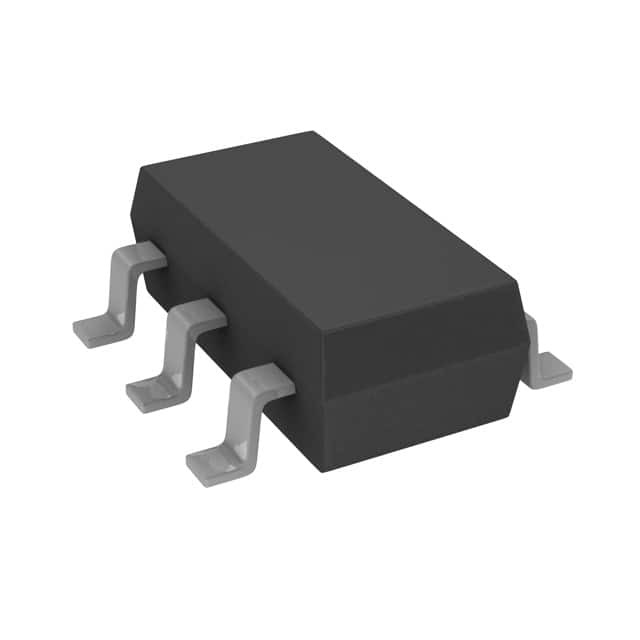
5V reverse standoff, 8.5V clamp, 4 channels, TSOT-23, -55°C to 150°C junction
Quick Engineering Summary
| Field | Value |
|---|---|
| Manufacturer | Diodes Incorporated |
| Category | TVS - Diodes |
| Package | TSOT-23 |
| Core function | TVS DIODE 5VWM 8. |
| Key electrical range | Operating Temperature Range: -55°C ~ 150°C (TJ); Supply and Demand Status: Limited |
| Reported stock | 18000 pcs reported — confirm on RFQ |
Good for new 5 V line protection
Yes, it fits.
For new design-in, the basic signals are solid. The part is Active, the lifecycle indicators line up, and EU RoHS compliance is clear, so status is not the reason to hold back.
The real fit is narrower. This is a 4-channel rail-to-rail TVS aimed at HDMI, with a 5V reverse standoff ceiling and an 8.5V clamp at 4.7A on an 8/20µs pulse. That puts it on low-voltage interface protection on dense boards, not on general power-rail suppression. If the protected line stays comfortably within that 5V ceiling, DT1446-04TS-7 deserves a spot on the shortlist.
5 V and 8.5 V set the real boundaries
5V is the first boundary. It is the reverse standoff ceiling, so this device belongs on 5V-class lines and below, not on higher nominal rails.
Then comes the 8.5V clamp at 4.7A with an 8/20µs pulse. That number is a ceiling too, and it tells you the protected node can still be pushed well above 5V during a surge event, which is exactly why the downstream tolerance still matters when you place protection on HDMI and similar low-voltage interfaces.
The -55°C to 150°C operating temperature range is a junction limit. It helps with environmental fit, but it does not settle the thermal picture because no thermal resistance or derating curve is listed.
The package is small, but the listing is not complete
The weak point is documentation depth. The strong point is density.
You get 4 channels in a TSOT-23 class footprint, with the package called out as TSOT-23, TSOT-26, and SOT-23-6 across the listing. That still reads like the kind of compact protection part you place right at a connector.
The HDMI application focus makes the intended job clear: short-trace ESD and surge shunting on compact I/O, not a board-level catch-all for every 5V net. Resolve the mixed package naming before layout release, because footprint confusion is a more likely failure mode here than lifecycle trouble.
Can you keep a running line on DT1446-04TS-7?
Can you actually get enough parts? Yes, but this is where the caution belongs.
The part is Active, stock is listed at 18000, reel quantity is 3000, and lead time is listed at 25 Weeks. That combination supports a running line when demand is planned in reel multiples instead of left to spot buys after the schedule tightens.
The supply-and-demand flag is Limited, and that's the detail that carries weight here. It matters more than the popularity field because it changes how you schedule builds, stage incoming inspection, and avoid a mid-quarter scramble for a protection device that sits directly on the external interface, where a missing low-cost part can stall an otherwise complete assembly.
For sustaining production, book reels against the build plan early. For a fresh program, the answer is still yes, provided the sourcing plan accepts 25 Weeks rather than treating this as a just-in-time line item.
What the datasheet still has to answer
Not for power rails. Fine for compact HDMI-class port protection.
The missing items are concrete: junction capacitance, pinout, package drawing, thermal resistance, and peak pulse power.
View the Win-Source product page for DT1446-04TS-7.
Key Takeaways for Engineers & Buyers
- Keep DT1446-04TS-7 on 5V signal protection only; the 5V reverse standoff is the rail ceiling here.
- Match the footprint to TSOT-23 / TSOT-26 / SOT-23-6 before release; the package naming is mixed across the listing.
- Cover the 25 Weeks lead time with reel planning; standard pack is 3000 and stock is listed at 18000.