
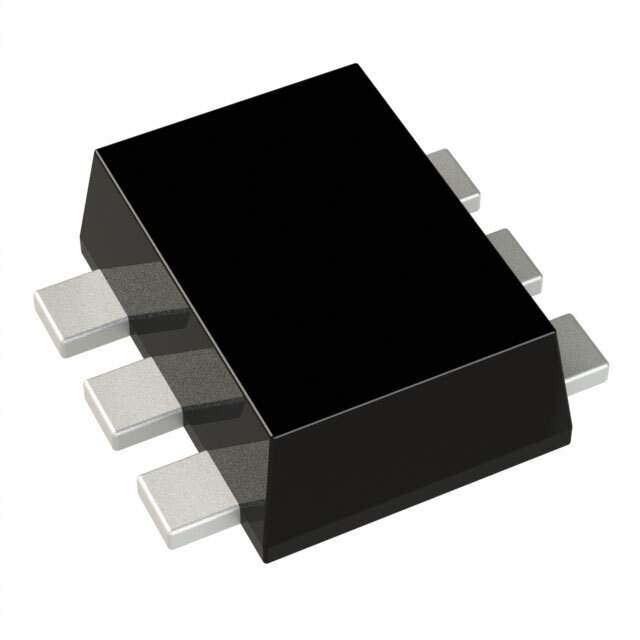
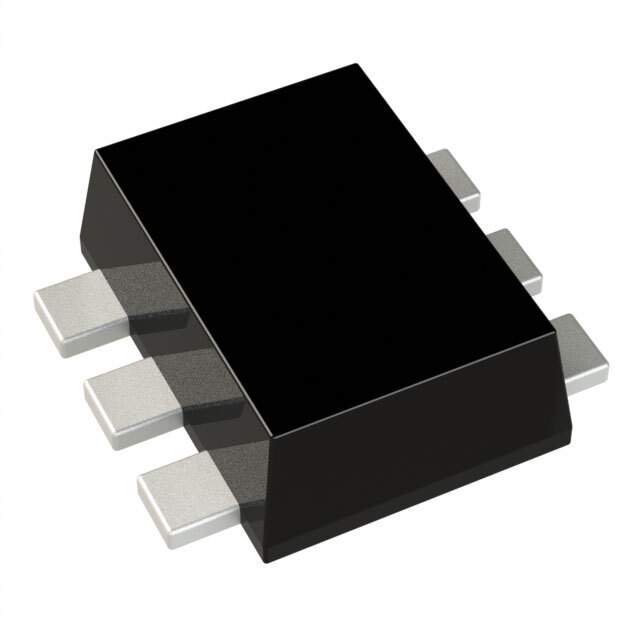
5.5V reverse standoff, 8.5V max clamp, 4 channels, SOT-563, -55°C to 150°C range
Quick Engineering Summary
| Field | Value |
|---|---|
| Manufacturer | Diodes Incorporated |
| Category | TVS - Diodes |
| Package | SOT-563, SOT-666 |
| Core function | TVS DIODE 5. |
| Key electrical range | Current - Peak Pulse (10/1000μs): 4.7A (8/20μs); Power Line Protection: Yes; Supply and Demand Status: Sufficient; Temperature Range - Operating: -55°C ~ 150°C |
| Reported stock | 36000 pcs reported — confirm on RFQ |
5.5V decides the rail, not the whole protection story
5.5V is the number that decides whether DT1446-04V-7 belongs on the line at all. The reverse standoff is listed as 5.5V maximum, so that value is the ceiling on normal line voltage. Anything that lives above it is out.
That keeps the part in play for HDMI-class lines, which is where the listing already points. DT1446-04V-7 is a 4-channel steering rail-to-rail TVS in SOT-563, so the shape of the part is about dense line-side protection rather than a single high-energy supply entry point.
EU RoHS is straightforward. Lifecycle is not. Unknown leaves the sourcing picture unconfirmed, so the part fits evaluation and near-term builds better than a new long-horizon program.
The 8.5V clamp is the real acceptance test
And that is the next filter: 8.5V matters more than the 6V minimum breakdown because breakdown only marks when conduction begins, while the listed maximum clamping voltage is the ceiling the downstream interface has to tolerate during a surge event when DT1446-04V-7 is actually working.
The pulse-current line needs the same reading discipline. It is listed as 4.7A with an 8/20μs waveform, even though the field name mentions 10/1000μs, so the usable fact is 4.7A at 8/20μs. Treat it as a surge ceiling. Not a continuous-current number, and not a general badge of toughness.
That distinction sets the boundary for use. If the threat is connector ESD or short surge events on HDMI-adjacent lines, the numbers line up with the package and channel count. If the design needs confidence around longer pulses, supply-line abuse, or energy handling beyond that one stated waveform, this listing does not answer the question, and the missing thermal resistance or derating data leaves repeated-hit behavior unresolved in a very small package.
Package choice reinforces the same conclusion. SOT-563 buys density, which is valuable on multi-line interfaces, but density alone does not settle thermal behavior under repeated strikes.
This belongs beside the connector, not on a power entry rail
4 channels tells the story. The application tag says HDMI, and the steering rail-to-rail type points the same way: grouped signal-line protection where board area matters.
It does not read like a general power-input protector. A 5.5V reverse standoff ceiling, an 8.5V maximum clamp, and a tiny SOT-563 package all push it toward compact protection near the connector. Don't use it as a bulk supply TVS.
The buy call is simple: stock exists, lifecycle does not
The constraint is lifecycle ambiguity. Stock is 36000, supply and demand status is Sufficient, and packaging is Reel, so near-term builds are supportable. Put it on approved BOMs only after a lifecycle check tied to the release window.
The missing data is exactly what would finish the decision
The weak point is documentation depth. The basic fit is still there, but DT1446-04V-7 needs a few concrete items to close the decision: pinout, package drawing, junction capacitance, and thermal resistance.
Those gaps matter for ordinary reasons. Pinout and drawing determine whether the SOT-563 escape is painless on the board. Junction capacitance determines whether the HDMI insertion-loss budget holds. Thermal resistance determines how repeated surge events stack up in a small package.
View the Win-Source product page for DT1446-04V-7.
Key Takeaways for Engineers & Buyers
- Keep DT1446-04V-7 on 5V-class HDMI rails; 5.5V reverse standoff is the ceiling.
- Budget protection around the 8.5V maximum clamp at 4.7A pulse current, not around the 6V minimum breakdown.
- Lock reel planning early; stock shows 36000 and packaging is Reel with lifecycle still Unknown.