
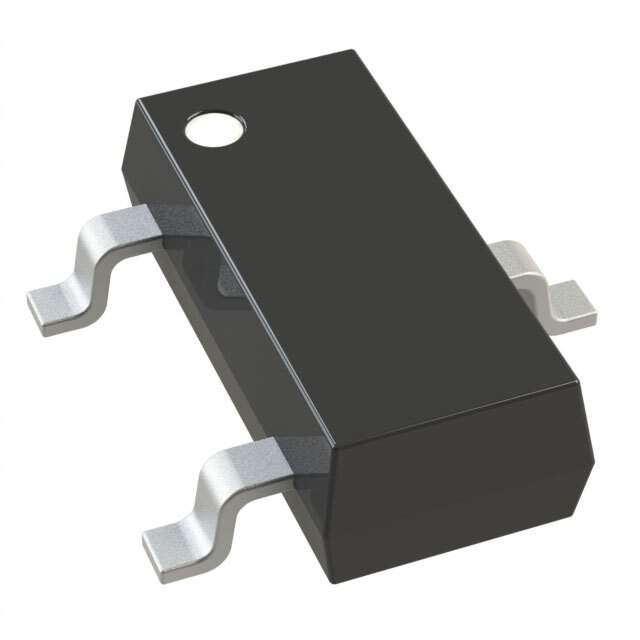
5.5V stand-off, 11V clamp, 2 channels, SOT-23, -55°C to 150°C junction range
Quick Engineering Summary
| Field | Value |
|---|---|
| Manufacturer | Diodes Incorporated |
| Category | TVS - Diodes |
| Package | SOT-23 |
| Core function | TVS DIODE 5. |
| Key electrical range | Max Clamping Voltage: 11V; Minimum Breakdown Voltage: 7V; Peak Pulse Current(Ippm): 5A (8/20μs); Power Line Protection: Yes |
| Reported stock | 33000 pcs reported — confirm on RFQ |
5.5V is the number that decides this part
5.5V is the hard boundary here. The listed stand-off voltage is 5.5V (Max), so DT1452-02SO-7 belongs on rails and signal lines that stay at or below that ceiling in normal operation; the 7V breakdown figure does not turn it into a fit for higher-voltage interfaces.
The rest of the protection window lines up with that job. Breakdown starts at 7V (Min), and the clamp is 11V at 5A (8/20μs). Those are surge limits, not operating points. That keeps the part in low-voltage port protection where an 11V clamp is acceptable during a transient and where 2 unidirectional channels cover the exposed lines without stepping up to a larger array.
Package choice matters as well. SOT-23 keeps placement compact near a connector, but the pinout and package drawing are not here, so final placement and routing still depend on the datasheet. The broader call is straightforward: new design-in makes sense when the interface fits the voltage ceiling, channel count, and package. Active lifecycle, EU RoHS compliance, and reel packaging support that conclusion.
The weak point is missing high-speed detail
The weak point comes first. The English specs leave out the numbers that usually settle a high-speed protection choice. For HDMI, capacitance is often the first filter, and the main listing does not show it even though the extended row includes 1.2pF @ 1MHz. That gap matters because DT1452-02SO-7 can fit the voltage window cleanly and still miss the line budget.
The stronger part of the listing is that the intended use is clear. HDMI is named, the type is Steering (Rail to Rail), power line protection is marked Yes, and the part provides 2 unidirectional channels in SOT-23. That points to compact protection on low-voltage interfaces, not bulk surge duty and not a general-purpose clamp for rails above 5.5V. If the design needs more channels, a bidirectional path, or a published peak pulse power number, this page does not provide it.
Can you keep a running line on it?
Can you keep buying it? Yes. Stock is 33000 and packaging is Reel - TR, so DT1452-02SO-7 is set up for SMT production rather than hand-load service.
What the listing still doesn't settle
Not complete yet.
The missing items are concrete. Pinout is not here. The package drawing is not here. The thermal path is not described with any RθJC or junction-to-ambient figure. For a TVS in a small package with 5A (8/20μs) clamp current, that leaves placement confidence thinner than it should be.
The transient picture is incomplete too. There is no trr, no derating curve, no peak pulse power figure, and no surge waveform detail beyond 8/20μs on Ippm. DT1452-02SO-7 may still be the right HDMI protector, but those are the details that close the argument on line loading, pulse survivability, and how much ambient headroom the -55°C to 150°C junction range really buys.
View the Win-Source product page for DT1452-02SO-7.
Key Takeaways for Engineers & Buyers
- Keep DT1452-02SO-7 on 5.5V-and-below rails; the stand-off listing is a ceiling, not headroom to spend.
- Use DT1452-02SO-7 where 2 unidirectional channels match the port map; this is not a catch-all array.
- Pull the datasheet for pinout and capacitance before layout; HDMI is named, but routing depends on both.