
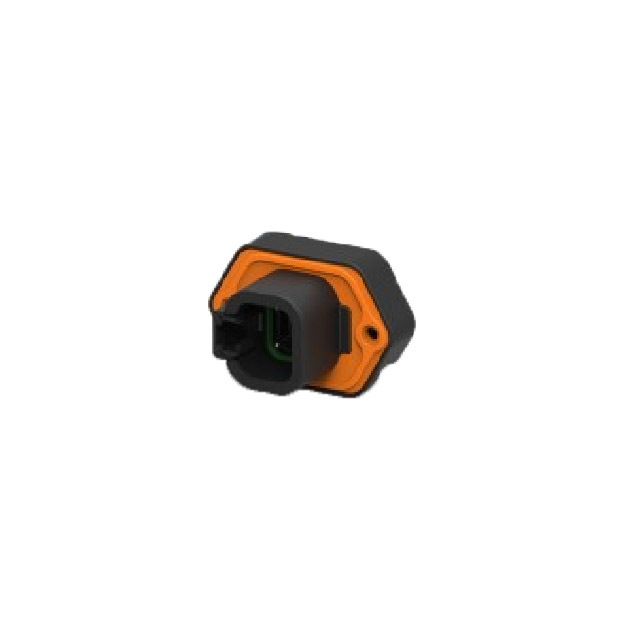
250VDC ceiling, 4 positions on 4.44mm pitch, panel-mount through-hole, -55°C to 105°C operating range
Quick Engineering Summary
| Field | Value |
|---|---|
| Manufacturer | TE Connectivity |
| Category | Rectangular Connectors - Headers, Male Pins |
| Package | Bulk |
| Core function | CONN HEADER VERT 4POS 4. |
| Key electrical range | Supply and Demand Status: Shortage; Temperature Range - Operating: -55°C ~ 105°C; Voltage Rating: 250VDC |
| Reported stock | 1 pcs reported — confirm on RFQ |
Use it, but buy ahead
Use it.
The lifecycle call is straightforward: Active with no conflict, so this is a valid new design-in candidate when you need a board-to-cable header in a panel-mount, through-hole format.
Supply is the issue. Supply and demand is marked Shortage, one stock field shows 1, and another quantity field shows 1306, which is uneven enough that I would not leave DT15-4P on an unconstrained release. EU RoHS compliance removes one routine compliance objection, but it does not change the availability picture.
What do the listed numbers actually decide?
Will it fit the interface and survive the environment?
The 250VDC rating is a ceiling on insulation and spacing performance for this connector system, so it helps answer the rail-voltage question, but it does not answer current loading because no current rating is listed here.
The -55°C to 105°C operating range is the other immediate filter. It places DT15-4P in equipment that sees cold start and elevated ambient, yet it still says nothing about contact heating under load because the current spec is missing.
Mechanical fit matters just as much. This is a 4-position, 2-row header on 0.175" (4.44mm) pitch with 0.360" (9.14mm) row spacing, and the post length is 0.122" (3.10mm). Those dimensions decide whether the cable-side connector family and the PCB stack-up physically land, while the shrouded 4-wall body, latch holder, and mounting flange point to a connector meant to stay located in a panel-mounted assembly rather than a loose board-edge header.
The real constraint is missing current data
Missing current data blocks the load decision. Even if DT15-4P fits the mechanical envelope, you cannot close contact heating, wire-size fit, or power distribution use from this page alone.
Good for sealed harness entry, not for blind assumptions
The weak point comes first: the electrical picture is thin. The strong point is that the mechanical picture is specific enough to place DT15-4P in the right kind of assembly.
It belongs in board-to-cable wiring where a vertical header, panel mount plus through-hole attachment, and a shrouded 4-wall interface are the point. The circular male pins, nickel mating finish, tin post finish, copper alloy contacts, and glass-filled nylon body read like a connector chosen for a defined harness interface, not a generic board header you swap late in layout. It's the wrong part to pick when you still need freedom on mating geometry or when the design hinges on a published current number.
The datasheet gaps are mostly mechanical and load-related
Wrong for a final load call; right for narrowing the mechanical fit.
What is missing is exactly what would finish the decision on DT15-4P: current rating, contact finish thickness, mating contact length, insulation height, a drawing, and pinout. Those are the items that settle panel cutout, PCB keepout, and stack-up confidence.
I would also want any stated ingress protection, flammability rating, and retention figures before freezing DT15-4P into a harsh-environment harness entry.
View the Win-Source product page for DT15-4P.
Key Takeaways for Engineers & Buyers
- Lock the mating interface to 4 positions, 2 rows, 0.175" (4.44mm) pitch and 0.360" (9.14mm) row spacing.
- Treat 250VDC as the voltage ceiling; it does not answer current loading because no current rating is listed.
- Place a buy now if DT15-4P is on a build plan; shortage status and stock of 1 can stall a line.