
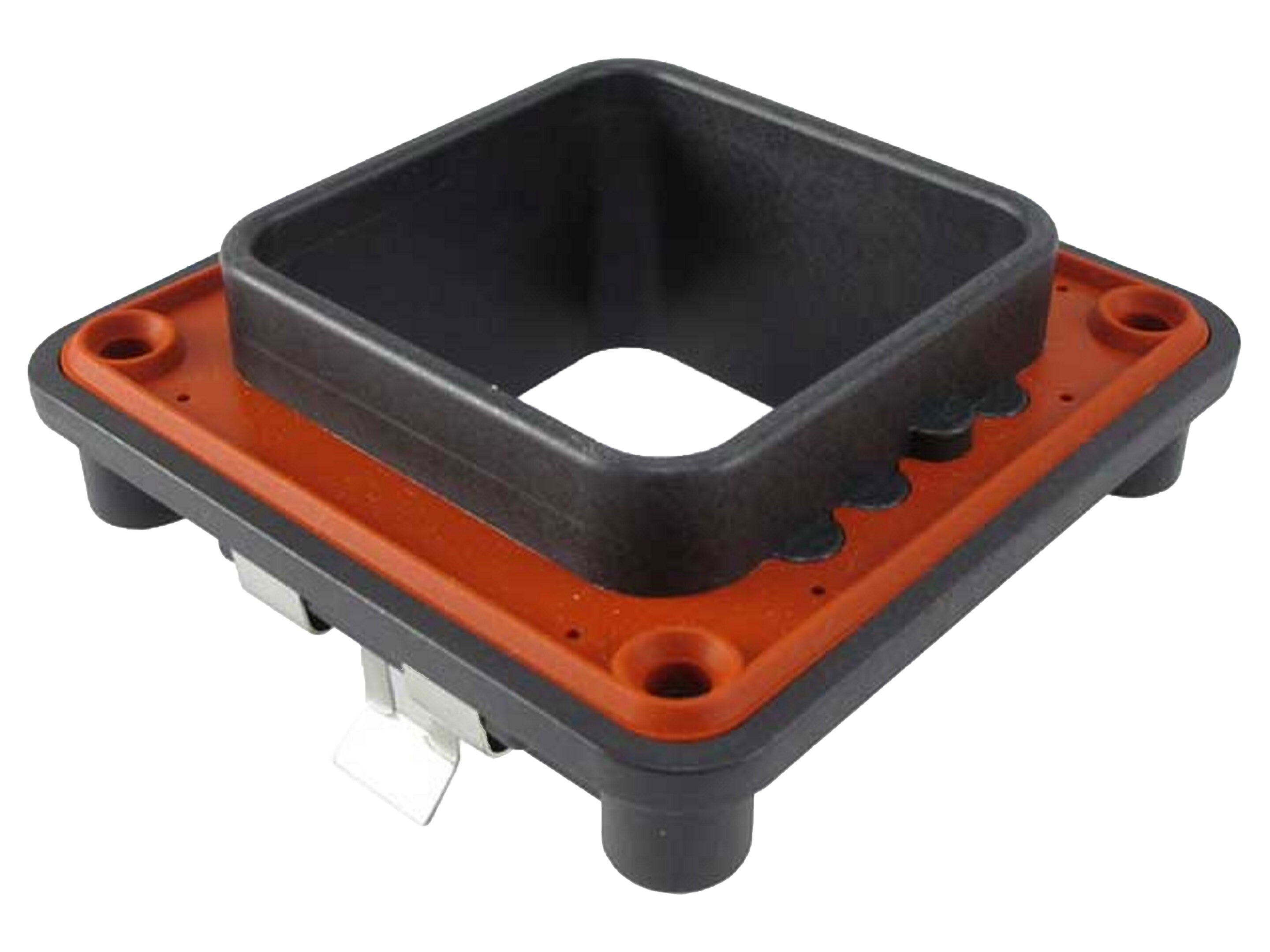
3 positions, DT Series fit, protective dust cap in box packaging; availability drives the decision.
Quick Engineering Summary
| Field | Value |
|---|---|
| Manufacturer | TE Connectivity |
| Category | Rectangular Connector - Accessories |
| Package | Box |
| Core function | PROTECT CVR, 3P, REC, GRY, DT |
| Key electrical range | Supply and Demand Status: Shortage |
| Reported stock | 763 pcs reported — confirm on RFQ |
Still, this is a straightforward new-design accessory
Still, the case for using DT3P-DC is plain: it is Active, the lifecycle risk is low, and nothing in the record points the other way. That clears the first gate for a new design and removes the usual migration concern for existing production, because there is no lifecycle warning attached to the part. EU RoHS is listed, but it is not what decides this part.
What decides it is the job. DT3P-DC is identified as a protective cap cover for a 3-position DT Series receptacle, with Dust Cap called out as the feature and PROTECT CVR, 3P, REC, GRY, DT repeated in the description, so the intended use is specific rather than broad. Put it on the right unmated connector interface and the listing makes sense immediately; try to stretch that description into a general connector accessory and it falls apart.
That matters because the listing is narrow in useful ways and silent in others. It tells you where the part belongs, but not contact performance, sealing level, retention force, or environmental qualification. Protective is not a license to assume more than the page states, and the practical failure mode is ordinary but costly: pick the wrong cavity count or the wrong series, the cap will not fit the receptacle, and a part that looked interchangeable on paper turns into a line-side problem.
The hard limit is fit, not an electrical ceiling
The constraint is mechanical matching. The only hard numbers are 3 positions and DT Series compatibility, and those limits define what this cover can mate with rather than any electrical ceiling.
3 positions is the number that decides the BOM
3 positions decides the BOM because it is the only explicit fit count, and it narrows DT3P-DC to one receptacle pattern right away. In connector accessories, that matters more than a broad category label. A cover that misses the cavity count is simply the wrong part.
The rest is descriptive, but still useful. Cap (Cover), Protective, and Dust Cap place it in harnesses or equipment where the receptacle sits exposed between mating cycles and needs contamination control. Box packaging works for bench stock or line-side issue, but it does not answer orientation, attachment method, or retention detail. Those remain concrete gaps before release: pinout is irrelevant for a cover, but a drawing, dimensional detail, and the exact receptacle interface geometry are not shown here.
Can you keep a running line on it?
What a buyer asks first is simple: can we actually get it? Here, supply is the issue. DT3P-DC is listed with 763 in stock, yet the supply-and-demand status is Shortage, so the constraint is replenishment pressure rather than lifecycle risk.
If DT3P-DC is already on a running line, secure the near-term requirement while stock is visible. If it is for a fresh release, do not assume the shortage disappears just because the part is Active. Box packaging keeps it straightforward from a stocking standpoint, but availability is the one item on this page that can stall builds.
View the Win-Source product page for DT3P-DC.
Key Takeaways for Engineers & Buyers
- Match DT3P-DC only to 3-position DT Series receptacles.
- Cover shortage risk early; listed stock is 763.
- Use DT3P-DC where dust exclusion matters, not as an electrical or sealing spec.