
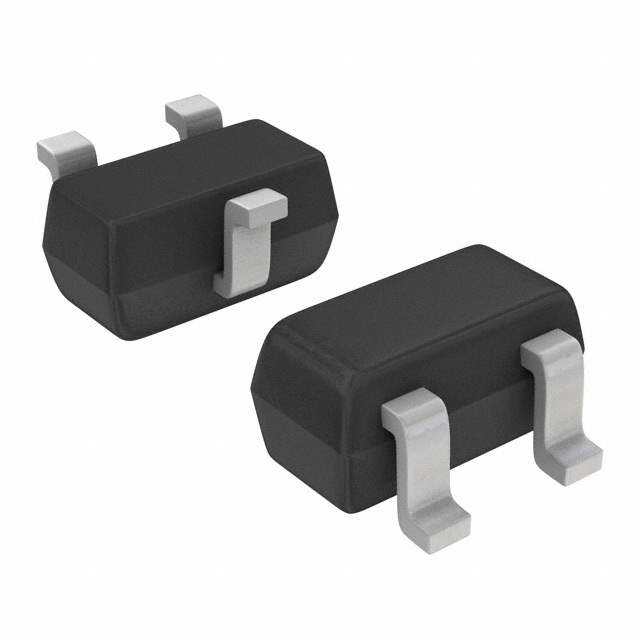
50V VCEO, 100mA collector ceiling, 200mW dissipation, SC-75/SOT-416 package
Quick Engineering Summary
| Field | Value |
|---|---|
| Manufacturer | ON Semiconductor |
| Category | Transistors (BJT) - Single, Pre - Biased |
| Package | SC-75, SOT-416 |
| Core function | TRANS PREBIAS PNP 50V 0. |
| Key electrical range | Collector Cut-off Current(Max): 500nA; Maximum Current Collector: 100mA; Maximum Power Dissipation: 200mW; Supply and Demand Status: Balance |
| Reported stock | 8500 pcs reported — confirm on RFQ |
Can you still buy DTA123JET1 with confidence?
For a new design, no. DTA123JET1 is marked EOL, and that settles the decision before the electrical limits even come into play.
For existing production, the picture is narrower but workable. Listed stock is 8500 and packaging is Reel - TR, so a bridge purchase for a running SMT build is plausible. That supports sustaining demand, not future qualification. The other issue is compliance: one entry says RoHS Compliant and another says RoHS Non-Compliant, so EU RoHS status is still too unclear to clear receiving or a customer compliance review.
Not for load switching; fine for small biased interfaces
Heavy current and heat are where this part runs out of room. The 100mA maximum collector current is a ceiling, and the 200mW maximum power dissipation is another ceiling that arrives quickly in a tiny SC-75, SOT-416 body.
It fits better in compact PNP interface work where the built-in bias network is the reason to use it. The internal resistor values, 2.2k for R1 and 47k for R2, point to simple drive and level-conditioning jobs that benefit from fewer externals, not stages where base drive needs to be tuned freely. The 50V VCEO ceiling gives rail headroom, but it does not turn the device into a high-energy switch.
The listed numbers narrow the use case quickly
The fit is narrow.
The 50V collector-emitter breakdown rating is a ceiling on rail exposure, so it can keep a small-signal path in play on higher-voltage control rails, but it says nothing about current margin once the transistor is asked to do real work. The 250mV max VCE(sat) at 300μA and 10mA is useful because it hints at low-current switching behavior, yet it does not answer the heavier-load case because saturation is only stated at 10mA.
The 500nA collector cut-off current max matters when off-state leakage affects battery-fed or high-impedance nodes. The 80 minimum hFE at 5mA and 10V is also tied to a specific test point, so treat it as a selection clue rather than a blanket gain promise across the full operating range of DTA123JET1.
What the listing still does not answer
The constraint is missing detail.
No pinout, no package drawing, no thermal resistance, and no derating curve are listed. Those four items decide footprint release, ambient headroom, and how tight the 200mW ceiling will be on your board.
View the Win-Source product page for DTA123JET1.
Key Takeaways for Engineers & Buyers
- Block DTA123JET1 from new BOM releases; lifecycle is EOL.
- Check collector load against the 100mA ceiling and the 200mW dissipation ceiling together.
- Resolve the RoHS conflict before any shipment hold is triggered.