
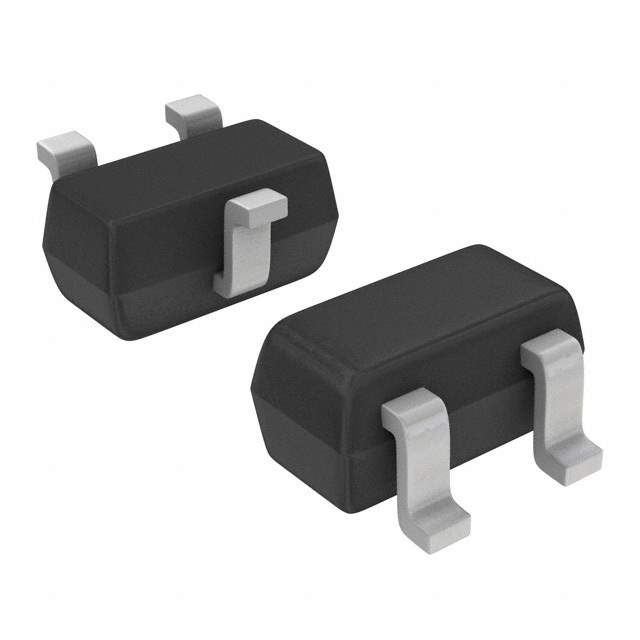
50 V, 100 mA, 200 mW in SC-75 show where this pre-biased PNP fits
Quick Engineering Summary
| Field | Value |
|---|---|
| Manufacturer | ON Semiconductor |
| Category | Transistors (BJT) - Single, Pre - Biased |
| Package | SC-75 |
| Core function | TRANS PREBIAS PNP 50V 0. |
| Key electrical range | Supply and Demand Status: Limited |
| Reported stock | 3000 pcs reported — confirm on RFQ |
Use it for new builds, but buy it like a constrained line
Good for new design-in.
There is no lifecycle conflict here: DTA123TET1G is Active, so status alone does not block a fresh schematic. The caution is supply, not age. Availability is marked Limited, stock is 3000, and lead time is 35 Weeks, which suits a controlled production plan far better than a casual add-to-BOM choice.
The compliance picture is clean too. EU RoHS is compliant, REACH is Unaffected, and MSL is 1 (Unlimited). When the pre-biased PNP function fits, design it in and lock reel demand early rather than assuming replenishment will be easy later.
50 V and 100 mA set the fence
50 V is the collector-emitter breakdown ceiling, and 100 mA is the collector current ceiling.
That puts DTA123TET1G in small-signal high-side switching and bias networks, not in jobs that lean on current headroom or repeated thermal stress. The 200 mW maximum is the other hard stop.
The missing resistor and thermal details matter here
The weak point comes first.
DTA123TET1G is a pre-biased PNP, but this listing gives only R1 at 2.2 kOhms and leaves R2 unstated, so the input-bias behavior is still incomplete from this page alone.
Even so, the listed electrical data is useful. Minimum hFE is 160 at 5mA and 10V, Vce saturation is 250mV at 300µA and 10mA, and collector cutoff is 500nA maximum. That points to control and interface work where an internal base resistor trims placement count and keeps the drive network simple in dense SC-75 layouts. It does not answer switching speed, thermal headroom, or exact logic-drive behavior, because transition frequency, derating curve, thermal resistance, and the full resistor network detail are not included here.
The package is tiny; the review gaps are not
The constraint is implementation detail.
SC-75, also called SOT-416 in the package text, is the kind of footprint you pick when board area matters more than hand-assembly comfort, and that lines up with a 50 V, 100 mA, 200 mW pre-biased transistor aimed at housekeeping work rather than power handling. It fits level shifting, pull-up or pull-down control, and similar support functions where integrated biasing removes external parts, but it is less flexible when a circuit depends on tuning the external base network because that resistor arrangement is built into the device.
The missing items are specific, and they matter more here because the package is so small. Pinout is not stated, which can stop a footprint release outright. A package drawing is also absent, so courtyard and land-pattern work still depend on the full datasheet. Thermal resistance is missing, leaving 200 mW as a ceiling without the ambient context needed for board-level dissipation judgment, and there is no transition-frequency value, so any speed-sensitive switching use remains open. DTA123TET1G may fit electrically, but those omissions keep it from being a drop-in schematic decision on this page alone.
View the Win-Source product page for DTA123TET1G.
Key Takeaways for Engineers & Buyers
- Keep DTA123TET1G on low-current rails; 100 mA is the collector ceiling, not a working target.
- Place the 35 Weeks lead time into the build plan now; supply is marked Limited.
- Pull the full datasheet for pinout and thermal data before committing the SC-75 footprint.