
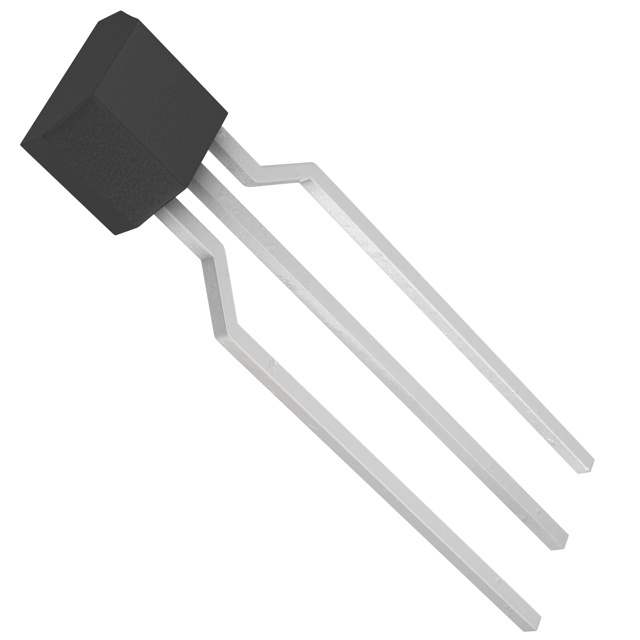
50V VCEO ceiling, 30mA collector ceiling, 300mW dissipation ceiling, through-hole SPT package
Quick Engineering Summary
| Field | Value |
|---|---|
| Manufacturer | Rohm Semiconductor |
| Category | Transistors (BJT) - Single, Pre - Biased |
| Package | SPT |
| Core function | TRANS PREBIAS PNP 50V 0. |
| Key electrical range | Collector Cut-off Current(Max): 500nA; Frequency - Transition: 250MHz; Maximum Current Collector: 30mA; Maximum Power Dissipation: 300mW |
| Reported stock | 1 pcs reported — confirm on RFQ |
Still usable only if the board is already built around it
And that is the whole verdict: sustaining designs only. The lifecycle is EOL, the status is also shown as Obsolete(EOL), and stock is listed at 1, so this is not a part to introduce into a fresh schematic, no matter how convenient the built-in bias network looks. EU RoHS is compliant, but that does not soften an end-of-life call.
The fit is narrow. DTA124ESATP belongs in low-current PNP switching or interface jobs where the 22k R1 and 22k R2 network is part of the original intent, because those internal resistors are the reason to choose a pre-biased transistor at all. It does not belong in a new platform that needs sourcing headroom or may need current growth later.
The constraint is current headroom, not voltage
Current headroom is the real limit here. The 30mA maximum collector current is the tighter ceiling than the 50V VCEO for most uses, and the 300mW maximum power dissipation leaves little room for overload or hot-running bias choices.
50V decides the rail, but not the whole design
50V is the breakdown ceiling that sets the rail. It tells you DTA124ESATP can sit on higher-voltage control rails than many tiny signal transistors, but not that it has much margin there once the 30mA current ceiling and 300mW power ceiling are in play.
The other useful figure is 300mV at 500µA, 10mA for VCE(sat). That is a listed saturation ceiling at a stated test point, useful when checking whether a low-level switched node still lands where the rest of the circuit expects it. The built-in 22k base resistor and 22k emitter-base resistor also narrow the use case to simple logic-driven biasing rather than spots where the resistor network needs external tuning.
Buy only to bridge an existing line
Don't start new work with it.
The buying constraint is plain: EOL status and stock quantity of 1. Even with supply and demand marked sufficient, the actionable signal is the single unit on hand because that is what stops a build first. If DTA124ESATP is already on a released board, reserve it for service or a short sustaining run and move the redesign queue now.
There are also concrete review gaps. The listing gives no pinout, no package drawing, no thermal resistance, and no derating curve. For a through-hole SPT device, those missing items decide footprint release, ambient headroom, and how much of the 300mW ceiling is actually usable on the board. ECAD is listed only as contact to download, so layout work is not closed from this page alone.
View the Win-Source product page for DTA124ESATP.
Key Takeaways for Engineers & Buyers
- Block DTA124ESATP from new BOM releases; lifecycle is EOL.
- Treat 30mA collector current and 300mW as hard ceilings, not operating targets.
- Pull the full datasheet for pinout and package drawing before touching the footprint.