
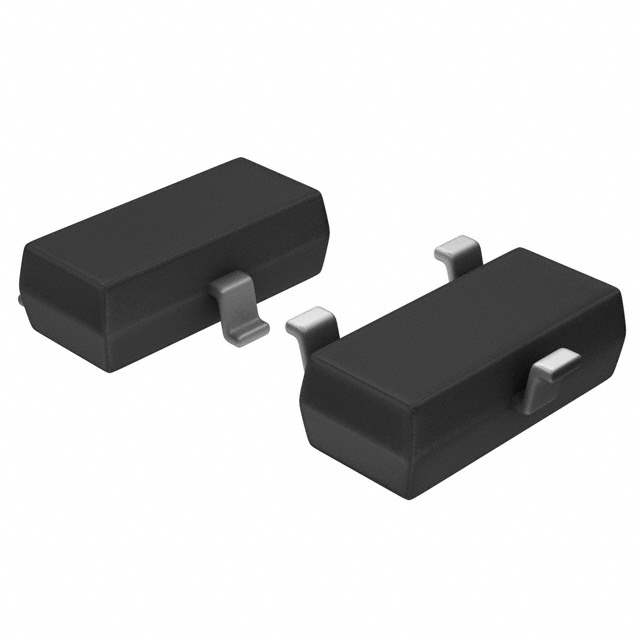
50V VCEO, 100mA collector ceiling, 200mW dissipation, SMT3 package; lifecycle conflict is the real decision point.
Quick Engineering Summary
| Field | Value |
|---|---|
| Manufacturer | Rohm Semiconductor |
| Category | Transistors (BJT) - Single, Pre - Biased |
| Package | SMT3 |
| Core function | TRANS PREBIAS PNP 50V 0. |
| Key electrical range | Collector Cut-off Current(Max): 500nA (ICBO); Frequency - Transition: 250MHz; Maximum Current Collector: 100mA; Maximum Power Dissipation: 200mW |
| Reported stock | 2474 pcs reported — confirm on RFQ |
Can you still put this on a new BOM?
For a new BOM, no. The buyer-level question is settled by the only conflict here that really matters: Lifecycle Status says Active, while Status says Not For New Designs. That outweighs the electrical headline numbers. Treat Rohm Semiconductor DTA124GKAT146 as a sustaining part for existing production, not a fresh design-in candidate.
Near-term supply still looks workable, with 2474 in stock quantity and reel - TR packaging for normal SMT handling. EU RoHS is compliant. Useful, but not enough to override the lifecycle conflict.
Not for power switching, fine for small biased control nodes
Wrong job first: this part does not give you much current or thermal margin. The 100mA maximum collector current is a ceiling, and the 200mW maximum power dissipation is another ceiling that may arrive sooner in a small SMT3 body. Push either one and the package becomes the limit fast.
It fits better in low-current PNP switching where the built-in bias network saves board area and simplifies drive. The 50V VCEO ceiling leaves room for modest high-side or pull-up style control work, but it says nothing about dynamic behavior. Only R2 is listed, at 22k, and R1 is absent, so this listing is not enough when exact input-bias behavior is the design question.
200mW is the number that keeps this honest
200mW. That's the figure that keeps the 100mA collector rating in perspective.
A small pre-biased PNP in SMT3 looks easy to drop in, but Rohm Semiconductor DTA124GKAT146 only stays easy if your dissipation budget remains comfortably below the listed maximum, because current limit by itself does not tell you whether the part will run with enough thermal margin once voltage drop and ambient are included.
The other useful ceiling is 300mV at 500µA, 10mA for VCE(sat). That helps only in that stated test corner. It shows the part can pull into saturation at light drive and 10mA collector current without a large drop, but it does not justify assuming the same behavior near 100mA.
Leakage is at least tidy on paper. The 500nA ICBO maximum supports low-leakage bias networks when off-state drift matters more than speed.
The missing resistor and thermal data are the real blockers
The weak point comes first: the missing detail matters more than the headline limits. Rohm Semiconductor DTA124GKAT146 is presented as a pre-biased transistor, yet the listing gives only R2 at 22k and leaves the base resistor R1 out. For this device class, that is not a minor omission. The resistor network is the part, and without R1 you cannot close the input-drive calculation that tells you whether a logic node, pull-down path, or bias source will switch it as intended.
Package detail is incomplete too. The row text names TO-236-3, SC-59, SOT-23-3, and supplier package SMT3, but there is no pinout or mechanical drawing here to settle land pattern orientation or symbol-to-footprint assignment. That is where assembly mistakes begin.
Thermal information is also thin. You get 200mW maximum power dissipation, but no thermal resistance and no derating curve, so ambient headroom remains open. There is also no storage or switching detail beyond a 250MHz transition frequency; no capacitance and no switching waveform data keeps this part in the small-signal control bucket on paper, not the timing-critical one.
View the Win-Source product page for DTA124GKAT146.
Key Takeaways for Engineers & Buyers
- Hold DTA124GKAT146 to existing production; the status conflict says Not For New Designs despite Active lifecycle.
- Check the 50V VCEO ceiling against the worst collector-emitter stress, not the nominal rail.
- Budget around the 200mW dissipation ceiling in SMT3 before using the full 100mA collector rating.