
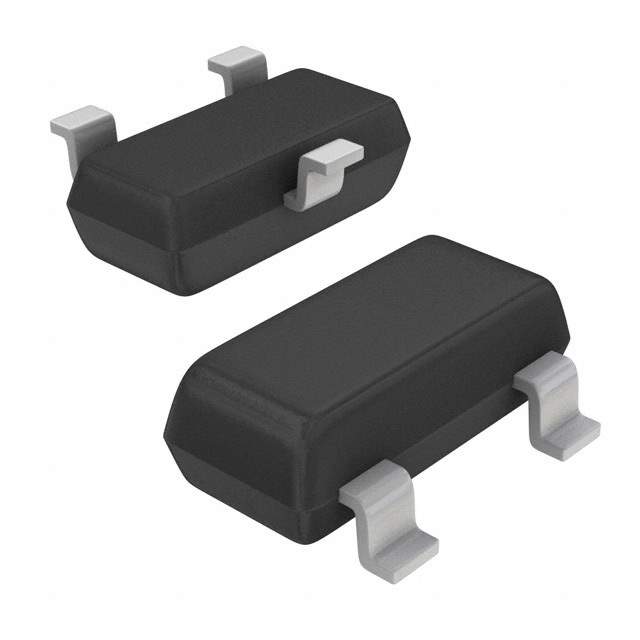
50V, 100mA, 150mW in EMT3: usable where the built-in 22k base resistor is the point
Quick Engineering Summary
| Field | Value |
|---|---|
| Manufacturer | Rohm Semiconductor |
| Category | Transistors (BJT) - Single, Pre - Biased |
| Package | EMT3 |
| Core function | TRANS PREBIAS PNP 50V 0. |
| Key electrical range | Collector Cut-off Current(Max): 500nA (ICBO); Frequency - Transition: 250MHz; Maximum Current Collector: 100mA; Maximum Power Dissipation: 150mW |
| Reported stock | 2600 pcs reported — confirm on RFQ |
2600 pieces do not settle the lifecycle question
2600 pieces are on hand. That helps a running line more than a new one.
DTA124TETL carries an Active lifecycle field, but it also carries Not For New Designs. That conflict is the real decision-maker. Use it for existing production that already wants this exact pre-biased PNP behavior in EMT3, and don't start a fresh design around it unless there is no cleaner path. EU RoHS is compliant, so compliance is not the blocker; lifecycle ambiguity is.
The weak point is lifecycle, but the electrical limits are clear
Not For New Designs is the weak point. The stronger part is that the listed ceilings are clear enough to show where DTA124TETL stops.
The 50V VCEO figure is a collector-emitter breakdown ceiling, so it answers the rail question and nothing more. It does not say the part is comfortable near that voltage in every switching condition. The 100mA maximum collector current is another ceiling, not a working setpoint, and the 150mW maximum power dissipation will usually end the conversation first in a tiny EMT3 body. Add the 300mV max VCE(sat) at 500µA, 5mA and you get a clue about low-current switching loss, but only at that stated test point. In short, DTA124TETL belongs in small-signal switching, not in anything that leans on current or heat.
50V is enough rail margin for logic-side switching
50V is the decisive figure here, because it tells you DTA124TETL can sit on modest control rails without needing a separate bias network.
The built-in 22k R1 is the reason to pick this device at all. It saves a resistor and keeps the interface tidy when a controller or logic node only needs to pull a PNP stage in a predictable way.
That same integration narrows the use case. You are not choosing DTA124TETL when base-drive tailoring is part of the design, because the listing shows only R1 at 22k and no R2. The 100 minimum hFE at 1mA, 5V supports the idea that this is a light-load control transistor, and the 250MHz transition frequency says it is not unusually slow, but neither number changes the 100mA and 150mW ceilings. Keep it in compact SMT control paths, level shifting, or simple load gating where the resistor network is supposed to be fixed.
Wrong for open-ended new platforms, right for exact BOM matches
Wrong first: DTA124TETL is a poor anchor for a new platform because the lifecycle message is split, and because the listing leaves out several details that matter once you move past a like-for-like BOM decision.
The buying case gets narrower and more practical from there. If an existing board already calls for a pre-biased PNP in EMT3 and reel packaging, DTA124TETL is straightforward to keep on the line because the package, polarity, and internal 22k base resistor are all explicit. The stock figure of 2600 supports that sustaining use, and Reel - TR matches normal SMT handling.
The missing pieces are concrete ones. There is no pinout or package drawing here, even though the row also mentions SC-75, SOT-416 alongside EMT3, and that mechanical mapping has to be nailed down before layout or AVL cleanup. There is no thermal resistance figure, so the 150mW ceiling cannot be translated into ambient headroom. There is no switching-time data and no capacitance data, so edge speed and charge storage cannot be judged from this page. ECAD is also not included here; it is only listed as contact to download.
View the Win-Source product page for DTA124TETL.
Key Takeaways for Engineers & Buyers
- Hold DTA124TETL to rails that stay inside the 50V VCEO ceiling.
- Keep collector load inside the 100mA and 150mW ceilings; those are limits, not targets.
- Reserve DTA124TETL for builds that want the internal 22k R1 and reel packaging.