
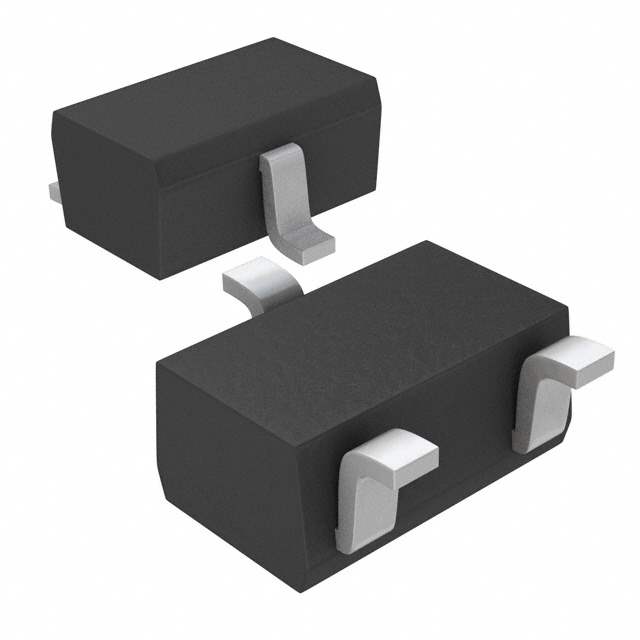
50V VCEO ceiling, 50mA collector limit, 200mW max in UMT3; lifecycle conflict is the real call.
Quick Engineering Summary
| Field | Value |
|---|---|
| Manufacturer | Rohm Semiconductor |
| Category | Transistors (BJT) - Single, Pre - Biased |
| Package | UMT3 |
| Core function | TRANS PREBIAS PNP 50V UMT3 |
| Key electrical range | Collector Cut-off Current(Max): 500nA; Frequency - Transition: 250MHz; Maximum Current Collector: 50mA; Maximum Power Dissipation: 200mW |
| Reported stock | 30000 pcs reported — confirm on RFQ |
The lifecycle conflict is the reason to hesitate
The weak point comes first: DTA124XUAT106 is marked Active, yet another lifecycle field says not suitable for new design. That conflict is enough to keep it out of a fresh platform unless the built-in bias network is exactly what you need and you are willing to carry the sourcing risk.
The better fit is existing production. It is a PNP pre-biased transistor in UMT3 with EU RoHS compliance, so it suits small-signal housekeeping work where board area and BOM count matter more than raw current. For a running line, it is usable. For a new design, the lifecycle disagreement is the first fact to accept.
Can you actually keep a line running on it?
Can you buy it in production form and keep builds moving? Here, yes. Stock is listed at 30000, packaging is Reel - TR, and supply-demand status is Balance. That lines up with scheduled SMT builds better than cut-tape cleanup or odd-lot handling.
There is still a practical limit. Because DTA124XUAT106 already carries a conservative lifecycle cloud over new design use, keep it contained to sustaining demand and manage it as a reel-based line item, not casual bench stock.
The 200mW limit matters more than the 50mA headline
This is the constraint.
The 50mA maximum collector current on DTA124XUAT106 is a ceiling, not a promise that any 50mA load is comfortable in every condition. The 200mW maximum power dissipation is the tighter design limit, because it decides whether a small UMT3 device stays inside thermal budget once voltage drop and duty cycle stack up; read only the current rating and you can approve the schematic, then discover the part runs too hot on the board.
The 50V VCEO rating is another ceiling with a narrower job. It answers whether the transistor can block that collector-emitter voltage, but it does not answer transient behavior, saturation loss, or thermal headroom. Use it to screen rail compatibility, not to assume comfort on a noisy line.
The listed 300mV max VCE(sat) at 500μA, 10mA is useful, but only in that stated corner. It shows the part can pull down with modest saturation loss at 10mA collector current and a 500μA base-drive condition through its internal network. It does not say what happens near the 50mA ceiling.
The built-in resistors are the other real design lever. R1 is 22k and R2 is 47k. Those values make DTA124XUAT106 attractive for direct logic interfacing and quick biasing, and they also rule it out when you need to set the base network yourself for speed, noise margin, or different drive current.
What the listing still doesn't answer
50V is decisive, but not sufficient. The missing items are concrete ones: pinout, package drawing, thermal resistance, and derating curve.
View the Win-Source product page for DTA124XUAT106.
Key Takeaways for Engineers & Buyers
- Treat 50V VCEO as a ceiling; keep rail transients inside that limit before releasing DTA124XUAT106.
- Budget dissipation against the 200mW maximum, not just the 50mA collector rating.
- Lock reel demand early if DTA124XUAT106 stays on the BOM; stock is listed at 30000 and packaging is Reel - TR.