
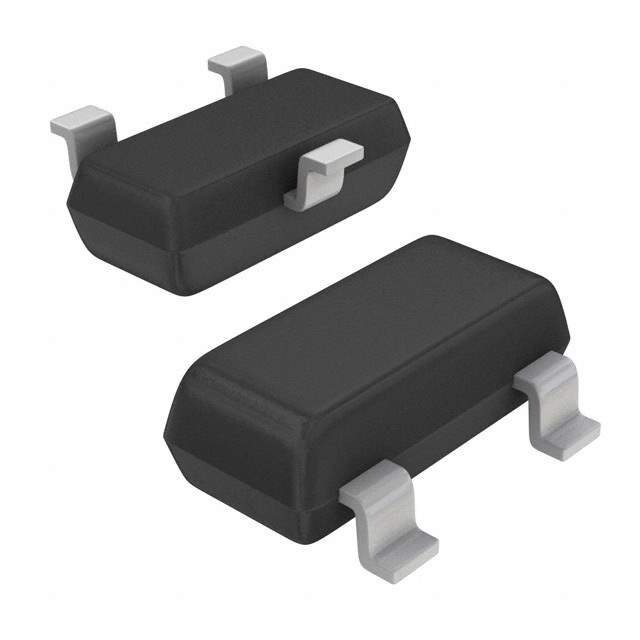
50 V, 100 mA, 150 mW pre-biased PNP in EMT3; suited to sustaining builds, not new platform starts
Quick Engineering Summary
| Field | Value |
|---|---|
| Manufacturer | Rohm Semiconductor |
| Category | Transistors (BJT) - Single, Pre - Biased |
| Package | EMT3 |
| Core function | TRANS PREBIAS PNP 50V 0. |
| Key electrical range | Supply and Demand Status: Limited |
| Reported stock | 1 pcs reported — confirm on RFQ |
Active on paper, but not a new design part
The weak point comes first: DTA143TEBTL is marked Not For New Designs. That carries more weight than the separate Active lifecycle signal when you're choosing parts for a fresh schematic, because the commercial message is clear even if the lifecycle database still says Active.
For existing production, the case is better. EU RoHS is compliant, MSL 1 (Unlimited) removes one handling concern, and the package is a standard reel format. Still, the conclusion stays the same: sustaining only. Don't start a new line on DTA143TEBTL when the part itself says not to.
The 150 mW limit matters more than the 100 mA headline
And that is why the electrical limits need to be read as ceilings, not invitations. The 50 V collector-emitter breakdown sets the rail boundary DTA143TEBTL can sit across; it does not tell you switching behavior, storage time, or how much margin your transient environment still needs.
The 100 mA collector current is a ceiling too. In this package, the 150 mW maximum power closes more decisions, because that dissipation budget gets spent first in a small surface-mount transistor long before a headline current figure looks comfortable. The listed 300 mV VCE(sat) at 250 µA and 5 mA helps, but only at that test point; it does not justify assuming the same drop elsewhere. One more detail matters: R1 is 4.7 kOhms, and only R1 is listed. That fixes the input-drive style this part expects and rules out any assumption that a second internal resistor is present to shape turn-off.
Wrong for precision drive, right for compact bias-saving stages
Not for high-current switching, and not for designs that need a fully specified digital transistor network. DTA143TEBTL lists R1 only, with R2 absent, so it belongs in circuits that can tolerate that simpler internal bias arrangement rather than ones that depend on a defined emitter-base bleed path.
It fits better in small signal level shifting or load control where a PNP pre-biased device saves external resistor placement and the EMT3 footprint matters. The 250 MHz transition frequency says it is not a slow transistor. Still, that number alone does not settle any switching-loss question without the missing dynamic data. Keep DTA143TEBTL in compact surface-mount control paths, not in anything that treats 100 mA as a normal operating target.
Can you keep a line running on it?
The first buyer question is simple: can I actually get enough of DTA143TEBTL to support production? Right now, the answer is cautious at best. Supply and demand status is Limited, stock quantity is 1, and the package is Reel - TR with 3000 per package. That is an awkward mix, because the commercial unit points to reel planning while the visible availability does not support any assumption of near-term volume.
That matters more than the popularity field. For an existing build, place DTA143TEBTL only against committed demand and lock the exact quantity needed for the next run; this is not the moment to let MRP treat it like a freely available transistor. The open-market fake threat is listed at 68 pct., which adds one more reason to stay on authorized channels and avoid spot buys when a line stop starts to loom.
There is also a lifecycle nuance that should shape purchasing behavior. Active status can keep a part on approved lists longer than engineering would like, while Not For New Designs is the field that should drive BOM policy. Keep DTA143TEBTL on sustaining BOMs if you must, but stop any plan to roll it into a new assembly.
What the listing still doesn’t answer
300 mV is useful, but it doesn't answer the missing basics. Pinout, package drawing, thermal resistance, and switching data such as storage or recovery behavior are still absent, and those gaps decide board fit, heat path, and edge behavior.
View the Win-Source product page for DTA143TEBTL.
Key Takeaways for Engineers & Buyers
- Treat the 100 mA collector current as a ceiling; keep DTA143TEBTL out of loads that live near that limit.
- Check the built-in base network: only R1 is listed, at 4.7 kOhms, and R2 is absent.
- Buy only against a real build need; stock quantity is 1 and supply status is Limited.