
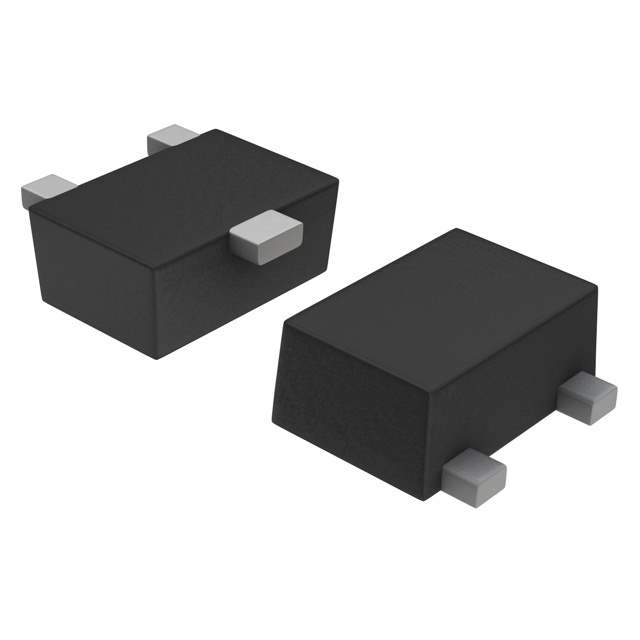
50V VCEO ceiling, 100mA collector limit, 260mW dissipation ceiling, SOT-723, pre-biased PNP with 4.7k R1
Quick Engineering Summary
| Field | Value |
|---|---|
| Manufacturer | ON Semiconductor |
| Category | Transistors (BJT) - Single, Pre - Biased |
| Package | SOT-723 |
| Core function | TRANS PREBIAS PNP 50V SOT723 |
| Key electrical range | Collector Cut-off Current(Max): 500nA; Maximum Current Collector: 100mA; Maximum Power Dissipation: 260mW; Supply and Demand Status: Sufficient |
| Reported stock | 1 pcs reported — confirm on RFQ |
50V is the real entry ticket here
50V gets this part into the conversation. In a pre-biased PNP transistor this small, that VCEO ceiling is the first useful filter, because it tells you the device is not limited to only very low-voltage logic rails.
DTA143TM3T5G is Active, comes in SOT-723, and fits new design-in when the integrated-resistor function and that footprint are both intentional. The other numbers that matter just as much are 100mA maximum collector current and 260mW maximum power dissipation. Both are hard ceilings. Together they place the part in small-signal switching and bias networks, not in any path where load current or heat can creep upward. EU RoHS is compliant, and lifecycle is clean.
And the current limit is where misuse starts
And that is where the easy misuse begins. A 100mA collector rating rules out a lot of casual applications people try to force into resistor-equipped BJTs, and it does not imply the part is comfortable near that limit across every ambient or board condition.
Pair that ceiling with the 260mW dissipation limit and the package becomes the real design argument, because a SOT-723 body leaves very little room for thermal sloppiness. The listed 250mV @ 1mA, 10mA VCE(sat) is useful in one narrow sense: it shows small-current switching without a large saturation penalty at those test points. The listing does not give the curve that would show how quickly dissipation rises beyond them. The 160 @ 5mA, 10V hFE minimum helps with bias confidence in the same small-signal region, but it won't rescue a marginal thermal design.
The package sets the lane
The constraint is density. SOT-723 and a built-in 4.7k base resistor push DTA143TM3T5G toward compact bias, level-shift, and simple inverter duties where saving external parts matters more than squeezing current.
1 piece in stock is the buy-side problem
1 piece is the figure that changes the purchasing discussion. Lifecycle is Active and supply-demand is marked sufficient, yet the immediately listed stock quantity is 1 while quantity shows 8000. That makes the real commercial risk availability on the required date, not obsolescence.
Use the reel format to your advantage if the build is real volume. The part is packaged as Reel - TR, and the package is small enough that ad hoc handling is where avoidable assembly pain starts. Reserve quantity against the build, not the lifecycle label.
The remaining engineering gaps are concrete. There is no pinout here, no package drawing, no thermal resistance, and no switching or capacitance data. In a pre-biased transistor in a tiny package, those omissions matter more than another line of generic copy: pinout and drawing set footprint confidence, thermal resistance sets ambient headroom against the 260mW ceiling, and switching data tells you whether DTA143TM3T5G is merely acceptable or annoyingly slow in the node you plan to switch.
View the Win-Source product page for DTA143TM3T5G.
Key Takeaways for Engineers & Buyers
- Keep collector current below the 100mA ceiling; that limit, not gain, decides whether DTA143TM3T5G belongs in the load path.
- Budget around the 260mW dissipation ceiling and the 250mV @ 1mA, 10mA saturation figure before using DTA143TM3T5G as a low-side logic inverter.
- Lock package and reel handling early: DTA143TM3T5G is SOT-723, Reel - TR, and listed stock is 1.