
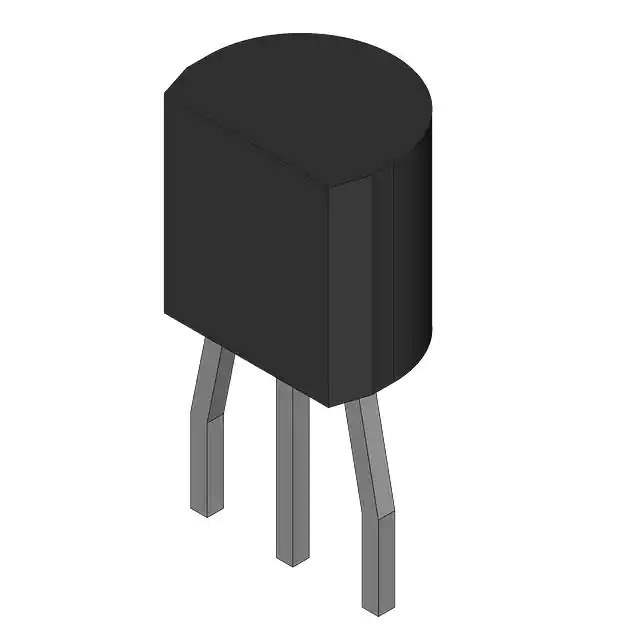
50 V, 100 mA prebiased PNP transistor in bulk supply; resistor values still decide the fit
Quick Engineering Summary
| Field | Value |
|---|---|
| Manufacturer | ON Semiconductor |
| Category | Transistors (BJT) - Single |
| Package | Bulk |
| Core function | TRANS PREBIAS PNP 50V 100MA |
| Key electrical range | TRANS PREBIAS PNP 50V 100MA |
| Reported stock | 11500 pcs reported — confirm on RFQ |
50 V is the number that decides whether it enters the schematic
50 V is the listed collector-emitter breakdown ceiling, and it is the first gate for DTA144E. If your node can cross that limit, the part is out. If your rail stays below it, key switching and bias details are still unresolved because they are not carried here.
The other headline limit is 100 mA collector current from the product description. Treat that as a ceiling. It places DTA144E in light signal switching and simple high-side or pull-up duties, not in work where current headroom drives the decision. EU RoHS is compliant, and lifecycle is Active, so the issue is not status or compliance.
The real constraint is missing bias-network detail
The real constraint is missing bias-network detail. A prebiased PNP only saves parts when its internal resistor pair matches the logic source and the load, and this listing does not give the built-in resistor values, does not confirm the transistor type field, and does not show any DC gain or saturation condition.
That matters more than the Active lifecycle. A prebiased transistor is not just a small-signal BJT with fewer externals; the resistor pair sets base current, turn-off behavior, and how hard the device can be driven from a controller pin. Without R1 and R2, you cannot tell whether DTA144E will switch cleanly from your source or leave too much voltage in saturation on a high-impedance node where leakage also matters.
The package picture is just as thin. The commercial package field says Bulk, and the standard package says 1 pcs, but neither gives the case outline, land pattern, or pinout. So even with usable top-line voltage and current ceilings, DTA144E is not ready for release.
So it fits simple control paths, not power work
So it fits simple control paths, not power work. The right mental model is a housekeeping transistor for board-level control, where a 50 V ceiling and 100 mA ceiling are enough and the value is fewer external resistors.
It does not read like a power switch, and nothing here supports using it where dissipation, pulse current, or thermal resistance dominate the call. For buying, the practical constraint is packaging and quantity: stock quantity is 11500, while the sell unit is bulk with a standard package of 1 pcs, so plan for manual handling or your own kitting step if the line expects taped parts.
What the datasheet still has to settle
11500 pieces on hand helps, but it does not close the items that matter most. For DTA144E, the open points are the internal resistor values, package drawing, pinout, and power limit.
View the Win-Source product page for DTA144E.
Key Takeaways for Engineers & Buyers
- Use DTA144E only where 50 V is a ceiling, not a rail target.
- Keep collector current below the 100 mA ceiling; this listing gives no power limit.
- Pull the datasheet for the built-in resistor values before freezing the bias network around DTA144E.