
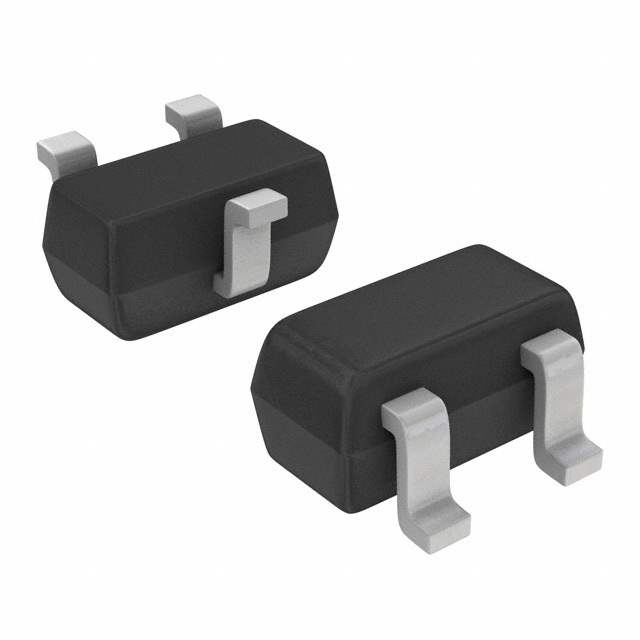
50V VCEO, 100mA collector ceiling, 200mW dissipation, SC-75/SOT-416, EOL status
Quick Engineering Summary
| Field | Value |
|---|---|
| Manufacturer | ON Semiconductor |
| Category | Transistors (BJT) - Single, Pre - Biased |
| Package | SC-75, SOT-416 |
| Core function | TRANS PREBIAS PNP 50V 0. |
| Key electrical range | Collector Cut-off Current(Max): 500nA; Maximum Current Collector: 100mA; Maximum Power Dissipation: 200mW; Supply and Demand Status: Balance |
| Reported stock | 2850 pcs reported — confirm on RFQ |
50V is enough only if the lifecycle problem is acceptable
50V is the ceiling that matters electrically, but it does not change the sourcing call. DTA144EET1G is EOL, so keep it out of new designs and use remaining stock only for existing production. EU RoHS is compliant.
The limits point to light switching, not margin-heavy loads
The constraint is light switching in a tight thermal box. A 100mA maximum collector current is a ceiling, not a working point, and the 200mW maximum power dissipation closes the door on anything that runs hot or carries heavy load for long.
The 250mV max VCE(sat) at 300µA and 10mA is useful because it shows where the part is characterized: low-current switching. It does not create headroom at 100mA. Set that beside the 50V VCEO ceiling and the fit is pretty clear—rail-referenced control and level-shift work where current stays modest, because once current and heat rise together, the thermal budget disappears before the voltage rating does.
EOL is the weak point; the built-in resistors are the reason to keep it
EOL is the weak point. The integrated bias network is why anyone still keeps it in view.
DTA144EET1G is a PNP pre-biased transistor with 47k on R1 and 47k on R2, so it fits compact logic-to-transistor interfaces where those resistor values already suit the circuit. The SC-75, SOT-416 package helps when the alternative is a transistor plus two external resistors, but it also limits thermal headroom and gives up the option to tune base bias later. The minimum hFE of 80 at 5mA and 10V supports low-current use; it does not make DTA144EET1G a general-purpose load switch.
Wrong for open-ended maintenance buys
Wrong for open-ended maintenance buys; right for a controlled last-time purchase tied to a running line. Reel - TR tells you it is aimed at SMT production, but that is not the real buying constraint. The real constraint is EOL status combined with 2850 pieces on hand.
Use that quantity as a bridge, not a comfort blanket. If DTA144EET1G is already qualified in an existing assembly, reserve stock against actual builds and lock the consumption plan now. If it is not already on your board, stop there.
One more practical point matters because it affects planning, not just wording: one field says Active while the lifecycle fields say EOL. Treat the lifecycle call as the decision-maker, because that is the conservative reading least likely to leave a production line exposed later.
The missing details are another reason not to stretch this part beyond a known use. There is no pinout here, no package drawing, no thermal resistance, and no derating curve. Those are the items that close layout and thermal review for DTA144EET1G.
View the Win-Source product page for DTA144EET1G.
Key Takeaways for Engineers & Buyers
- Block new BOM releases on DTA144EET1G; lifecycle is EOL.
- Check rail and load against the 50V VCEO ceiling and 100mA collector limit.
- Confirm the fixed 47k/47k bias network matches the drive scheme before committing layout.