
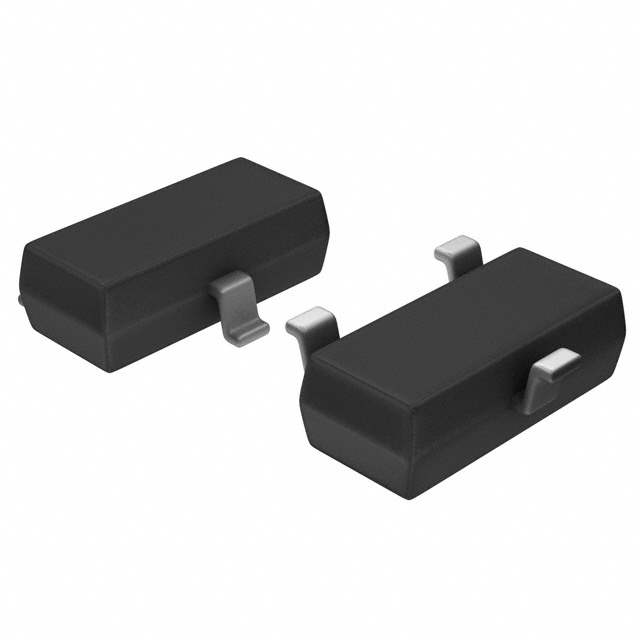
50V VCEO, 100mA collector ceiling, 200mW limit, SMT3 package; usable, but not for new designs.
Quick Engineering Summary
| Field | Value |
|---|---|
| Manufacturer | Rohm Semiconductor |
| Category | Transistors (BJT) - Single, Pre - Biased |
| Package | SMT3 |
| Core function | TRANS PREBIAS PNP 50V 0. |
| Key electrical range | Collector Cut-off Current(Max): 500nA (ICBO); Frequency - Transition: 250MHz; Maximum Current Collector: 100mA; Maximum Power Dissipation: 200mW |
| Reported stock | 12199 pcs reported — confirm on RFQ |
Still usable, but only for a running line
And that lifecycle conflict is still the first thing that decides DTA144GKAT146. One field says Active, another says Not For New Designs, and those two point to different sourcing decisions. The conservative read is straightforward: keep it in existing production if the circuit already depends on this exact pre-biased PNP behavior, but do not start a new platform around it.
The electrical picture also argues for a narrow role, not a broad one. VCEO is 50V, and that is a ceiling. Maximum collector current is 100mA, also a ceiling, while the 200mW maximum power dissipation is likely the tighter practical limit because it quickly rules out casual use as a small high-side switch just because the current headline looks comfortable. The listed 300mV VCE(sat) at 500µA, 10mA is useful because it shows characterization in a low-current switching condition, but it does not describe behavior at the 100mA ceiling, and the missing transient and thermal detail leaves little room to treat the part as forgiving. EU RoHS compliance is clear, but it doesn't settle the lifecycle split.
This is not your 100mA switch
Use it narrowly.
DTA144GKAT146 fits compact bias-and-switch jobs where the built-in resistor network is the reason to use it. It belongs in logic-driven level shifting and simple load gating, not in general-purpose transistor stages where you want to choose the base network yourself.
12199 pieces helps, but it doesn't settle design-in
12199 pieces helps if you are trying to keep a line moving, and reel packaging fits normal SMT intake.
Inventory still does not overrule the status conflict on DTA144GKAT146. Use available stock to cover existing production or service demand, then freeze the requirement instead of spreading DTA144GKAT146 into new assemblies where the same lifecycle question will return at the next build review.
The missing datasheet items are the real stop signs
The weak point is obvious: the listing is too thin to close a circuit review by itself. The upside is that the gaps are specific.
For DTA144GKAT146, the missing items that matter are the pinout, the package drawing, thermal resistance, and the resistor-network detail conflict. One field lists Resistor - Base (R1) as 47k, while another says only R2 is included and R1 is absent; that is not a cosmetic mismatch, because the internal resistor arrangement is the whole reason to pick a pre-biased transistor. There is also no saturation behavior beyond 300mV @ 500µA, 10mA, no derating curve for the 200mW limit, and no switching waveform data. Those omissions decide whether DTA144GKAT146 is merely convenient or actually safe in the intended node.
View the Win-Source product page for DTA144GKAT146.
Key Takeaways for Engineers & Buyers
- Keep DTA144GKAT146 on sustaining BOMs only; the status conflict lands on Not For New Designs.
- Check the 50V VCEO ceiling against worst-case rail and transients before keeping DTA144GKAT146 in circuit.
- Budget around the 200mW dissipation limit and 300mV @ 500µA, 10mA saturation figure, not the 100mA headline.