
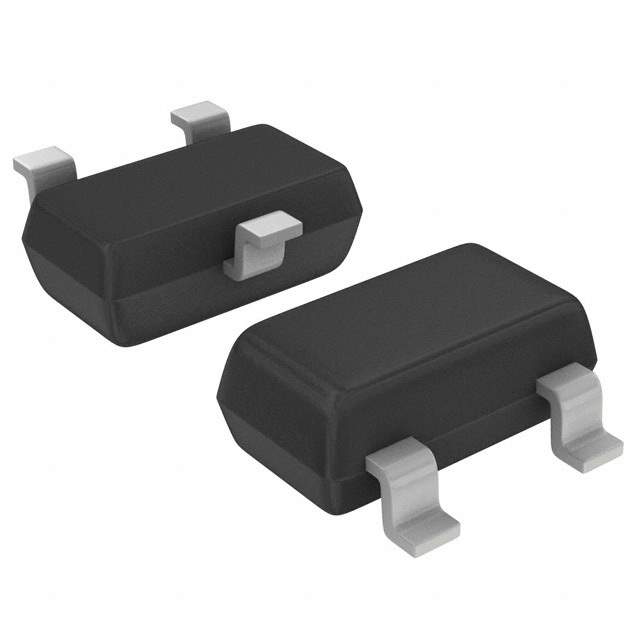
50 V, 100 mA, 230 mW in SC-59: lifecycle, not transistor limits, decides DTA144TT1
Quick Engineering Summary
| Field | Value |
|---|---|
| Manufacturer | ON Semiconductor |
| Category | Transistors (BJT) - Single, Pre - Biased |
| Package | SC-59 |
| Core function | TRANS PREBIAS PNP 50V 0. |
| Key electrical range | Supply and Demand Status: Balance |
| Reported stock | 1 pcs reported — confirm on RFQ |
And that makes lifecycle the first design constraint
So the main call is simple: DTA144TT1 is not a new design part. The electrical headline can look serviceable at first glance — 50 V, 100 mA, 230 mW in SC-59 — but those are ceilings, not margin, and they do nothing to change the real constraint: lifecycle is EOL, Part Status is Obsolete, and listed stock is 1. For a fresh design, that ends it.
For existing production, this is a containment problem rather than a component choice. Reel - TR packaging and 3000 per package show how the part was meant to move through assembly, yet the available quantity no longer supports that use in any practical way. MSL 1 helps on handling, and EU RoHS is not the blocker, but neither one offsets end-of-life status or the fact that sustaining demand now has to compete with near-zero availability. Keep DTA144TT1 limited to sustaining builds, secure what remains for that purpose, and move it off the active AVL while migration work starts.
The package naming also tells a familiar story. TO-236-3, SC-59, and SOT-23-3 point to a small board-level transistor used for compact switching or bias duties, not a part you stretch into a broader role just because the top-line ratings appear workable. In other words, the lifecycle decision is doing the real design work here.
The listed limits are ceilings, not comfort margin
These numbers are tight.
The 100 mA collector-current maximum is a ceiling, not a promise that a 100 mA load is comfortable across ambient and board conditions. The 230 mW maximum power rating says the same thing from the thermal side, and in a small SC-59 body dissipation can become the real limit before the current headline does. The 50 V collector-emitter breakdown rating is useful for rail screening, but it only places the part below that ceiling; it does not establish transient or thermal headroom.
The pre-biased network matters just as much. DTA144TT1 includes only R1, listed at 47 kOhms, with no R2, so interface behavior is shaped by a built-in base resistor rather than a fuller emitter-base resistor pair. The listing also gives hFE as 160 at 5mA and 10V, plus Vce saturation as 250mV at 1mA and 10mA. Those conditions are narrow. They identify the intended low-current switching region, but they don't replace the curves needed to judge edge cases.
Wrong for open-ended new work, fine for small PNP glue logic
Not for platform work. DTA144TT1 is wrong for any program that needs a stable second-source path, comfortable stock depth, or broad operating detail, because the lifecycle is already closed and the listing stays thin where design closure usually happens.
It does fit existing low-current surface-mount circuits that already expect a pre-biased PNP in SC-59 and already use a 47 kOhms input resistor arrangement. A 50 V ceiling leaves room for modest rails, while the 500nA collector cutoff maximum helps where off-state leakage matters. It is still a poor fit anywhere resistor-network flexibility matters, because the internal resistor arrangement is partly fixed and only R1 is listed.
1 piece is the real purchasing problem
1 piece changes the conversation from sourcing to triage. DTA144TT1 is packaged as Reel - TR with 3000 per package, but the listed stock quantity is 1, so this is not a part you can count on for normal SMT replenishment.
Use that single unit only to keep an existing line moving briefly, to cover a repair, or to support failure analysis while migration starts. The open-market fake threat is listed at 39 pct., which raises the cost of waiting until the line is already short.
The missing datasheet items are the ones that close risk
The weak point is documentation depth. DTA144TT1 still needs a pinout or drawing, a thermal derating curve, and fuller saturation or forward-drive curves to close risk. IFSM is not relevant here, but resistor-network behavior beyond the single 47 kOhms value is still too thin in this listing.
View the Win-Source product page for DTA144TT1.
Key Takeaways for Engineers & Buyers
- Block DTA144TT1 from new BOMs; lifecycle is EOL and Part Status is Obsolete.
- Reserve the single listed unit only for an existing production stopgap or failure analysis.
- Check the 47 kOhms base resistor against your drive network before touching the schematic.